5 months ago
90
5 months ago
90
Watch: Israeli attacks on Lebanon a 'grave violation' of ceasefire, says Iran's deputy foreign minister
An Iranian minister has told the BBC that Israeli strikes in Lebanon on Wednesday constituted a "grave violation" of the US-Iran ceasefire agreement.
Deputy Foreign Minister Saeed Khatibzadeh said Lebanon was covered by the two-week deal agreed on Tuesday - something the US and Israel dispute - and said the US must choose "between war and ceasefire".
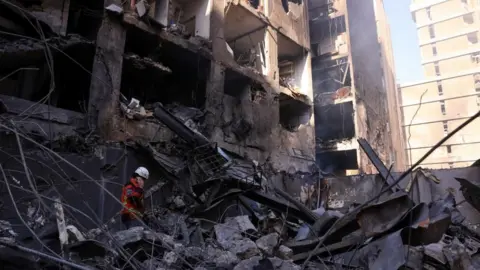
The Lebanese health ministry has said at least 203 people were killed on Wednesday in air strikes on what Israel called Hezbollah command centres and military sites.
Pressed on whether Tehran would likewise ask Hezbollah to stop firing rockets towards Israel, Khatibzadeh claimed the Iranian-backed militant group had "abided" by the ceasefire.
Hezbollah said on Thursday that it had fired at Israel overnight in response to what it called ceasefire violations.
It has also threatened to keep up its attacks until "Israeli-American aggression" against Lebanon comes to an end.
Speaking to BBC Radio 4's Today programme, Khatibzadeh said Tehran had sent a "crystal clear" message to the White House late on Wednesday which could be summarised as "you cannot have cake and eat it at the same time".
"You cannot ask for a ceasefire and then accept terms and conditions, accept all the areas that a ceasefire is applied to, and name Lebanon, exactly Lebanon in that, and then your ally just starts a massacre."
Pressed on whether this meant Iran would also ask Hezbollah to stop attacking Israel, Khatibzadeh responded that Hezbollah was a "Lebanese freedom movement" which he was "not shy to say" received "support" from Iran.
He said the deal that was reached - "which Trump called a workable framework" - meant Iran, Washington and each of their allies were to adhere to the ceasefire, and claimed Hezbollah had "very much abided by that".

 Reuters
At least 200 people were killed after Israeli strikes in Lebanon on Wednesday, according to health officials
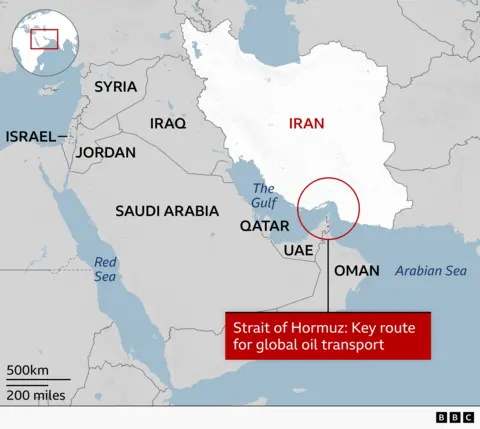
Khatibzadeh said Iran would abide by international law, while arguing that the shipping channel comprised the territorial water of Oman and Iran and that both countries had in the past allowed safe passage through it out of "goodwill".
He said that, if the US withdrew its "aggression", Iran would "provide security for safe passage".
Asked if this meant Iran would not be charging ships for passage or threatening them, the minister said Iran wanted the strait to be "peaceful".
But he added that Iran would need to work with Oman and the international community on a protocol for safe passage to ensure it was not "misused by warships".
Since the war began on 28 February, Tehran has effectively blocked the shipping lane through which about a fifth of the world's oil and liquefied natural gas usually passes, causing disruption to the global economy.
Khatibzadeh said he was "very doubtful" about reaching a permanent understanding with the US, accusing Washington of having used negotiation as a cover for military action.
Asked whether scheduled talks between the US and Iran in Pakistan would still go ahead, Khatibzadeh said: "We are going to closely monitor what is happening from now on."
Khatibzadeh added: "But as a diplomat, I'm very much hopeful that finally we reach an understanding and settle this within our national interest and within the regional interest."