2 months ago
17
2 months ago
17
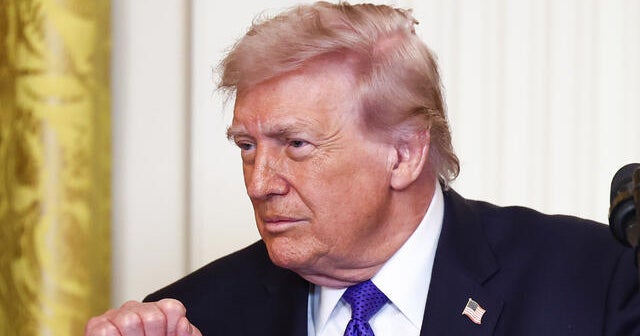
Washington: US allies that fail to increase defence spending and contribute to collective defence will face consequences, while those that step up will receive “special favour”, War Secretary Pete Hegseth said as he outlined the Trump administration’s approach to the Indo-Pacific.
Speaking at a major defence summit as Australian ministers fly to Washington for talks, Hegseth said the US did not seek confrontation in the region but a “balance of power” where all countries’ interests were respected.
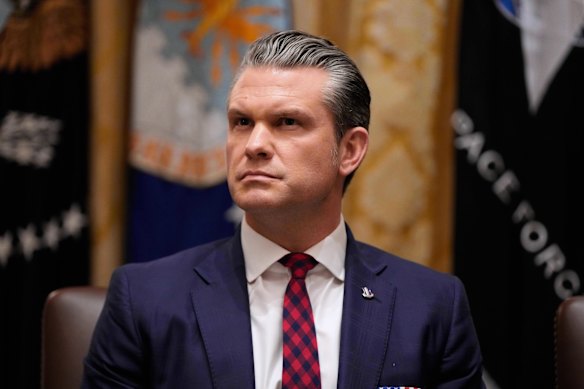
War Secretary Pete Hegseth said allies that failed to step up and share the burden of collective defence would face consequences.Credit: AP
That meant “respecting China’s historic military buildup”, while also being positioned strongly enough to deny any aggression, including along the First Island Chain.
“We’re not trying to strangle China’s growth, we’re not trying to dominate or humiliate them. Nor are we trying to change the status quo over Taiwan,” he told the Ronald Reagan National Defence Forum in California. “Our interests in the Indo-Pacific are significant, but also scoped and reasonable.”
The summit’s annual survey also found most Americans - 60 per cent, up from 48 per cent last year - support committing US forces to defend Taiwan in the event of an invasion.
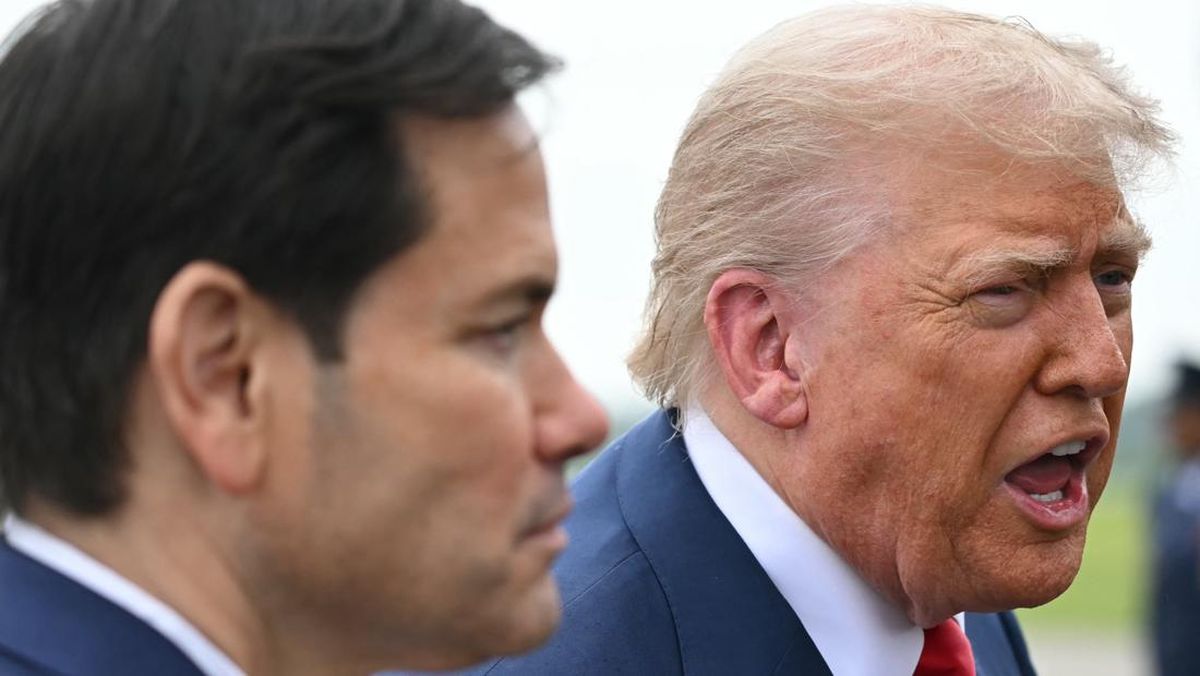
Hegseth’s speech came less than 48 hours before he is due to meet Defence Minister Richard Marles for annual AUSMIN talks in Washington, along with Foreign Minister Penny Wong and US Secretary of State Marco Rubio.
The secretary – who faced a difficult week amid accusations he presided over a war crime against survivors of a US attack on a suspected drug boat - reiterated the Trump administration’s call for US allies to lift their defence expenditure to 3.5 per cent of gross domestic product.
This was the “new global standard”, Hegseth said, and noted South Korea had pledged to join NATO members in reaching that number as soon as possible. He did not single out Australia but said: “We are optimistic that other Indo-Pacific allies will follow suit.”
“Model allies that step up - like Israel, South Korea, Poland, increasingly Germany, the Baltics and others will receive our special favour,” Hegseth told the Reagan conference. “Allies that do not - allies that still fail to do their part for collective defence - will face consequences.”
The US under Trump sought “real partnerships and alliances based on hard power, not just flags and fancy conferences”, he said. “Our allies are not children. They are nations capable of doing far more for themselves than they have. It’s time they stand up, and they are.”
The speech comes two days after the White House released its broad National Security Strategy, with sweeping changes for how the world is seen and dealt with by Washington.
Loading
It included a warning that Europe faced “civilisational erasure” from mass migration and the loss of national sovereignty, as well as a new focus on the US’s own backyard, the Western Hemisphere, and a revival of the so-called Monroe Doctrine.
In the Indo-Pacific, the document treated Australia differently to Japan and South Korea. While they were told they “must” increase defence spending, on Australia and Taiwan the US would only “maintain our determined rhetoric” on higher expenditure.
That reflects the attitude of President Donald Trump when he met with Prime Minister Anthony Albanese in October. Asked about Australia’s defence spending, which is less than 3 per cent of GDP, Trump was relaxed, saying, “You can only do so much.”
The Albanese government argues that, rather than the official Treasury figure of 2 per cent, it actually spends about 2.8 per cent of GDP on defence, using the same formula as NATO.
Trump also emphatically committed to honouring the AUKUS defence pact, including the sale of three US nuclear-powered submarines to Australia starting in 2032.
But at Saturday’s (Sunday AEDT) Reagan forum in Simi Valley, California, senior administration and military officials spoke about the ongoing difficulty of ramping up US military production, including the Virginia-class submarines Australia expects to receive.
“Coming back into office, the thing I’ve been blown away by is how far behind we are on these programs,” said Trump’s director of the US Office of Management and Budget, Russell Vought.
“I don’t know how many times we’ve said we want more Virginia submarines and ships built. So, it’s not just market demand, it’s execution at these companies to be able to make their contracts and stay on time.”
Admiral Daryl Caudle, who told Congress in July that the US was not making enough submarines to honour AUKUS commitments, said there was no shortcut to increase shipbuilding to the level required.
“Moving the tool chest closer, giving [workers] an iPad - that’s not going to give me the 100 per cent increase I need,” he told the Reagan conference. “I’ve got a capacity issue that needs to be addressed.”
Get a note directly from our foreign correspondents on what’s making headlines around the world. Sign up for our weekly What in the World newsletter.
Most Viewed in World
Loading