3 months ago
15
3 months ago
15
Rugby league players could increasingly be asked to play two matches on the same day as a result of the expansion of the interchange bench.
The NRL on Wednesday announced four new rules after a meeting of the ARL Commission, with the increase from four to six players on the interchange bench the tweak with the most tactical significance.
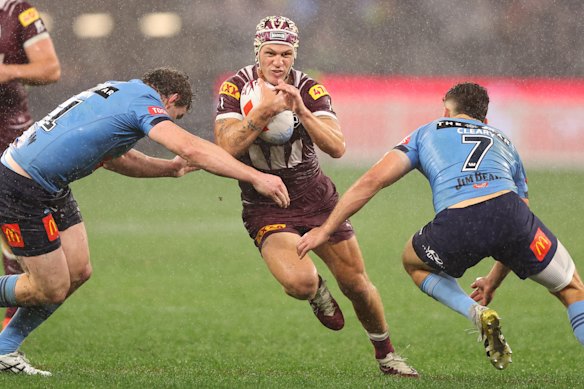
Could Queensland unleash a superstar such as Kalyn Ponga late in a tight Origin game under the new interchange rules?Credit: Getty Images
Given most coaches had previously opted for a bench composition of three forwards and a utility player, back-rowers often had to replace injured outside backs, while there was rarely an adequate replacement on the bench when a playmaker was forced from the field.
Even before the beefing up of the bench, it was possible to play a full game of NSW or Queensland cup and then be brought into the first-grade squad for another match on the same weekend – or even the same day. While backing up in that fashion rarely happened in reality, it is likely to become a much more common occurrence under the new interchange rules.
“We have situations where it’s an option for a club to utilise a player in that regard as a back-up,” NRL chief executive Andrew Abdo said. “That will be possible.”
If a fringe player plays reserve grade every week before sitting on the NRL interchange bench, they could find themselves called upon to play twice in quick succession, possibly even on the same day. The scheduling of games – sometimes reserve grade is played before, the day of or after an NRL fixture – is another complicating factor.
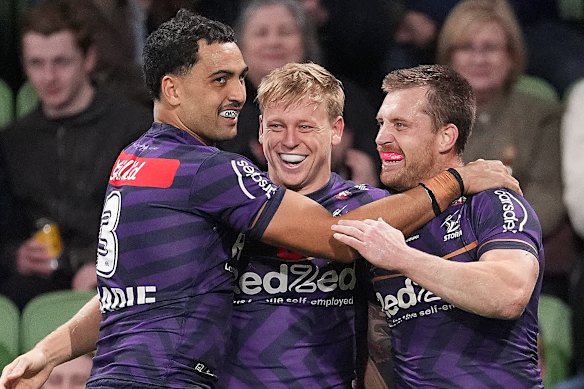
What impact will the new rules have on star utilities such as Tyran Wishart (centre).Credit: Getty Images
“This is going to be about the clubs managing their players, their workloads and their game time,” Abdo said. “It’s not in the clubs’ interest to have a player not exposed to playing regularly, whether it be NSW Cup, Queensland Cup or at NRL level.
“The flexibility is going to be there for the clubs to decide on who they select and when they play. That will include, potentially, on some weekends, playing in the NSW Cup and Queensland Cup, and then potentially sitting on the bench. That is possible for the clubs and something they will have to consider as part of their selection.”
NRL clubs will now have to find the balance between having an insurance policy on the bench and not exposing players to workloads that are too light or too strenuous. For instance, one challenge will be getting the right amount of game time for a back-up half. If the first-choice playmakers remain injury free, there is the risk of going weeks – or even months – without any football.
“This rule change looks good on paper for a single game, but the cumulative effects will have significant and foreseeable unintended consequences for players,” Rugby League Players’ Association chief executive Clint Newton said. “Particularly around injury risk, loss of meaningful game time and overall game and development opportunities.
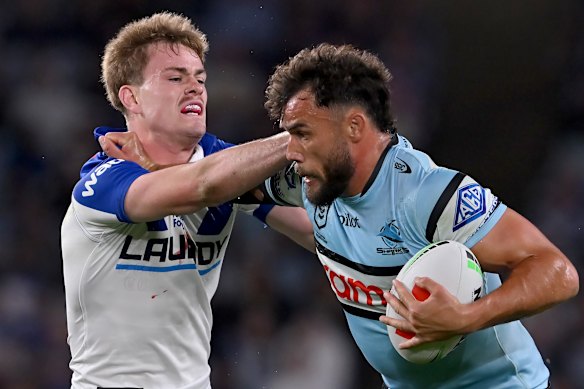
Coaches face the challenge of giving players too much, or too little, football under the new rule changes.Credit: Getty Images
“There is a high likelihood that young halves who need game time will be put on ice and not risked in State Cup because they’re always on an extended NRL bench.
“We understand the game strategy elements, however the likelihood that some players will consistently miss match-day and development opportunities, second-tier selection and match payments is real. Others could be left inactive for long periods throughout a season, and the fourth player consistently used only at the end of games. That’s when injuries have historically happened.
“We will consistently engage club coaching staff and players to ensure we stay on top of how the change impacts the game.”
The interchange expansion could also result in more superstars being utilised for big games. For instance, Queensland may have the luxury of picking a team containing Reece Walsh and Kalyn Ponga, with the prospect of both being on the field at the same time at various stages. NSW, meanwhile, could turn to an expanded bench that includes the likes of Ethan Strange or Isaiya Katoa if they are chasing the game, or a defensive specialist if they are protecting a lead.
Loading
There are also differing views in club land about whether utility players such as Tyran Wishart and Connor Watson will become more or less valuable under the change.
“It’s going to be fascinating because it’s another form of strategy for a club,” Abdo said. “I don’t think it will have a one-size-fits-all [outcome]. I don’t believe it will have an impact on any position for players. It’s about the right squad for the right game at the right time of the season.
“Hopefully it provides more opportunities for players to make their debuts and ultimately provide more strategy [decisions] for clubs, depending on which way they want to go.”
Most Viewed in Sport
Loading