3 months ago
36
3 months ago
36
January 29, 2026 — 11:56am
With the Federal Reserve Board, what it says is often as important, if not more important, than what it does. On Wednesday, it didn’t do anything, and didn’t signal that it would do anything, which isn’t what Donald Trump wanted to hear.
The Fed, as was expected, left its policy rate, the federal funds rate, unchanged after this week’s meeting of the rate-setting body, the Federal Open Market Committee (FOMC).
Where, at its last meeting in December, when it cut the policy rate for the third consecutive time, the FOMC stated that the “downside risks to employment rose in recent months,” its latest statement excised that line.
That modest change to their language suggests that the officials are now less concerned about the labour market than they were last month and are in no hurry to make further changes to rates that have already been cut 175 basis points during the rate-cutting cycle that started 16 months ago.
While the markets are still pricing in two 25 basis point cuts this year – against the one FOMC officials projected at their December meeting – expectations of a rate cut in the first half of this year have subsided amid signs that, despite weak job growth, the labour market has stabilised and inflation, while above the Fed’s 2 per cent target, seems to be under control.
The Fed chair, Jerome Powell, said it was hard to categorise current interest rate settings as restrictive, which was interpreted by Fed watchers as a signal that any further easing of monetary policy in the near term was unlikely.
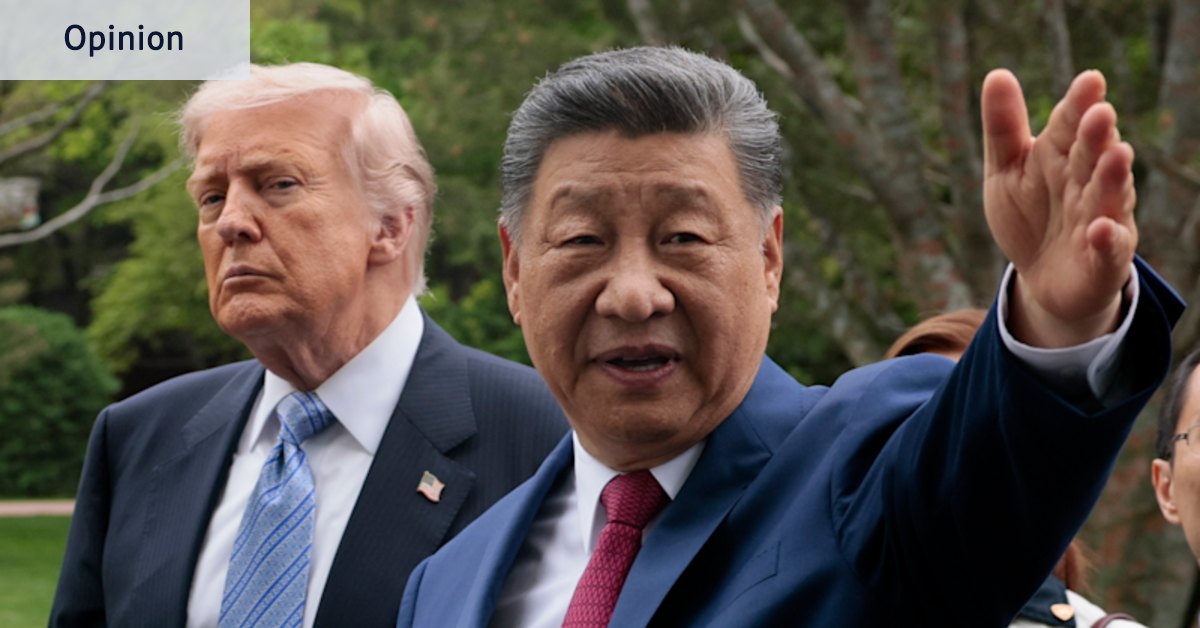
That won’t go down well with Trump, who has said, very loudly and frequently, that he wants much lower interest rates to turbocharge US growth, lower the cost of servicing the government’s surging debt and tamp down “affordability” as an issue at this year’s midterm elections.
Trump’s man inside the Fed, Stephen Miran, on unpaid leave from his position as chairman of Trump’s council of economic advisers, was one of the two Fed governors who dissented from the majority decision (10 to 2) to leave the federal funds rate unchanged.
He wanted a 25 basis point cut – he’s voted for cuts at every meeting since Trump appointed him to fill a temporary vacancy on the board last year – as did Christopher Waller, one of the key contenders to become Fed chair when Powell’s term expires in May.
Waller would be very aware, as would the other contenders for the role, that anything other than support for rate cuts would see Trump dump him from that list.
The consensus among the majority of the FOMC members that there’s no urgency to cut rates further, however, does represent a challenge for whomever Trump does nominate in fulfilling Trump’s expectations.
The incoming chair, whether it is Waller (unlikely), former Fed governor Kevin Warsh (favoured by prediction markets) or BlackRock’s fixed interest chief, Rick Rieder (whose odds have shortened) will have only one vote within a 12-voting member committee that has shown increasing independence as Trump’s verbal and legal assaults on the Fed and its chair have escalated.
The administration has taken action against Powell over a blowout in the costs of a renovation of the Fed’s Washington headquarters – even though he steps down as chair in May – and is seeking to sack another governor, Lisa Cook, for claimed mortgage fraud, although the Supreme Court seems sceptical that her purported firing via a Trump social media post meets the constitutional requirements for due process.
The administration’s targeting of Powell despite his imminent relinquishment of the chair is probably because it fears that he will break from past practice and remain as a governor, where his term doesn’t end until 2028. Powell could, even without the title, be a focus of opposition to the big rate cuts Trump is demanding.
Powell avoided answering questions relating to the charged political context in which the Fed is now operating, although he did reiterate the virtues of central bank independence.
“The point of independence is not to protect policymakers,” he said.
“It’s just an institutional arrangement that has served the people well.
“If politics gets in the way, it would create the perception that the bank would act in the interests of one group or another, rather than the broader public. If you lose that, first of all, it would be hard to restore the credibility of the institution,” he said.
He could have said, but didn’t, that undermining the Fed’s credibility would inevitably lead to higher bond market yields, which are the rates that dictate what companies and consumers actually pay.
As Trump’s attacks on Powell and the legal efforts to dislodge him and Cook have escalated, the US 10-year bond yield has remained above their levels at the start of this rate-cutting cycle – despite the 175 basis point fall in the federal funds rate. Trump might regret it if he actually achieves the influence or control of the Fed’s decisions that he is seeking.
Indeed, Trump’s insistence on inserting someone who will do what they are told into the Fed chair risks a market backlash, although all of the remaining candidates could, as Trump has acknowledged, tell him what he wants to hear and then act independently once they’re in the role. Powell was, after all, nominated by Trump during his first term.
What the Fed does next, and when it does it, will – regardless of who is the next chair – depend on the data and be disciplined by the financial markets.
The US economy has shown surprising growth, which may be related to the massive investments in artificial intelligence and the data centres to support it, without the significant tariff-driven rise in the inflation rate that most economists had expected.
That may be because the effective average tariff rates are much lower than Trump originally announced, with many more exceptions, or it might be because his series of backdowns and delays in implementing his tariffs allowed a massive pre-tariffs build up in inventories, delaying the full pass-through of their cost to US consumers.
With the US Supreme Court considering the legality of the reciprocal tariffs announced on “Liberation Day” last April, companies might also be absorbing their cost pending a decision that might see them refunded duties already paid. The threat of a surge in inflation remains latent.
Part of the dilemma confronting the Fed this year is that the US economy is “K-shaped,” with the top 20 per cent of households enjoying the wealth effects of buoyant share and property markets and spending expansively, while the bottom 60 per cent are struggling to make ends meet.
Lowering rates might help the lower-income households (and reduce the cost of servicing the exploding levels of government debt), but could also fuel inflation and produce an over-heating economy, not that Trump believes there is such a thing as too much growth.
Trump might regret it if he actually achieves the influence or control of the Fed’s decisions that he is seeking.
Navigating this year, with the imminent nomination and insertion of a new Trump-beholden chair with a mandate for upheaval of the Fed’s status quos and within a complex economic and markets environment, will be challenging for the world’s most important central bank.
It will be even more challenging if, as some believe, the AI investment and sharemarket boom is actually a bubble and it bursts.
Recent meetings have, however, shown a growing streak of independence from the majority of the FOMC members who will decide the Fed’s course.
Whether that can be sustained if Trump is able to expand his foothold within the bank will be critical to maintaining the Fed’s credibility and reputation as an independent, data-driven institutions, and probably for the stability of US financial markets.
The Market Recap newsletter is a wrap of the day’s trading. Get it each weekday afternoon.