Trump says oil prices haven't been nearly as bad as he thought they would be
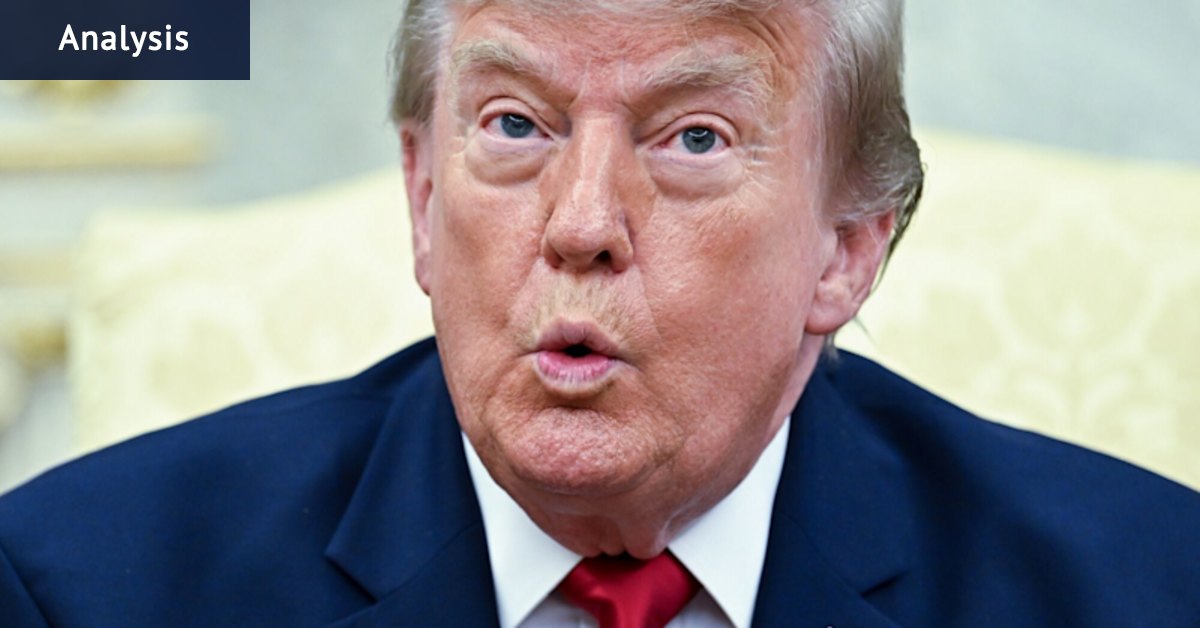
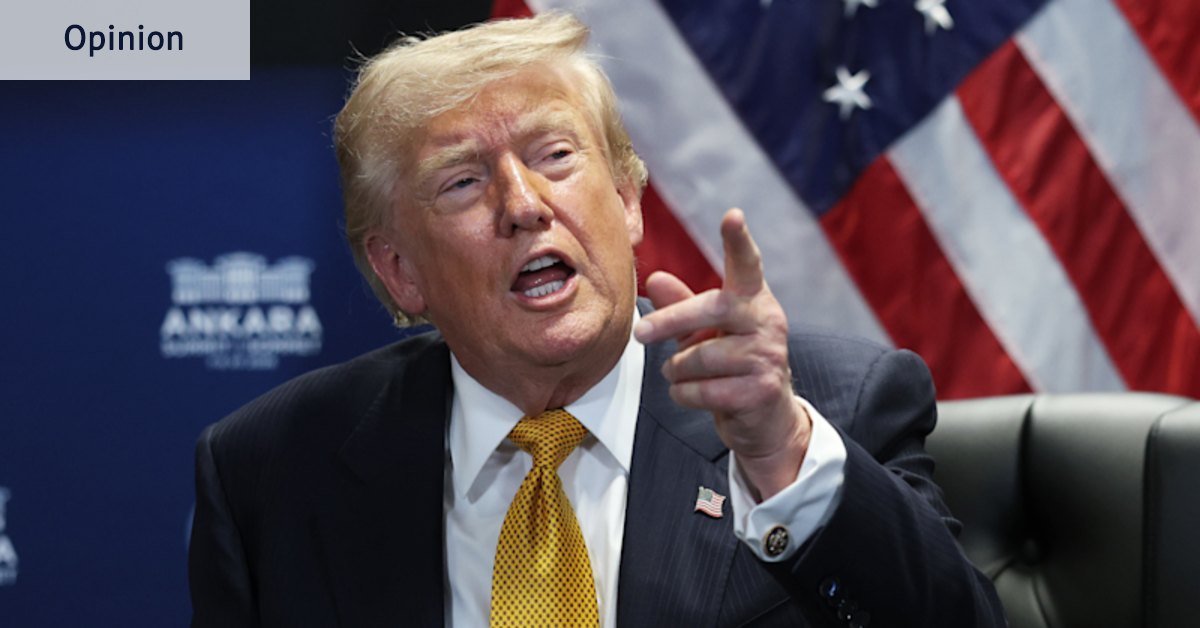
Speaking during a Cabinet meeting, President Trump said Thursday that he thought oil prices would be higher and the stock market would fall further than they have as a result of the war in Iran.
"Frankly, I thought the oil prices would go up more and I thought the stock market would go down more," he said. "Hasn't been nearly as severe as I thought. I think they have confidence in maybe the American president and maybe the people sitting around this table."
Still, the president acknowledged that energy prices could still increase.
"It's not over, so maybe it'll go up a little bit more," he said. "It's all going to come back down to where it was and probably lower."
Trump says U.S. "way ahead of schedule" in Iran as war nears end of timeline he initially set
As the Iran war nears the four-week mark with no clear end in sight, President Trump repeated on Thursday that the U.S. was "well ahead of schedule" in meeting its objectives.
"We estimated it would take approximately four to six weeks to achieve our mission, and we're way ahead of schedule," the president said during a Cabinet meeting. "If you look at what we've done in terms of the destruction of that country, I mean, we're way ahead."
"So we estimated it would take approximately four to six weeks to achieve our mission," he added. "Twenty-six days in, we're extremely, really a lot, ahead of schedule."
U.S. CENTCOM chief says Israel's killing of Iranian naval commander "makes the region safer"
The head of the U.S. military's Central Command said Thursday that Israel's killing of the commander of Iran's Revolutionary Guard naval force "makes the region safer" and signals that the IRGC navy is "on an irreversible decline."
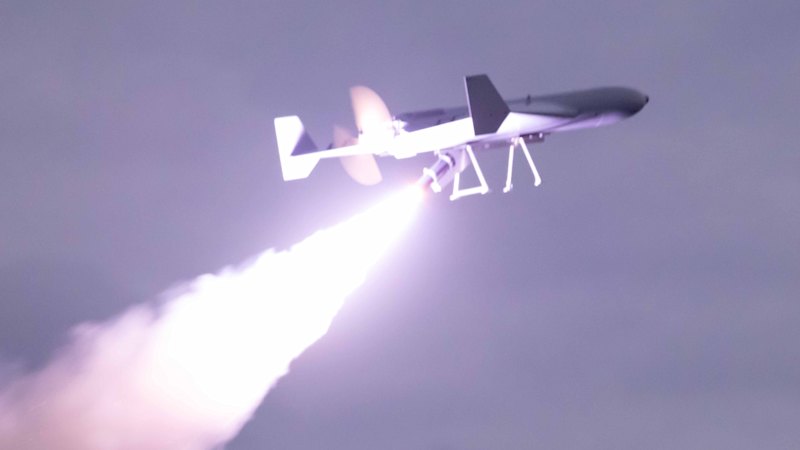
Alireza Tangsiri commanded the IRGC naval forces for eight years, "during which time the IRGC harassed thousands of innocent merchant mariners, attacked hundreds of vessels with one way attack drones and missiles, and killed countless innocent civilians," Cooper said in a post on social media.
"Since the commencement of Operation Epic Fury, 92% of the large ships in the Iranian Navy have been eliminated. As a result, IRGC-N has completely lost their ability to project power in the Middle East or around the world. Now, with the loss of their long-time leader, the IRGC-N is on an irreversible decline," Cooper said, adding that U.S. strikes would continue to hit the Iranian forces calling on all of its members "to immediately abandon their post and return home to avoid further risk of unnecessary injury or death."
Iranian official tells Reuters "no plan for talks appears realistic" with U.S. at this stage
The Reuters news agency cited a senior Iranian official as saying Thursday that the proposal from the Trump administration of terms to end the war "was reviewed in detail on Wednesday night by senior Iranian officials and the representative of Iran's Supreme Leader" but deemed one-sided and unacceptable.
Iran's state media had said Wednesday that the regime rejected the list of points conveyed from Washington via an intermediary, but the unnamed official gave Reuters more detail on Iran's assessment of the proposal.
"In brief, the proposal suggests that Iran would relinquish its ability to defend itself in exchange for a vague plan to lift sanctions," the news agency quoted the official as saying, adding that the it lacked the "minimum requirements" for success.
There is "still no arrangement for negotiations, and no plan for talks appears realistic at this stage," the Iranian told Reuters, though they acknowledged that Turkey and Pakistan were working to "establish common ground between Iran and the United States and reduce differences."
Top EU diplomat says Russia helping Iran "kill Americans," and Iran and Ukraine wars "very much interlinked"
The EU's top diplomat Thursday accused Russia of providing intelligence support to Iran in the Middle East war to "kill Americans," calling on the U.S. to increase pressure on Moscow.
"We see that Russia is helping Iran with intelligence to target Americans, to kill Americans, and Russia is also supporting Iran now with the drones so that they can attack neighboring countries and also U.S. military bases," Kaja Kallas told journalists at a G7 meeting outside Paris.
"These wars are very much interlinked ... If America wants the war in the Middle East to stop, Iran to stop attacking them, they should also put the pressure on Russia so that they are not able to help them in this," she added, referring to Moscow's invasion of Ukraine.
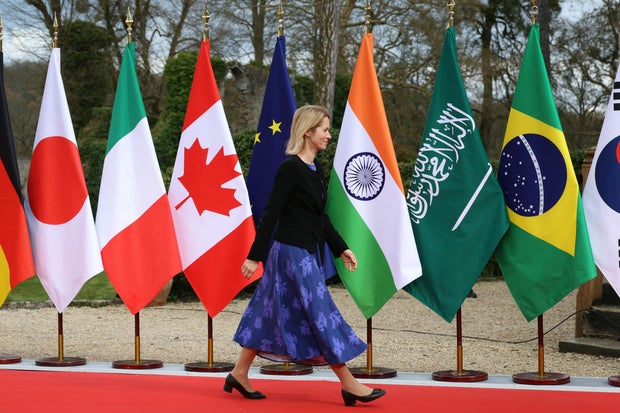 EU High Representative and Vice-President for Foreign Affairs and Security Policy Kaja Kallas arrives for a G7 Foreign Ministers' meeting with partner countries for talks on Russia's war in Ukraine and the Middle East situation at the Vaux-de-Cernay Abbey outside Paris, March 26, 2026.
Alain JOCARD/AFP/Getty
EU High Representative and Vice-President for Foreign Affairs and Security Policy Kaja Kallas arrives for a G7 Foreign Ministers' meeting with partner countries for talks on Russia's war in Ukraine and the Middle East situation at the Vaux-de-Cernay Abbey outside Paris, March 26, 2026.
Alain JOCARD/AFP/Getty
Kallas spoke hours after Britain's defense chief said, citing U.K. intelligence that Russia had not only provided Iran with intelligence, but training before the war began, that he saw the "hidden hand of Putin" behind Iran's war effort.
Multiple sources, including a senior U.S. official with direct knowledge, told CBS News just six days into the war that Russia was providing intelligence to Iran regarding U.S. positions in the Middle East. That information came days after six U.S. service members were killed in an Iranian strike on an installation in Kuwait.
Asked about the reports of Russia sharing intelligence with Iran, Defense Secretary Pete Hegseth told CBS' 60 Minutes that President Trump was "well aware of who's talking to who," and that the "anything that shouldn't be happening, whether it's in public or back-channeled, is being confronted and confronted strongly."
CBS/AFP
UAE says 15 Iranian missiles and 11 drones "dealt with" today, as country's death toll from war hits 10
The United Arab Emirates Ministry of Defense said it had intercepted 15 Iranian missiles and 11 attack drones on Thursday.
One of the interceptions killed two civilians, bringing the overall death toll in the UAE since the U.S. and Israel launched the war on Iran, drawing retaliatory attacks against America's Persian Gulf allies, to 10.
"Since the start of the blatant Iranian attacks, the UAE air defenses have dealt with 372 ballistic missiles, 15 cruise missiles, and 1,826 drones," the ministry said in an update posted online Thursday.
It listed two members of the UAE armed forces, whose deaths were announced previously, among the fatalities in the country, along with eight civilians, two of whom were killed Thursday by debris from an intercepted missile in Abu Dhabi.
U.S. sailor sustains non-combat injured on USS Lincoln aircraft carrier during Iran war operations
A sailor on the USS Abraham Lincoln aircraft carrier, currently deployed in the Arabian Sea in support of U.S. operations against Iran, sustained a non-combat injury and was transferred ashore for medical treatment, the U.S. Navy's Fifth Fleet said Thursday.
The Navy said the sailor was injured during flight operations but their injury was not "combat-related nor life threatening," and they were in stable condition.
"The circumstances of the incident are under investigation," the Navy said.
The Lincoln is one of two U.S. aircraft carriers that were deployed in support of "Operation Epic Fury," with the USS Gerald R. Ford previously positioned in the Red Sea.
That ship was forced to head to port on the Greek island of Crete last week for repairs weeks after its toilet system broke down and about a week after a fire broke out on board. Sailors were treated for smoke inhalation and, according to multiple reports, the damage caused by the fire left hundreds of crew members sleeping on floors.
The cause of the fire on the Ford was not combat-related, the Navy said.
U.S. has committed 50,000 troops to the Iran war, CBS News analysis shows
CBS News Data Team/John Kelly
U.K. defense chief sees "hidden hand of Putin" in Iran's war effort, says Russia provided intel and training
The U.K. Secretary of Defense told BBC News on Thursday that he sees the "hidden hand of Putin" behind Iran's war effort, and he said the Russian autocrat's regime provided not only intelligence, but training to Iranian forces before the war began on Feb. 28.
Secretary John Healey told CBS News' partner network there was an "axis of aggression" between Russia and Iran as he revealed the cooperation between the two nations, citing British intelligence agencies.
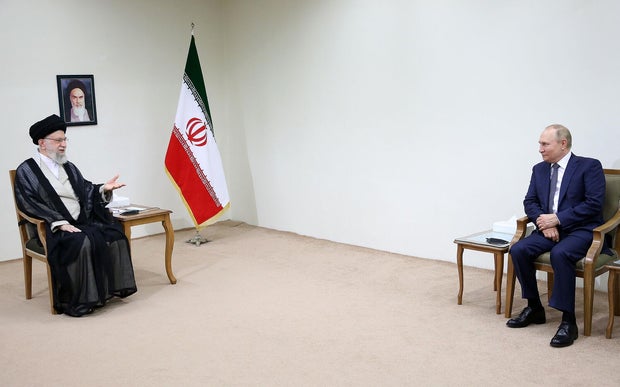 Iranian Supreme Leader Ali Khamenei meets with Russian President Vladimir Putin in Tehran, Iran, in a July 19, 2022 file photo.
Iranian Leader Press Office/Anadolu Agency/Getty
Iranian Supreme Leader Ali Khamenei meets with Russian President Vladimir Putin in Tehran, Iran, in a July 19, 2022 file photo.
Iranian Leader Press Office/Anadolu Agency/Getty
Healey also told the BBC the U.K. was helping to draw other countries together to "create options that are beyond the military" to reopen the Strait of Hormuz to international shipping, but he offered no further detail.
Healey said that to his knowledge, the Trump administration's plans for the war "are being developed," but he said he was unaware of "granular detail at the moment."
He said that the U.S. and Iran were "now having conversations" was something that has "got to be welcome. Because if we are going to bring back shipping to the strait, if we are going to bring back stability to the region, then we have got to have a path to end this conflict."
European development bank warns of global economic impact if oil prices remain at $100 per barrel
Oil at $100 per barrel for a sustained period would dampen global economic growth and boost inflation, the European development bank forecast Thursday as the Middle East war pushes energy prices higher.
The European Bank for Reconstruction and Development — founded to help former Soviet bloc nations embrace free-market economies before extending its reach to the Middle East and Africa — noted that a 10% increase in the average oil price is typically associated with a 0.1 percentage-point decline in global growth.
Since the start of the US-Israel conflict with Iran almost four weeks ago, the prices of benchmark oil contracts have soared around 40-45%, with Brent North Sea crude trading above $105 on Thursday.
"If oil remains above US$100 per barrel for a prolonged period and supply-chain disruptions involving chemicals and metals continue, global growth could be reduced by at least 0.4 percentage points, while inflation could rise by more than 1.5 percentage points," the bank forecast, noting that "economies with high energy import bills, strong trade and remittance links to the Gulf (are) particularly exposed."
"The conflict shows how quickly geopolitical shocks can ripple through energy markets, supply chains and financial conditions," said EBRD chief economist, Beata Javorcik. "The broader fallout from the conflict is likely to strain government budgets already overstretched by high defence spending in central Europe and elevated debt-servicing costs in the southern and eastern Mediterranean and sub-Saharan Africa."
The Organization for Economic Cooperation and Development on Thursday maintained its global growth forecast at 2.9 percent for 2026, even as it cut its outlook for Europe.
Commander of Iran's ground forces says his troops are "prepared for any scenario"
With thousands more U.S. military forces headed toward the Middle East and President Trump warning the next moves he orders against Iran "won't be pretty" if it refuses to capitulate to his demands, the commander of Iran's ground forces vowed Thursday that if America does launch an invasion, it will be met with "unwavering" resistance.
"Every inch of Iranian territory is being protected with the vigilance and readiness of our forces," Brigadier General Ali Jahanshahi told Iranian forces during a visit to one of the country's borders, in a video clip shared by Iranian state media.
"All enemy movements along the borders are closely monitored, and we are prepared for any scenario," Jahanshahi said. "The sons of our nation in the army, relying on God, stand resolute and unwavering on the frontlines of defense, and they will decisively neutralize the enemy."
9 wounded by Iranian missiles in Israel on Thursday
At least nine people were wounded Thursday in Israel as Iran continued firing missiles at the country, though none of the victims were said to be seriously hurt.
Images shared online by the Magen David Adom emergency rescue agency showed fires and damage caused by falling debris from missile interceptions, and possibly new cluster munition impacts, in Tel Aviv, Jerusalem, and at least three other locations around the country.
President Trump warns "strange" Iranian negotiators to "get serious soon, before it is too late"
President Trump warned Iran's regime on Thursday to "get serious soon" and reach a deal to end the war, "before it is too late."
Calling the Iranian officials with whom the U.S. is apparently negotiating "very different and 'strange,'" Mr. Trump said in his early morning post on Truth Social that Tehran was "begging" for a negotiated resolution to the war, but noted their public rejections of a U.S. proposal of terms.
"They are 'begging' us to make a deal, which they should be doing since they have been militarily obliterated, with zero chance of a comeback, and yet they publicly state that they are only 'looking at our proposal.' WRONG!!! They better get serious soon, before it is too late, because once that happens, there is NO TURNING BACK, and it won't be pretty!," Mr. Trump said.
Israeli defense chief says killing of Iranian naval commander behind Strait of Hormuz closure confirmed
Israeli Defense Minister Israel Katz said Thursday that an Israeli airstrike had killed Alireza Tangsiri, commander of the Iranian Revolutionary Guards' navy, confirming earlier reports by Israeli media.
"Last night, in a precise and lethal operation, the IDF eliminated the commander of the Revolutionary Guards' navy, Tangsiri, along with senior officers of the naval command," Katz said in a video statement.
"The man who was directly responsible for the terrorist operation of mining and blocking the Strait of Hormuz to shipping was blown up and eliminated."
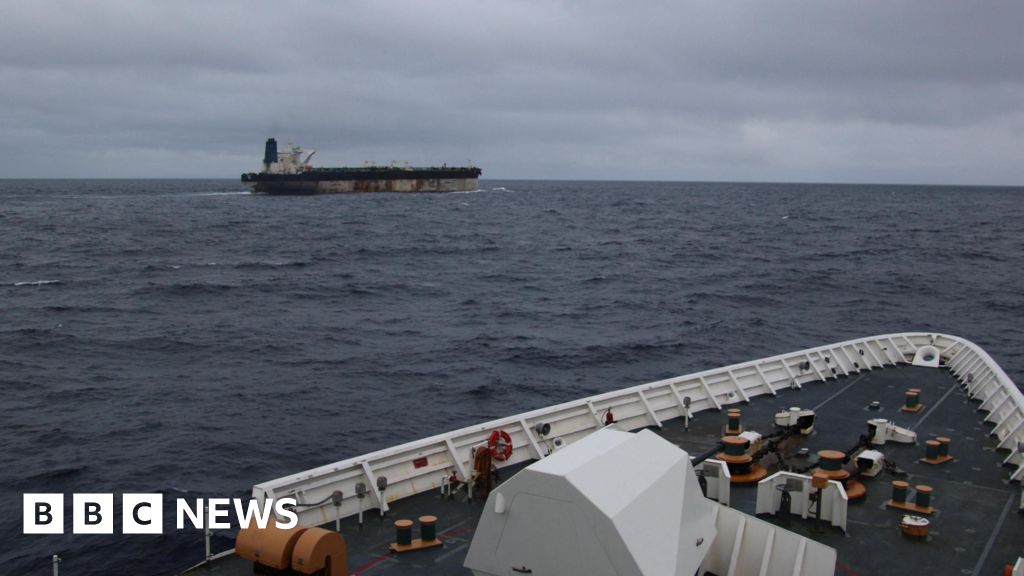
The IRGC is thought to be largely in charge of Iran's war effort, including the ongoing missile and drone attacks on Gulf states and the drone strikes on commercial vessels that have kept the strait unpassable for most international vessels for the past 26 days.
Just two days ago Tangsiri announced that a container ship heading from the Port of Sharjah in the UAE was "turned back for failing to comply with legal protocols and lacking authorization to transit the Strait of Hormuz."
The attacks on ships notably appear to have stopped over the last week, with the most recent confirmed incident reported by the U.K. military's Maritime Trade Operations center coming on March 19.
CBS/AFP
Roller coaster ride for stocks and energy prices continues amid mixed messages from Tehran and D.C.
Asian stocks traded lower and oil prices rose back to around $100 per barrel on Thursday as any deescalation in the Iran war remained deeply uncertain.
U.S. futures were down 0.5%. Tokyo's Nikkei 225 was trading 0.3% lower at 53,603.65. South Korea's Kospi lost 3.2% to 5,460.46. Hong Kong's Hang Seng fell 1.9% to 24,856.43, while the Shanghai Composite index was down 1.1% to 3,889.08.
Australia's S&P/ASX 200 edged down 0.1%, while Taiwan's Taiex was trading 0.3% lower.
Oil prices were up again on Thursday, meanwhile. Brent crude, the international standard, rose 3.3% to $100.41 per barrel. It was below $95 on Wednesday. Benchmark U.S. crude was 3.8% higher at $93.74 a barrel.
With the Strait of Hormuz, a crucial waterway between Iran and Oman where roughly a fifth of the world's oil typically passes through, remaining largely closed after the Iran war began, oil prices have fluctuated, climbing around 40% since the beginning of the war, which is now in its fourth week.
Wall Street stocks had closed higher on Wednesday, with the S&P 500 gaining 0.5%, the Dow Jones Industrial Average up 0.7% and the Nasdaq composite rising 0.8%.
CBS/AP
Israeli soldier killed amid ground operation against Hezbollah in southern Lebanon
An Israeli soldier was killed in fighting in south Lebanon on Thursday, the military said, after the army announced it was conducting ground operations against Iran-backed Hezbollah.
"Staff sergeant Ori Greenberg, aged 21, from Petah Tikva, a soldier of the Reconnaissance unit, Golani Brigade, fell during combat in southern Lebanon," the military said.
In total, three Israeli soldiers have been killed in fighting in south Lebanon since Hezbollah drew the country into war by launching rocket attacks against Israel on March 2 to avenge the killing of Iran's supreme leader.
Israel says Iranian naval commander Alireza Tangsiri killed in targeted strike
Israeli news outlets, including the Times of Israel, cited anonymous sources on Thursday as saying the commander of Iran's Revolutionary Guard Corps naval forces, Commodore Alireza Tangsiri, was killed in the latest targeted assassination by Israeli forces.
The Channel 12 network said Tangsiri was killed along with all other senior members of the IRGC's naval command.
The Israeli military did not immediately confirm the reports, but it has killed dozens of senior Iranian military commanders since the war began on Feb. 28., and Tangsiri was among the most important Iranian figures behind the ongoing closure of the Strait of Hormuz shipping lane.
Just two days ago he announced that a container ship heading from the Port of Sharjah in the UAE was "turned back for failing to comply with legal protocols and lacking authorization to transit the Strait of Hormuz."
The IRGC is thought to be largely in charge of Iran's war effort, including the ongoing missile and drone attacks on Gulf states and the drone strikes on commercial vessels that have kept the strait unpassable for most international vessels for the past 26 days.
Those attacks on ships notably appear to have stopped over the last week, with the most recent confirmed incident reported by the U.K. military's Maritime Trade Operations center coming on March 19.
2 killed in UAE by debris from intercepted Iranian missile
Two people were killed Thursday by debris from an Iranian ballistic missile intercepted near Abu Dhabi, in the UAE, while Saudi Arabia said it shot down at least 18 drones, and Kuwait reported a new missile and drone attack.
Iran has targeted Gulf nations it accuses of serving as launchpads for US strikes, notably with hits on energy sites that have sent markets into a tailspin, threatening lasting damage to the global economy.
CBS/AFP
Asian nations heavily reliant on Gulf oil and gas forced to roll out emergency economic measures
South Korea will roll out a $17 billion "wartime" supplementary budget and expand fuel tax cuts as the war in Iran pushes up energy prices, the government said Thursday.
"The government will draw up a supplementary budget worth 25 trillion won next month — funded by excess tax revenue — in response to the prolonged Middle East conflict," the government said in a statement.
South Korea imports roughly 70% of its crude oil from the Gulf region, so, like many of its Asian neighbors, it is impacted by not only the rise in global energy prices due to the closure of the Strait of Hormuz, but directly by the shorter-term halt to supplies.
Japan said it had started to release another part of its strategic oil reserves Thursday as it looked to temper the impact on the resource-poor nation from the surge in prices caused by the war. Japan is the fifth-biggest importer of oil - more than 90% of which comes from the Middle East.
A ship carrying more than 700,000 barrels of Russian crude oil arrived in the Philippines, a source told AFP on Thursday, days after the Southeast Asian country declared a national energy emergency over the Iran war.
CBS/AFP
Trump says he doesn't want to call Iran conflict a "war" because of need for congressional approval
President Trump said late Wednesday he's avoiding describing the military conflict in Iran as a "war" because of concerns around the fact that Congress hasn't authorized a war.
"I won't use the word 'war' because they say, if you use the word war, that's maybe not a good thing to do," the president said at an event for House Republicans' fundraising arm. "They don't like the word 'war,' because you're supposed to get approval, so I'll use the word military operation, which is really what it is."
Mr. Trump has still occasionally called it a war, including during Wednesday's speech, when he said, "The war essentially ended a few days after we went in."
Trump insists Iran is negotiating, "but they're afraid to say it"
President Trump insisted Wednesday that Iran was taking part in peace talks, suggesting Tehran's denials were because Iranian negotiators fear being killed by their own side.
"They are negotiating, by the way, and they want to make a deal so badly. But they're afraid to say it, because they figure they'll be killed by their own people," Mr. Trump told a dinner for Republican members of Congress.
CENTCOM commander Adm. Brad Cooper says Operation Epic Fury is "on plan or ahead of plan"
CENTCOM commander Adm. Brad Cooper said in a video statement Wednesday that the military operation in Iran remains "on plan or ahead of plan."
Cooper said the U.S. has struck more than 10,000 military targets as of Wednesday, and that Israel has struck "thousands more." Cooper also claimed the U.S. has destroyed "92% of the Iranian navy's largest vessels."
"My operational assessment is they have now lost the ability to meaningfully project naval power and influence around the region and around the world," he said.
Cooper said the U.S. has damaged or destroyed more than two-thirds of Iran's missiles, drone and naval production facilities and shipyards.
Leavitt says talks with Iran are continuing, despite Tehran's reported rejection
Leavitt said the United States and Iran are still engaged in peace talks, despite Iranian state media reporting Tehran had rejected Washington's plan to end the war.
"Talks continue. They are productive," Leavitt said when asked about the Iranian report, adding that there were "elements of truth" to media reports on the details of a 15-point U.S. plan setting out demands on Tehran.
Trump to "unleash hell" if Iran doesn't make deal, White House says
President Trump is ready to "unleash hell" on Iran if Tehran does not accept a deal to end the war in the Middle East, the White House warned on Wednesday.
"If Iran fails to accept the reality of the current moment, if they fail to understand that they have been defeated militarily and will continue to be, President Trump will ensure they are hit harder than they have ever been hit before," press secretary Karoline Leavitt said in a briefing.
"President Trump does not bluff and he is prepared to unleash hell," Leavitt said. "Iran should not miscalculate again."