3 months ago
34
3 months ago
34
Jeremy Warner
January 30, 2026 — 5:10pm
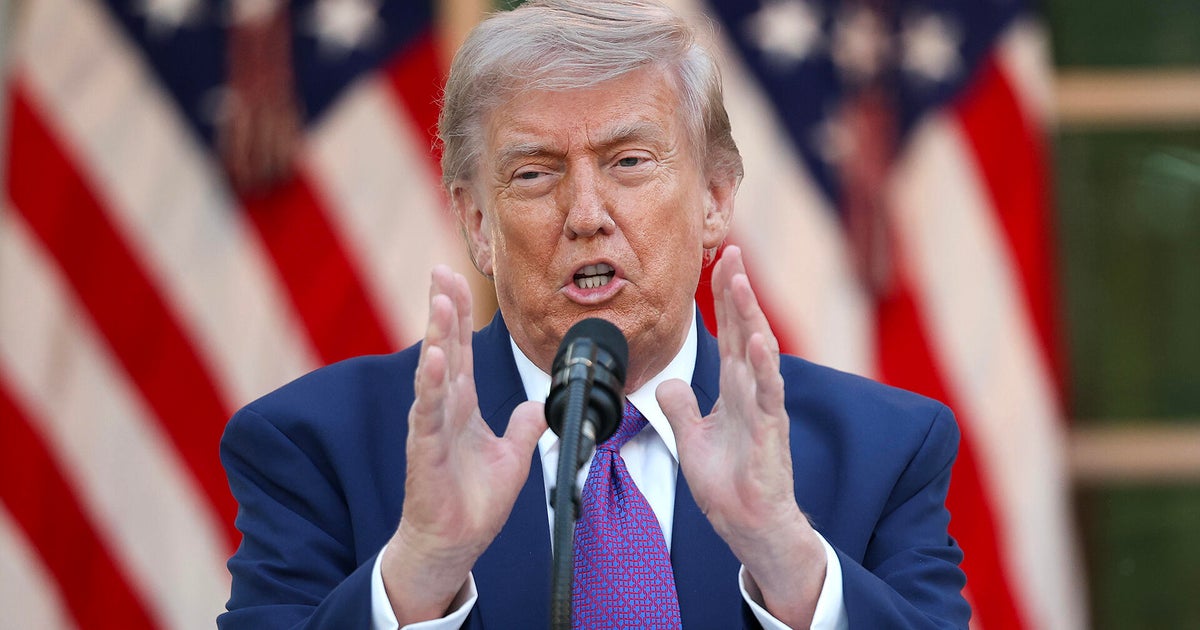
Donald Trump’s America needs to look long and hard at the mote in its own eye before mocking Europe, Britain and much of the rest of the world over their collective inability to get anything done.
US triumphalism was on full and lurid display at this year’s alpine gathering of wealth and power for the World Economic Forum annual meeting in Davos.
The “spirit of dialogue” intended by organisers was completely drowned out by the Trump roadshow, which, like an episode of The Traitors, kept everyone guessing on the US president’s Greenland threats right up to the last moment, before he rowed back from the brink.
Whether this was a defeat or a victory for Trump matters little; it sucked the oxygen clean out of virtually everything else.
Yet it was by no means the only story. You don’t need to dig deep for others bubbling away beneath the main event. An increasingly vulnerable US economy is just one of them.
For all the bombast and grandstanding, things are not as they should be in this seemingly unassailable behemoth. But don’t take it from me; this is not just the wishful thinking of an old and dying liberal order.
We also heard it from the billionaire class itself. From none other than Larry Fink, in fact, chief executive of BlackRock, one of the world’s largest money managers, and co-chair this year of the WEF.
More wealth has been created since the fall of the Berlin Wall than at any other time in human history, he said in opening remarks. But it had not translated into shared prosperity.
“In advanced economies, that wealth has accrued to a far narrower share of people than any healthy society can ultimately sustain,” he said.
Nowhere is this more apparent than in the US, where there has been dramatic increases in wealth and income inequalities since the 1980s.
There is nothing wrong with inequality as such; it’s always been part of the human condition, and by creating incentives for betterment, it is a key driver of economic progress.
Yet you can always have too much of a good thing, and the US is now very definitely in that place. According to data collated by the US Federal Reserve, the top 1 per cent of Americans now account for 31 per cent of household wealth, and the bottom 50 per cent just 2.5 per cent.
Just as concerning is increased reliance on high earners for domestic consumption, which is far and away the biggest element of US GDP. Here, the numbers are in some respects even more alarming: the top 10 per cent of earners account for nearly half of US consumption, up from 35 per cent in the mid-1990s.
Similarly, the bottom 80 per cent has gone from nearly half of consumption to little more than 35 per cent.
In summary, the great dynamo of the US economy has become dangerously dependent for its sustenance on a relatively small group of high spenders.
This makes it acutely vulnerable not just to social and political disharmony, but also to any significant setback in US stock markets. The consequent destruction of wealth would act like a lightning rod on consumption, the collapse of which would send the economy into a tailspin.
Early signs are that the artificial intelligence revolution is further widening wealth inequalities. The gains are going overwhelmingly to its promoters and financial enablers than to the common man.
“The open question is, what happens to everyone else?” said Fink. “If AI does to white-collar workers what globalisation did to blue-collar workers, we need to confront that today, directly.”
Not everyone holds to this view. True believers such as Tesla’s Elon Musk think that AI, when combined with robotics, will put the US and world economies on a path of “abundance for all”.
The new technologies promise “explosive” growth in the economy, “an expansion which is truly beyond all precedent”, he told Davos attendees.
The history of economically transformative technology suggests strongly that he is broadly correct, but only in the long run.
Almost invariably, there is a long period of socially destabilising transition – typically involving a series of economic busts – before arrival in the sunlit uplands of more widely based advancement for all.
Nor is it just the US economy’s growing dependence on a super elite of high spenders and investors that makes it so acutely vulnerable to upset. The state of the public finances is also close to catastrophic.
Granted, this is not a uniquely American problem. Britain and much of the rest of Europe are in much the same boat. Throughout the Western world, nations are in a state of fiscal ruin.
But it is perhaps worse in the US, not just because the nominal size of the debt is so much larger, but because the president appears entirely oblivious to the problem.
He wants lower interest rates and he is seemingly prepared to impinge cherished Federal Reserve independence to get them. Yet, there is no sign at all of the White House addressing the yawning structural mismatch between federal receipts and outlays, which was still at 6 per cent of GDP at the last count.
Running deficits of that size when the economy is growing at an annualised rate of 4.4 per cent is virtually asking for a fiscal crisis, but there is seemingly no plan for reducing the shortfall beyond leaning on the Fed to reduce debt servicing costs by cutting interest rates.
The great dynamo of the US economy has become dangerously dependent for its sustenance on a relatively small group of high spenders.
The nonpartisan Congressional Budget Office forecasts that if nothing is done, the size of the national debt will swell from about 100 per cent of GDP today to 156 per cent in 30 years’ time.
Americans cannot forever rely on the goodwill of foreign investors to keep funding these deficits, especially if Trump engages in the sort of financial repression (artificially depressing interest rates) anticipated by financial markets.
Trump and his entourage have convinced themselves that the productivity-enhancing powers of AI will make all these problems disappear. If Musk is right about an era of “abundance” to come, then sure, many of today’s concerns will indeed eventually be seen as groundless.
But that’s quite a bet on the wheel of fortune, and in any case, the journey to the promised land is very unlikely to be smooth or swift.
Fact-checkers were out in force for Trump’s hour-long-plus stream of consciousness in Davos last week, but you didn’t need much of a grasp of economics to know that many of the “achievements” he listed for his first year in office were a load of puffed-up nonsense.
Boosted primarily by fiscal incontinence and rampant investment in AI, the US economy is indeed running “hot”, but many Americans don’t feel the resulting boom in their own pockets.
Call it economic rebirth if you want; for others, it feels more like a new dark age of carpetbaggers and scallywags.
The Telegraph, London
The Business Briefing newsletter delivers major stories, exclusive coverage and expert opinion. Sign up to get it every weekday morning.