3 months ago
25
3 months ago
25
Council rates will not increase by more than 2.75 per cent next financial year under the state government’s new cap, further tightening the screws on municipal budgets as costs mount.
Local Government Minister Nick Staikos’ decision to cap the increase at that figure, gazetted on Monday, was based on the forecast consumer price index and was spruiked as a measure to ease cost-of-living pressures.
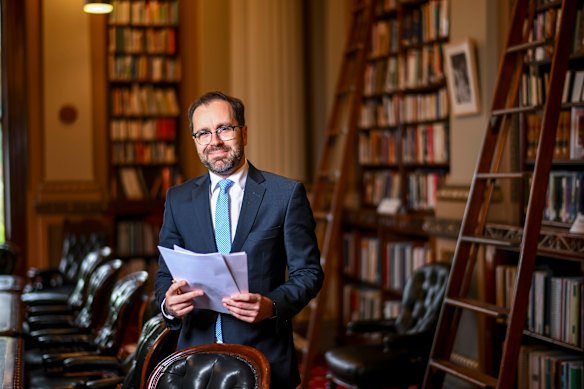
Local Government Minister Nick Staikos.Credit: Eddie Jim
However, the Municipal Association of Victoria (MAV) criticised the reduction from the 3 per cent cap this financial year, arguing it still did not accurately reflect rising council expenses.
The peak body for Victorian councils wants the Allan government to adopt a specialised local government cost index, as Victoria is the only state without one.
“Using Treasury forecasts of CPI growth to inform the rate cap simply doesn’t work,” said MAV president Jennifer Anderson.
“It’s not a true reflection of the increased costs our sector faces in construction, materials and services.”
Inflation also greatly exceeded forecasts after the pandemic hit, meaning the main source of council revenue, rates, has failed to keep up with broader price rises.
The MAV has warned council infrastructure like roads will deteriorate, and essential services like kindergartens will be shuttered unless rate capping is reformed.
An unexpected inflation spike in November has also called into question CPI forecasts for the coming year.
Loading
However, a state government press release on Tuesday said the new rate cap eased cost-of-living pressures on families and still allowed councils to provide adequate services.
“The rates cap has made a real difference to household budgets,” Staikos said.
Councils have also received revised guidelines for waste management charges, clarifying that the rates should not exceed the costs incurred by council for kerbside services.
Staikos said this would make council waste charges more accurate and consistent across Victoria.
Tanya Tescher, secretary of the Victorian Ratepayers and Residents Association, worried councils would likely raise rates to the maximum allowed under the 2.75 per cent cap.
Rate caps in Victoria since they were introduced in 2016
- 2016-2017: 2.5 per cent
- 2017-2018: 2 per cent
- 2018-2019: 2.25 per cent
- 2019-2020: 2.5 per cent
- 2020-2021: 2 per cent
- 2021-2022: 1.5 per cent
- 2022-2023: 1.75 per cent
- 2023-2024: 3.5 per cent
- 2024-2025: 2.75 per cent
- 2025-2026: 3 per cent
- 2025-2026: 2.75 per cent – (announced on December 23, 2025)
She feared many would then seek extra revenue via other higher charges, such as parking fees.
“We would always like to see low increases to rates, especially at this time when people are doing it hard with the cost of living,” she said.
“However, we also understand that councils have to provide services for their ratepayers. It is especially important that councils do not waste money on extravagant items, which we have seen done in some council areas.”
Tescher pointed to Bayside Council as evidence it was possible to freeze rates.
Start the day with a summary of the day’s most important and interesting stories, analysis and insights. Sign up for our Morning Edition newsletter.
Most Viewed in National
Loading