3 months ago
27
3 months ago
27
There is no legal difference between Russian President Vladimir Putin’s attack on Ukraine and US President Donald Trump’s attack on Venezuela. Both are acts of aggression, the “supreme crime” according to the judgment at Nuremberg, because leaders who start wars are responsible for all the deaths and destruction that result. The UN Charter of 1945 proclaims its purpose of saving succeeding generations from the scourge of war and Article 2(4) lays down the fundamental rule that a UN member must never invade another except in self-defence.
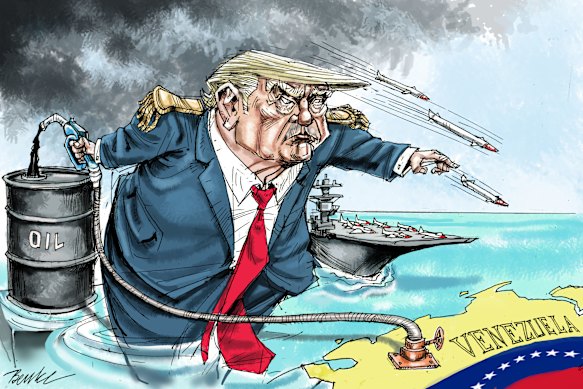
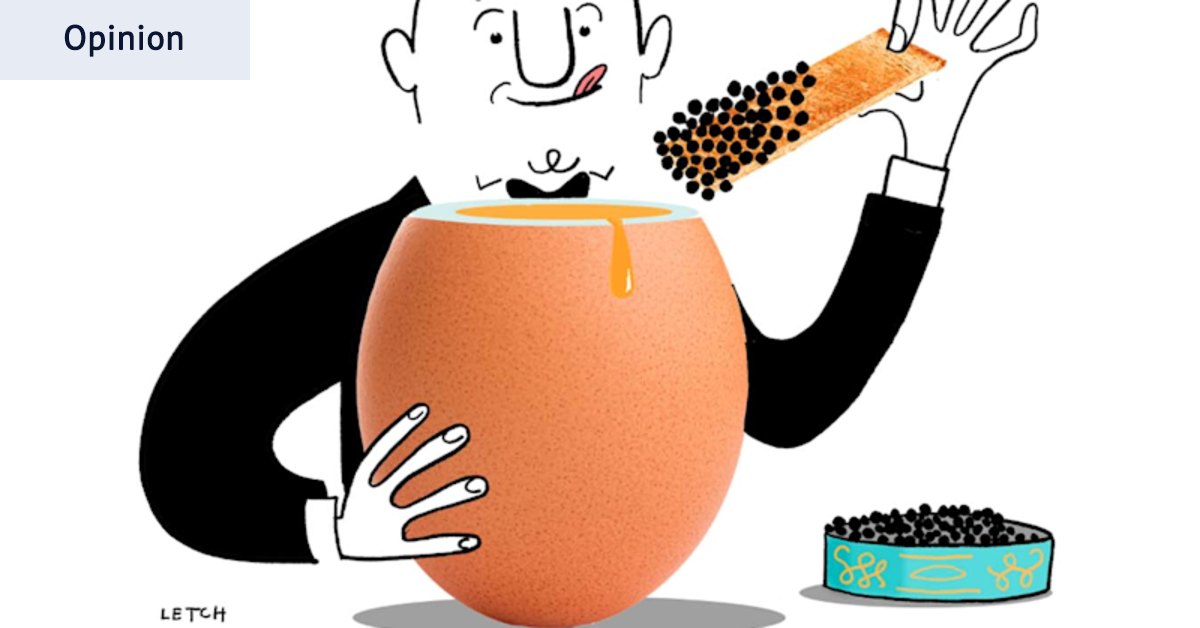
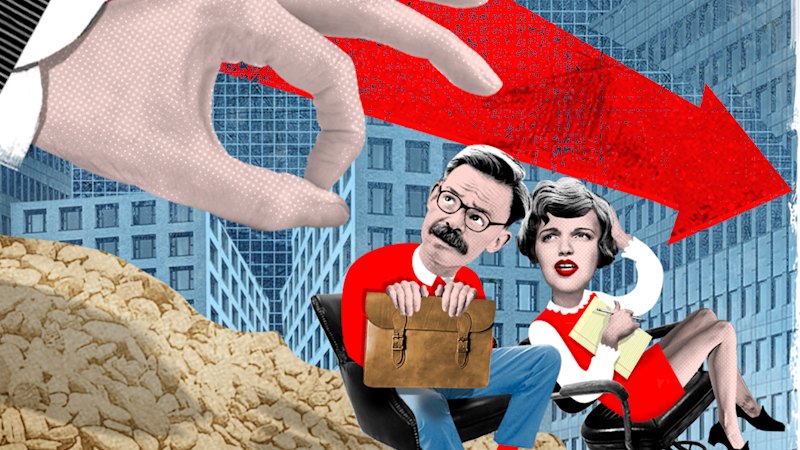
Illustration by Joe Benke. Credit:
It is absurd to think that Venezuela was about to attack the US, last Friday or in the foreseeable future. So Trump has no legitimate defence. But like Putin, he has nuclear weapons and a veto on any discomforting action (such as a Security Council condemnation) that the UN might take.
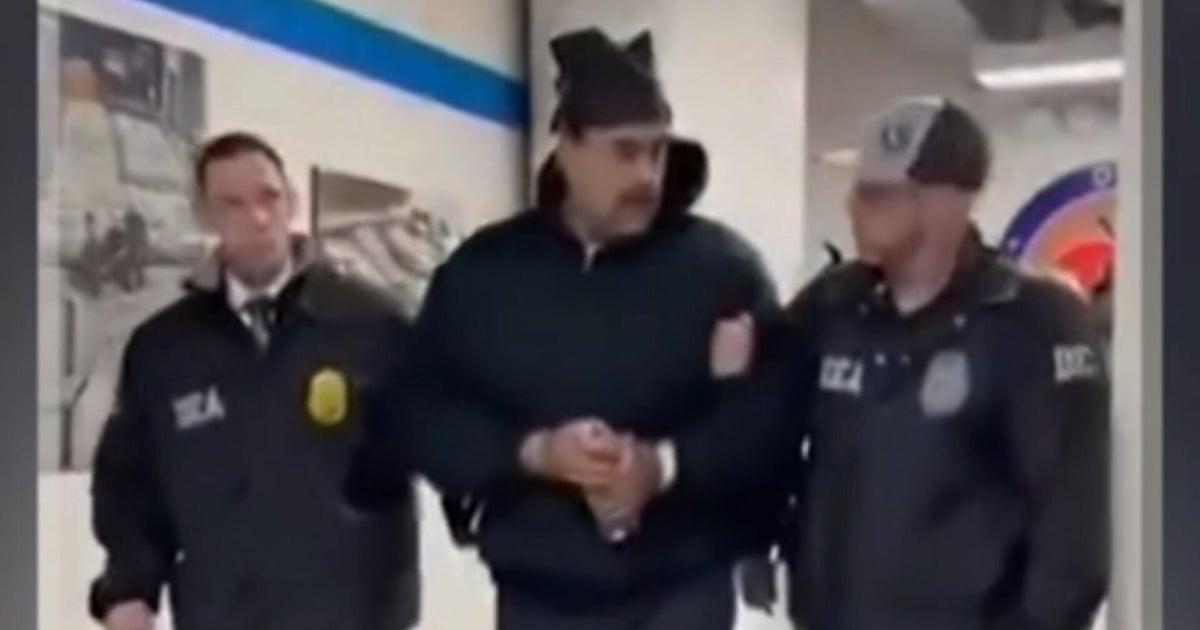
In short, the indictment that awaited the Venezuelan President Nicolas Maduro and his wife in New York conferred no retrospective extraterritorial authority to arrest or imprison them or to occupy or annex their nation. No treaty permitted this and no international court approved it. What occurred was not a “police action” or law enforcement procedure but a unilateral use of armed force to coerce the representatives of a sovereign state.
There can be no quibble about the purpose of the US invasion, namely to change the government regime. Trump has admitted as much: the US will now “run the country” irrespective of the interests or wishes of its people. Its economy will be organised by large US oil companies empowered to seize infrastructure and profits denied them by nationalisation under past president Hugo Chavez. This is a reversal of the requirement of international law by which the US should compensate Venezuelans for the consequences of its illegal invasion, for example the families of the 40 or so civilians said to have been killed, the destruction of their property and so forth. The planning for the oil transfer must have taken some time, which suggests the takeover of the nation’s oil reserves was one reason for the invasion.
But it was preceded by several months in which suspected drug smugglers were extrajudicially executed – two of them, notoriously, while clinging to the wreckage of their bombed boat. The invasion and the unlawful arrest of Maduro and his wife was the culmination of unlawful conduct by the US forces under the command of Trump and his war secretary, Pete Hegseth.
Loading
Australia and Britain, among other law-respecting countries, are party to arrangements under which their armed services may have to fight under the command of or in partnership with US forces led by these men who are oblivious to the rules of, or to their duties under, international law. It will certainly not be comfortable for our own armed forces if they are called upon to protect Taiwan under US command.
That is more likely than ever as a result of Trump’s invasion of Venezuela: if he can get away with it, why not Chinese President Xi Jinping, who has a genuine historical claim, albeit flawed, to Taiwan? Trump’s unlawful but unpunished attack will serve him as a useful precedent and it is obvious that Trump, the great appeaser of Russia over its attack on Ukraine, will not fight to save democracy anywhere else.
As for what might be termed a “non-lethal decapitation strike” on the Maduros, this sounds a warning to all world leaders who are minded to antagonise America. In law, they are accorded “head of state immunity” or similar from personal attack. Even during WWII, captains and kings were not threatened with assassination: US president Theodore Roosevelt once allowed an attack on an admiral of the Japanese fleet as payback for Pearl Harbour and British prime minister Winston Churchill approved an unsuccessful commando raid on German field marshall Erwin Rommel, but the general reluctance to target leaders was justified by fear of retaliation. Trump himself ended that convenient arrangement when he threatened the Supreme Leader of Iran, Ayatollah Khomeini – “we know where he lives” but it was “not yet time to assassinate him”.
The fate of former and deposed Panamanian leader General Manuel Noriega (who was at least guilty of drug-trafficking) now threatens world leaders who fall out with Trump, no matter how democratically elected or how popular they may be with their own people. But overall, the attack on Venezuela following the attack on Ukraine demonstrates that we live in that age described by the ancient historian Thucydides where “the strong do what they can and the weak suffer what they must”. There may be few regrets for Maduro, a gangster guilty according to a recent UN Human Rights Council report of many abuses, although Trump had pulled the US out of the council before this report.
International law has one last chance. Although the US is not a party to the International Criminal Court, Venezuela is and any war crime committed on its territory may be subject to prosecution. For this reason, Putin is being prosecuted for kidnapping children from Ukraine, and Trump could be indicted for kidnapping the Maduros or (more simply) for killing civilians in the illegal bombing of Caracas.
Ironically, Maduro himself announced several years ago that Venezuela would defy the West by withdrawing from the ICC but he never got around to doing so. It now remains his only chance.
Geoffrey Robertson KC was president of the UN War Crimes Court in Sierra Leone and is author of World of War Crimes published by Penguin this month.
Most Viewed in National
Loading