3 months ago
18
3 months ago
18
Chelsea Blissett was about 14 years old when the voices in her head started up.
They were quiet at first, but then the intrusive thoughts became bolder, more pervasive and harder to shake.
“Should you really eat that? Have you burned enough today?” they’d murmur in the background, judging if a meal was worth consuming.
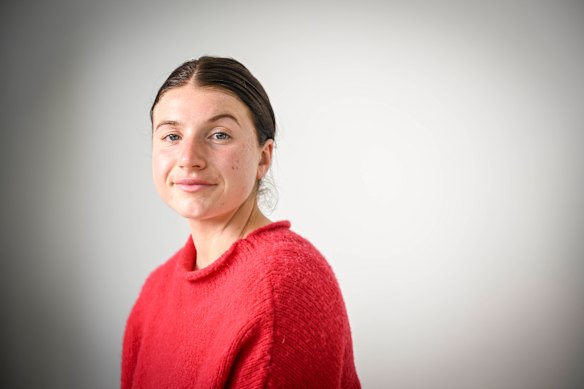
A-League player Chelsea Blissett. Credit: Edie Jim
The 25-year-old Melbourne Victory player says the thoughts festered and eventually amplified as her brain transformed into a “calorie calculator”.
“I was quite young to start thinking about food as good or bad,” she told this masthead.
“I have memories of feeling unsafe around food and unhappy in the way that I looked and my body image and conversation around food as a female.”
Two reports published within a week of each other both detailed the prevalence of disordered eating and body-shaming in Australian sport. Sport Integrity Australia found body-shaming was the most prevalent behaviour witnessed and experienced by athletes in sport, while Professional Footballers Australia found more than two-thirds of A-League Women players experienced psychological distress last season, including disordered eating.
The issue isn’t new. Matildas player Katrina Gorry, cricketer Meg Lanning and former tennis star Jelena Dokic have all spoken out about their experiences with disordered eating while playing high-level sport. Most recently, Matildas star Mary Fowler described her own disordered eating and body dysmorphia in her book Bloom.
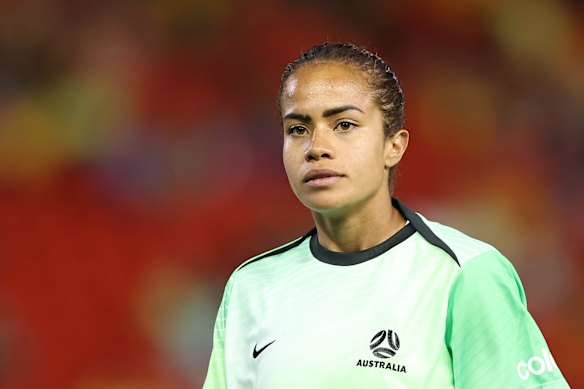
Australian soccer star Mary Fowler.Credit: Getty Images
For Blissett, who initially disclosed her experience with disordered eating via a short film in 2023, the report’s findings were simultaneously heartbreaking and alarming.
“We are playing at the highest level that we can play in our country and yet a lot of our top athletes are experiencing such psychological distress, whether it be eating disorders, anxiety or anything else,” she said.
“A lot has to contribute with the way that our league is run, I think the lack of professionalism in terms of full-time contracts can cause a lot of stress for athletes.”
The PFA report found that 67 per cent of A-League Women’s players reported sport-related psychological distress. In the past year, 41 per cent experienced disordered eating.
Jennifer Hamer, an elite endurance runner in Britain before an eating disorder forced her early retirement, later earned her PhD in eating disorder prevention in athletes.
“We definitely know a lot of anxiety, depression and various mental health issues occur alongside disordered eating,” Hamer said. “It does reaffirm to me that we are looking at environmental issues and a lack of systems in place within that environment to really nurture athletes as we need because it’s not just disordered eating that’s occurring.”
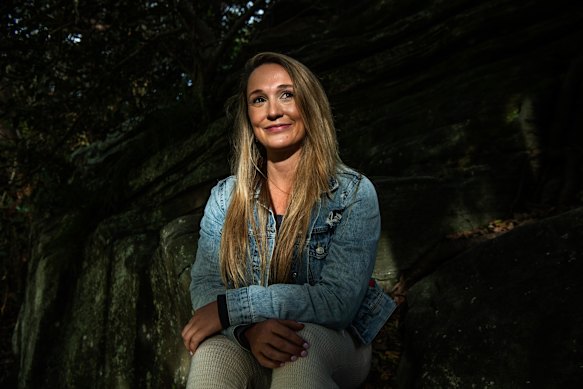
Dr Jennifer Hamer, a former endurance runner, now works with athletes to prevent eating disorders.Credit: Steven Siewert
Blissett said the stress of performing like a full-time athlete, while working multiple jobs, amplified the problems faced by A-League players.
“I think the financial situation, working two to three different jobs, plus training as a full-time athlete, of course it’s going to create psychological distress on a lot of us,” she says.
“It’s hard to see other leagues growing in leaps and bounds, and our league is still in a stalemate.”
Blissett, who is in recovery for bulimia and anorexia, noted there were elements of high-performance sport that can make female athletes vulnerable to developing eating disorders. Hamer agreed.
“Athletes are driven; they are high achievers. They tend to be perfectionists, they’re very dedicated, motivated ... those traits are the very same ones, as research shows us, that people who develop eating disorders obtain,” she said.
The gruelling nature of sport means sometimes unhealthy eating habits or weight loss can be easily masked and accidentally glorified. It’s something Blissett knows well.
Loading
“As high-performing athletes, we do have to have a type of discipline and self-restraint and respect for our bodies and nutrition,” she said.
“Honestly, I’ve had times where I might have lost some weight … and instead of it being an alarming thing, I get rewarded from it.”
Blissett’s eating disorder worsened when she was 18 and initially afraid to tell her club at the time, Melbourne City. But club officials noticed her struggling with meals during an away trip and put her in touch with the PFA and a psychologist.
Blissett is eternally grateful for the intervention. She says she was met with kindness, grace and support from her coach, the PFA and club staff, but she says this is not every athlete’s experience.
She is studying nutrition and dietetics at university and wants to help reduce the stigma athletes feel about mental health and eating disorders.
Danni Rowlands, director of education initiatives at the Butterfly Foundation, a leading charity supporting Australians affected by eating disorders, says the recent data shows those in sport are talking about the issue more than ever.
“We’re starting to have more athletes actually coming out and talking about their experience in their body, in their sport, whether that be an experience of disordered eating or an eating disorder,” Rowlands said. “There’s nothing more powerful than hearing it directly from someone.”
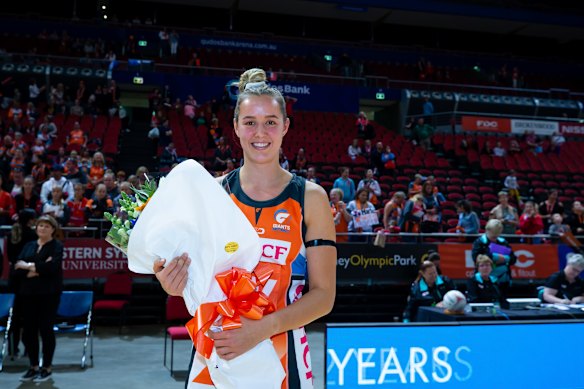
Teigan O’Shannassy during her debut for the Giants in 2019.Credit: Narelle Spangher
Still, she said there was always room for progress, particularly in language used by spectators, coaches and judges. Or in ensuring a safe culture at every level of sport, including early pathways to the elite level. And in ensuring this takes place across all sports, including in football, which may not usually be considered a high-risk environment for disordered eating.
“It’s not just the aesthetic sports, it’s not just the sports that you would typically think would be struggling. It’s across all, which we’ve just seen with football,” Rowlands said.
Netball player Teigan O’Shannassy has always been obsessed with food. The 26-year-old NSW Swifts defender recalls fond memories of home-cooked Sunday meals and sun-soaked afternoons in her family’s vegetable garden as a child.
However, when O’Shannassy entered the elite netball pathway as a teenager, her love of healthy eating started to morph. Self-conscious of her “lanky, tall frame”, she started comparing her body to other players and found herself focusing more on calories.
During her time with the Giants netball team, the then 18-year-old chatted with a team dietician and disclosed that she had not had a period in more than a year.
“Growing up, we didn’t really have chats about menstrual cycles and how important that is and I guess the risks of not getting it,” O’Shannassy said.
“We looked at what was going on in my life and realised I was quite controlled with my eating, very restrictive and just very obsessed with being healthy.”
Throughout her early netball career, O’Shannassy was plagued with injuries, including bone stress, glandular fever and chronic fatigue. As her eating disorder worsened, the netball player found herself stuck in an unrelenting and unforgiving cycle.
“I’d restrict myself; I’d come back [to play]; I’d be under-fuelled, so I’d be weaker and I’d get injured again,” she said.
“I ended up losing my contract with the Giants because they basically said to me ‘we can’t vouch for a player that hasn’t played’.”
Loading
O’Shannassy joined the NSW Swifts in 2021, which she describes as pivotal moment in her recovery. She saw a new psychologist and started studying nutrition, which challenged her warped perception of what “good and bad” foods were.
Suddenly, O’Shannassy found herself wanting to socialise more; she was putting on muscle in the gym and she was in a better mood. Now a qualified nutritionist with her own website and business Tossed Together, the 26-year-old wants to teach kids who love sport that food is fuel and everyone’s body is different.
She also wants to see greater education and resources in the sports space around nutrition and mental health.
Similar to Blissett, the voices in O’Shannassy’s head are still there, but she doesn’t let them control her life any more.
“Unfortunately, eating disorders are so common and I think the more we talk about it, the more we’ll be able to work on it,” she said.
Butterfly National Helpline 1800 ED HOPE (1800 33 4673) www.butterfly.org.au
News, results and expert analysis from the weekend of sport are sent every Monday. Sign up for our Sport newsletter.