3 months ago
27
3 months ago
27
The frigid forests in the Polish borderlands were where Dasia Black-Gutman discovered fear. She had fled for the dense tree cover flanking her home in Galicia, an area in Ukrainian hands, as Nazi SS officers stormed the town, tasked with killing the Jews in her village.
Black-Gutman, three years old in the winter of 1941, rushed into the forest to avoid being seen. Hidden behind large tree trunks and quiet as a stone, a new feeling poured through her, commanding her to be still.
“Learning to be very quiet came very early in my life – to see them pass through the town, I think that’s where I acquired fear,” Black-Gutman, now 87 and living in Sydney’s eastern suburbs, said.
“Children were in fear, and they caught the feelings of their parents.”
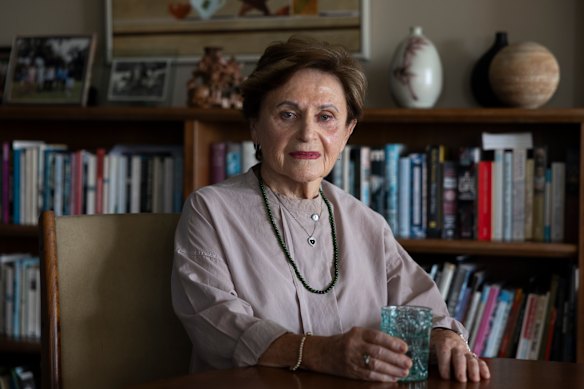
Black-Gutman has happier memories, including learning Hebrew from her father and watching frost fill the double-glazed windows in her home. She was born in February 1938, 16 months before the outbreak of war in Poland, to a father who taught Jewish studies at a prestigious high school in Rzeszów. She began her education while Nazi forces, aided by the sympathetic Ukrainian militia, forced her family from town to town, desperately seeking survival from the brutality under Adolf Hitler.
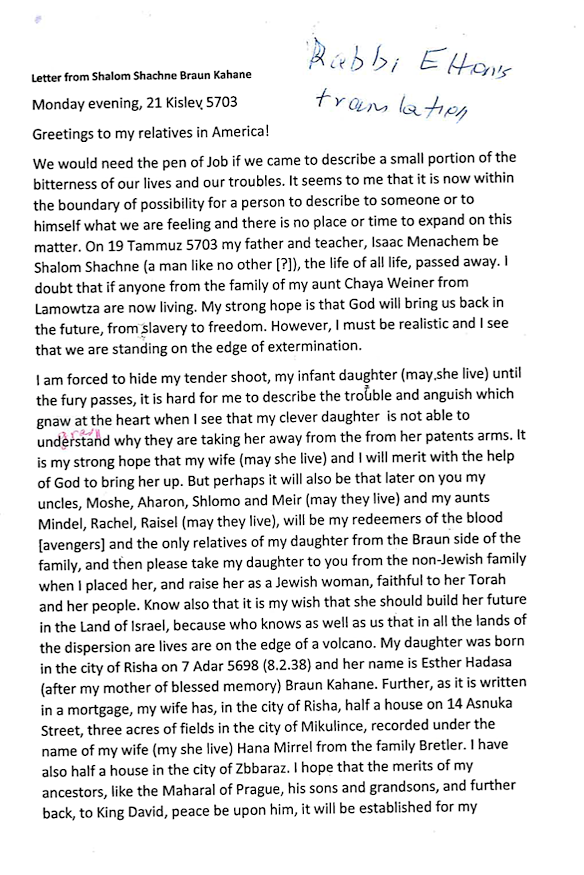
Black-Gutman’s parents, Shulem and Chanah, gave her away to a Catholic woman in November 1942, who was hiding her Jewish husband and two young boys in the then-Polish town of Tarnopol. In a letter written on November 30, 1942, Shulem told American relatives he was “standing on the edge of extermination”, and that it was “hard to describe the trouble and anguish” he felt separating from his daughter, unable to comprehend why she was being taken.
Dasia, four years old when she was given away, would never see her parents again. They were murdered sometime before June 1943. Shulem was 34 and Chanah was 28.
“The first thing I did was look around to find my little white ball, which I couldn’t find,” recalled Black-Gutman, five years old when she learnt she was an orphan.
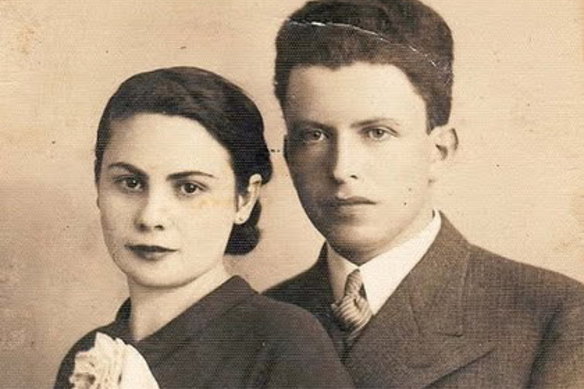
“I was a little girl, and there was nobody to take care of me, so perhaps I might stop existing … I learnt that if I fell down, nobody would pick me up.”
Thousands of kilometres east, Alex Kleytman shivered through freezing Siberian winters during the Holocaust. Kleytman, born in Odessa, Ukraine, and his family were sent by his father to the vast Russian province after the Nazi invasion. The train was bombed on the way to Siberia, killing several passengers and leaving Kleytman with a profound gratitude for being alive.
The family was put in small quarters and Kleytman endured overcrowding at school, forcing him to sit in a fashion that caused permanent deformities to his body. Kleytman became separated from his family in Siberia, as he contracted a serious illness that put him in hospital.
Kleytman stayed in the Soviet Union for decades after the Holocaust, starting a family in his native Ukraine before moving to Sydney in 1992. He was 87 when he was killed in the Bondi terror attack last month, shot while protecting his wife, Larisa, at the celebration of Hanukkah.
Daughter Sabina Kleitman said her father rarely recounted the Holocaust with his children, offering only a handful of stories to explain differences in his body and his life in Siberia.
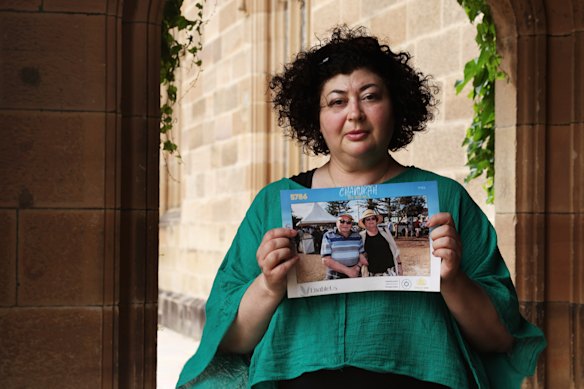
“It wasn’t his favourite way of being with us,” Kleitman said.
“He recalled a lot of times how cold they felt, how they were hiding under chairs, under desks, just to feel safe … he also remembered lots of snow, and how the snow was both the source of joy because you could do tobogganing … but at the same time the snow would fall, and it would be two storeys above them – it was so high, and they had to clean it, that must’ve been scary for them.”
The dunny behind the Auburn shophouse where Mimi Wise first lived in Australia reminded her of the dung heaps used in the Holocaust. Wise’s family left France in 1946, deciding that Europe was no longer safe. It followed antisemitic remarks made by a school teacher to Mimi and brother Sam, and escalating tensions from the Soviet Union as the Cold War began.
Wise boarded a French cargo ship in Marseille, and despite her father paying for first-class passage to Australia, was hoarded into crammed bunk beds in the hold of the ship, without showers or ventilation. They were dropped into Vietnam during the First Indochina War, and slept on mats in a military camp while they waited several weeks to board a plane for Darwin, arriving in Sydney following a stop in Brisbane.
The Wise family, being Jewish, required a guarantor to enter Australia. They “won the lottery”, Mimi said, as her mother’s uncle was already living in the western suburbs and was happy to take in the family.
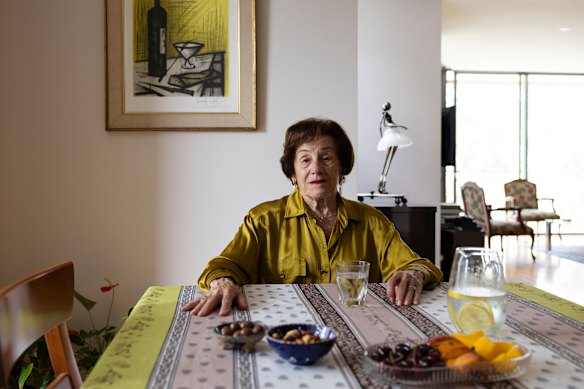
They quickly put down roots in Sydney, with Mimi’s parents operating a restaurant and cafe near the Capitol Theatre, where she and her brother helped after school.
“People were always nice to us,” said Mimi, whose family knew no English when they arrived in Sydney. “My father loved Australia and loved the Australians.”
Their new life was a far cry from the permanent displacement experienced in France, where the family moved around to avoid persecution under Nazi occupation. Mimi recalled playing on an old dirt road when she heard a rumble, triggering a mad scramble home as German soldiers zipped through the village.
The family spent time during the Holocaust hiding on a pig farm, where Mimi recalled her father leading makeshift Hanukkah celebrations amid the absence of candles, and the flying of hundreds of planes overhead before Liberation Day.
None of Mimi’s extended family, all from Poland, survived the Holocaust. Her mother never discussed the trauma suffered in those years, something Mimi thinks led to health issues later in her life.
Ernie Friedlander set foot on Australian soil four years after Wise, finding work as a factory apprentice while studying textiles at the East Sydney Technical College.
He and his mother were the only family members to survive the Holocaust, for which he credits a German soldier who secretly instructed the pair to escape by quickly rolling off the bank of a dirt road as a large group of Jews was being walked to concentration camps.
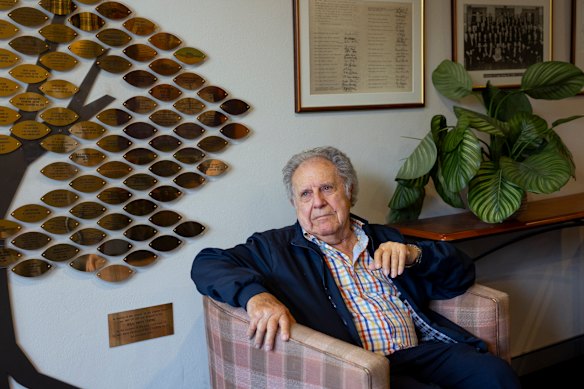
Friedlander met his wife and started a family in Australia, and now, aged 90, is a grandfather to seven grandchildren. He said he was “very grateful” for his adopted country, which he found to be “accommodating and helpful” after his arrival, even as he barely spoke English.
It’s a sentiment familiar to Sabina Kleitman, who recalled how father, Alex, took to the new way of life moments after arriving in Australia.
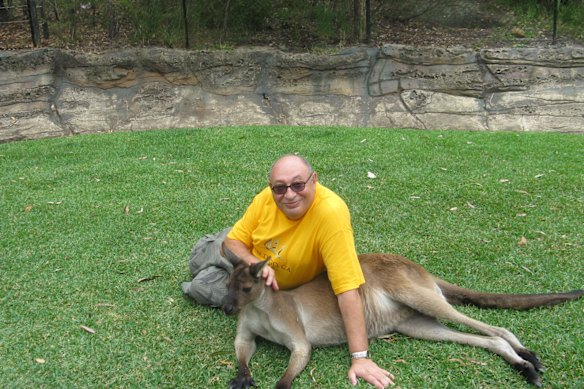
“He was absolutely in love with this country – he used to say things like ‘I actually didn’t have life before, I was born again when I arrived here’,” Kleitman said.
“If you were to criticise Australia in front of him, he gets very upset very soon, and would correct you about how amazing this country was.”
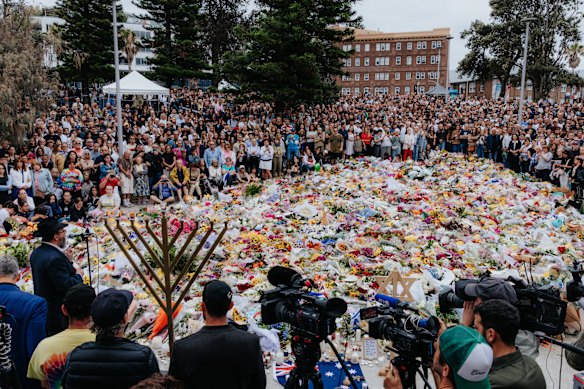
The adoration that Holocaust survivors hold dear for Australia has only deepened the heartbreak they’ve endured in the past two years as increased levels of antisemitism culminated in the Bondi terror attack which killed 15 and injured dozens more.
Friedlander worked closely with Bondi victim Edith Brutman, remembering her as a “very clever lady” in the days after the massacre. Black-Gutman also lost a “very close” friend at Bondi, though was too upset to share any details.
“It’s affected my heart, because I permanently seem to be in a chronic state of rage,” Black-Gutman said. “It’s been surreal … this is not the country we came to.”
Wise goes further, saying the antisemitic attacks have corroded her pride as an Australian, as she feels increasingly unwelcome in the country that opened its arms to her 80 years ago.
“I’m really glad my father’s not around today, or my mother,” she said. “The whole atmosphere here leading up to this has been just awful. And I have been angry as hell.”
Alex Kleytman was heartbroken by the rise in antisemitism, according to Kleitman, saying he likened the public dialogue in Australia to the anti-Jewish propaganda he faced while living in the Soviet Union.
“He really never expected for that to happen,” Kleitman said. “It broke his heart to see what was happening.”
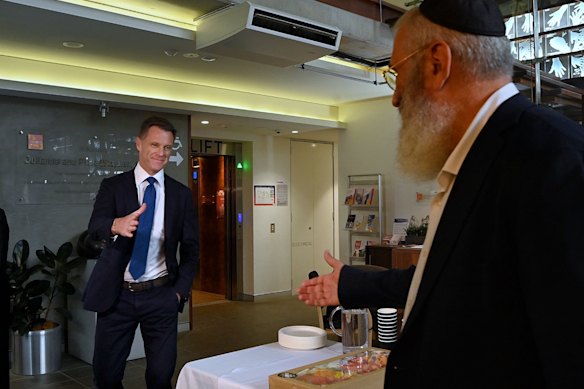
Friedlander has responded with action, providing a submission to Premier Chris Minns that recommends introducing new education programs that can empower Australians to stand against hate.
He cautioned against dwelling on the past alone, finding that an emphasis on steering away from prejudice was needed to prevent further violent incidents.
“Hate is such a terrible element of emotion; it’s only self-destructive,” Friedlander said.
“I’ve seen the hatred inside of people, people that I didn’t know, and the ferocity, it’s just plain ignorance in some cases, being stirred up.”
About 2200 Holocaust survivors are living in Australia, according to the 2025 demographic report from the Conference on Jewish Material Claims Against Germany, representing 1 per cent of the global survivor population.
The report indicates that 70 per cent of the survivors won’t be alive in 2035, sparking an urgent push for all generations to hear first-hand testimonies of the Holocaust, as they become increasingly scarce.
Black-Gutman believes the Holocaust shouldn’t be remembered for what it did to the Jews, but rather for what it did to “humankind”.
“This horrific act of getting people naked and gassing them happened,” she said.
“We like to think that if somebody is an evil person, it’s because they were born because of some psychological reason. But in the Holocaust, a whole country did just that.”
Start the day with a summary of the day’s most important and interesting stories, analysis and insights. Sign up for our Morning Edition newsletter.