3 months ago
17
3 months ago
17
Everything in the room is red: the plush chairs, the benches and tables, the roses, the vase-sized burgundy spittoons. Rows of spotless wine glasses are stacked in crimson wheelie trays. There are designer-looking engraved corks resting in what looks like jewellery boxes. Small groups are clustered around the room, some in aprons, swirling, sniffing, tasting, and poring over liquid worth perhaps more than some earn in a month.
Welcome to Penfolds’ red wine recorking clinic, where the price of entry isn’t cash, it’s an expensive, old bottle of red wine.
Fifteen years or older, to be exact: that’s what qualifies a bottle for inspection at these recorking clinics, where wine lovers and collectors can see how well their Grange, St Henri Shiraz or Bin 707 Cabernet Sauvignon have held up in their cellars.
On this occasion, wine lovers and collectors across South Australia have converged at Adelaide’s famed Penfolds Magill Estate, the birthplace of global winemaker Treasury Wine Estates’ flagship brand. Many come armed with several bottles, sometimes cases, of their long-term investment, which can start from as low as a few hundred dollars and go upwards of $30,000.
It can be an emotional time. “There are real tears,” says Peter Gago, Penfolds’ chief winemaker. “People are quiveringly handing over things. They’re real quivers.”
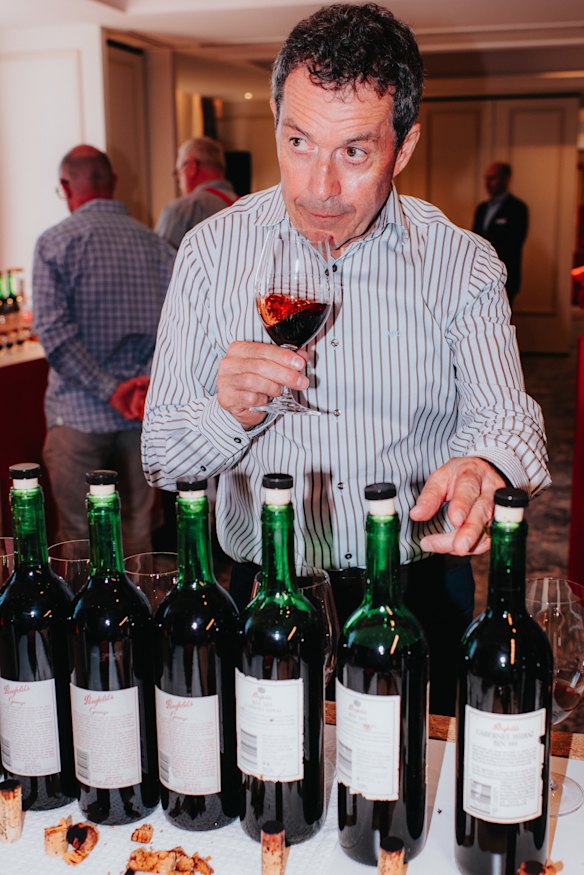
Penfolds chief winemaker Peter Gago.Credit: James Brickwood
Gago, who has played Penfolds’ chief host for over three decades, is a celebrity unto himself, a Rolodex of vintages, tasting notes, and charming anecdotes. “A lot of this is about therapy and condition and, you know, meeting expectations … You get every kaleidoscopic array of human behaviour here.”
These recorking clinics began in 1991, inspired by Penfolds’ first winemaker Max Schubert, the creator of Grange who was known to recork old vintages for friends. Since then, over 200,000 bottles have been uncorked and recorked in a ‘world tour’ that has visited New York, London, Beijing, Tokyo, Stockholm, Munich, Toronto and Hong Kong as well as Australian capital cities Sydney, Melbourne, Brisbane and Adelaide.
By appointment only, they are always booked out: people are anxious to know if their carefully temperature-controlled assets have expired. Over the years, wine corks can lose elasticity and become crumbly or spongy, a death sentence for wine which loses flavour and vibrancy once it becomes oxidised.
If deemed assessable, wines are opened, inspected and tasted. If it has kept well, the wine is topped up with the latest vintage, recorked, recapsuled, granted a certification sticker and entered into a database.
What these well-heeled collectors (remember, you must be rich in both financial wealth and time for an appointment at these clinics) want is this certification. Where a wine is exceptionally rare, Penfolds may buy it back.
What no one wants to see is the white sticker of doom, which indicates the wine has deteriorated too much.
This can be unexpectedly good news. “They give you permission to drink the wine,” says Gago. Two white dots means it’s not fit for consumption (cue the tears).
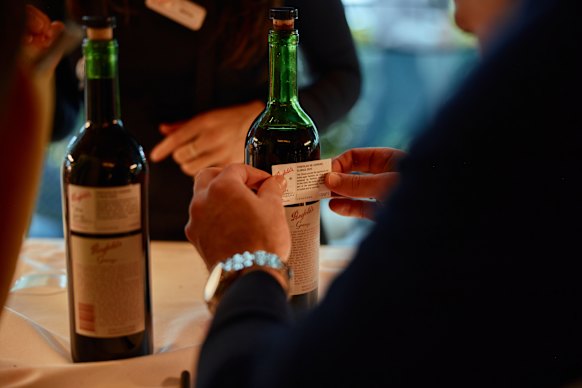
Bottles that have aged well are certified with a label, which can increase resale value.
The clinics, a free after-sales service, are a multimillion-dollar expense to Treasury, the only wine company to consistently run such clinics (every two or so years). It did not disclose costs, but sending teams of winemakers around the world, the logistics of specialised machinery, and no doubt Gago himself, is no small operation. “This is state-of-the art bottling equipment, custom-modified,” he says. “It’s like a rock-and-roll show on and off airplanes.”
The clinics serve another purpose, doubling as an expensive marketing exercise. The theatrics of uncorking – hoisted on a screen is live footage of a birds-eye-view behind the recorking machine – attracts television crews, radio producers and writers as it tours the globe.
The optics are carefully orchestrated: perceptions of luxury are shaped more by service than by product alone. “It’s a highly personalised one-on-one experience. Most wine is sold without any connection to the winemaker,” says Emperor Champagne founder Kyla Kirkpatrick.
“It says: you are significant, you are important, I’m going to inspect how my wine is doing in your home. It’s almost the reverse of how classical wineries operate.”
Although Penfolds – which makes up about 60 per cent of Treasury Wine’s profits – can be counted among a select handful of truly global Australian-born luxury brands (RM Williams, Aesop, Zimmerman), it could use the publicity.
“The interest for us in the wine industry is important,” says Gago. “It’s about the culture of wine, and you’ve got to spread the word, because all these young people … [they’re] not drinking wine. We’ve got to get people back into this.”
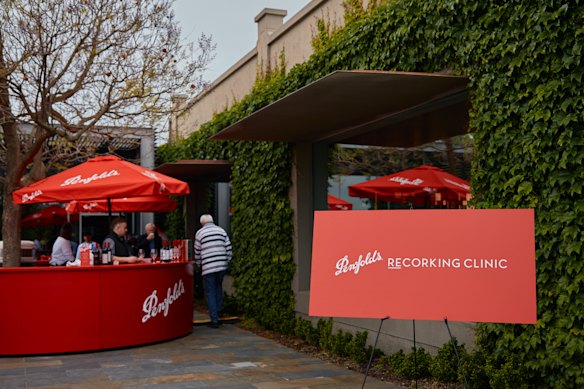
The recorking clinic at Penfolds Magill Estates in Adelaide, November 2025.
The last few years have forced Treasury Wine Estates to roll with the punches. The four-year trade war between Beijing and Canberra was not fatal, but it choked the winemaker’s access to its most lucrative market ($1.2 billion): China. Treasury diverted shipments to neighbouring countries like South Korea, Japan and Singapore and redoubled focus on the US market, where it made a $1.6 billion gamble on California-based Daou Vineyards to become the next flagship brand.
Penfolds kept its allure as a coveted luxury brand among Chinese consumers, who were replenished by grapes not from South Australia but from California, Bordeau and Ningxia, China itself. Partnerships with Japanese fashion designer Nigo and local influencers helped. It took on counterfeiters who tried to rip off the Penfolds brand and won.
But these efforts to reassert Penfolds’ pole position are in a world that is slowly shrinking. Fewer people – particularly Gen Z – are drinking wine, as spritzers, seltzers, and canned drinks rise in popularity. Global wine consumption hit its lowest point in over 60 years, declared the International Vine and Wine Organisation in April.

Tim Ford, the recently departed CEO of Treasury Wine, steered it out of the depths of the pandemic and devastating China tariffs.Credit: Eamon Gallagher
Lower-quality wine – $15 or less – has fallen out of favour: people are drinking less, but better. The future for Treasury is in its luxury and icon portfolio (Grange, Bin series), where margins are highest. The wine giant put commercial wine brands Wolf Blass, Lindemans, Yellowglen and Blossom Hill on the market, but couldn’t find a buyer for the right price.
China has never returned to the market it once was for Australian winemakers. Many have sold their vineyards or ripped up grape vines to plant white grapes or fruit instead. Those who remain are now competing with a new wave of domestic Chinese winemakers. In May this year, the Chinese government tightened its crackdown on bureaucratic excess, banning alcohol, cigarettes, alcohol, and even fancy plants from official receptions.
These problems are structural, not cyclical: Treasury Wine has been forced to reset investor expectations. In October, Treasury Wine admitted Chinese drinkers were holding back more than anticipated and dumped profit predictions. Panicked investors sent the ASX giant’s share price to a 15-year low, pointing to a “high level of uncertainty caused by evolving consumption dynamics in the Chinese market,” noted RBC Capital Markets analyst Michael Toner.
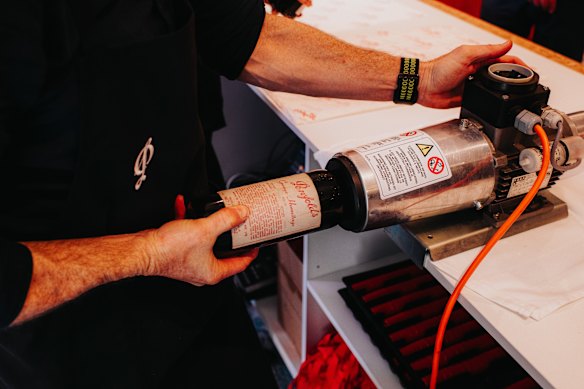
After a wine is assessed and approved for certification, it is recorked and recapsuled.Credit: James Brickwood
Not only is demand shrinking, but it’s getting more expensive to make and grow wine. Climate change is disrupting terroirs and temperatures, leading Treasury to diversify grape-growing regions and invest in developing new climate-resistant varieties, water-saving technology and renewable energy. These are the challenges facing Treasury’s new chief executive Sam Fischer, the former boss of beer maker Lion Group.
Amid the change, recorking clinics are a conspicuous reminder of Penfolds’ legacy of prestige and luxury – and looks great on social media. The clinics also serve a very commercial purpose: bad wines are taken out of the system to “improve the gene pool”, says Gago.
Certification can pump up a bottle’s value, all at no additional cost to the owner. Fine wine auction house Langtons’ guide to Penfolds describes Grange as the most important wine in the secondary market.
“Penfolds Grange is traded enormously on auctions,” said independent wine writer and critic Huon Hooke. “When a wine appears with a sticker on it, it says this has been clinic-ed and adds to desirability. Prices on auctions are actually higher for clinic’d wines.”
The stakes are high. “Quite often, we talk people out of recorking,” says Gago. “Not to forget, we can only ever recork once.”
The Business Briefing newsletter delivers major stories, exclusive coverage and expert opinion. Sign up to get it every weekday morning.