2 months ago
26
2 months ago
26
Yvonne Yuan walked her dog past a Victorian terrace house in Armadale for 10 years, striking up a friendship with the owner. He suggested she should buy it – “the cheapest one in the street”.
The 63 year-old wasn’t looking for a heritage home. Once the owner went into care, she bought the heritage-overlay house in 2020, unprepared for how much it would cost to update.

Yvonne Yuan in her renovated Victorian terrace in Armadale.Credit: Penny Stephens
“I knew [heritage houses] have an extra cost,” she said. “I just had no idea how much of a difference it could make.”
But many buyers are looking for homes with period features and a link to the past.
“Heritage” was the fifth most popular keyword search term on property listings website domain.com.au in Melbourne in 2025, higher than any other capital city and up from eighth in 2024.
Yuan joked that the popularity of the search term might be because people were trying to avoid them. Her renovation went 60 per cent over its initial budget, thanks to material and labour increases post-pandemic and demands from council.
Marshall White group sales director John Bongiorno said people looked to heritage homes for a sense of prestige, character and scale.
“High ceilings, distinctive cornicing, beautiful fireplaces, those sort of aspects that just give a house a bit of a wow factor,” he said.
National Trust Victoria’s executive manager, Samantha Westbrooke, said Victorian heritage buyers weren’t necessarily chasing the elite end of the market.
“It’s not just the inner neighbourhoods that have really great heritage,” she said. “I think people see that potential, and they want to buy into a neighbourhood that has some sort of connection to its history.”
“Heritage” covers different protections. Local government heritage overlays apply to neighbourhood character and preserve the visual quality of certain eras of architectural style, generally limited to what is visible from the street.
Homes can be individually heritage listed, which means stricter preservation requirements because of the historical importance of the home or because it’s a key example of an architectural style.
DX Architects director Daniel Xuereb, who was Yuan’s architect, said people often bought without a good understanding of what heritage protections meant.
“I do find that clients are quite confused, generally,” he said. “It is quite complicated, and often best to obtain the advice of a heritage architect before making decisions, particularly on purchasing a property.”
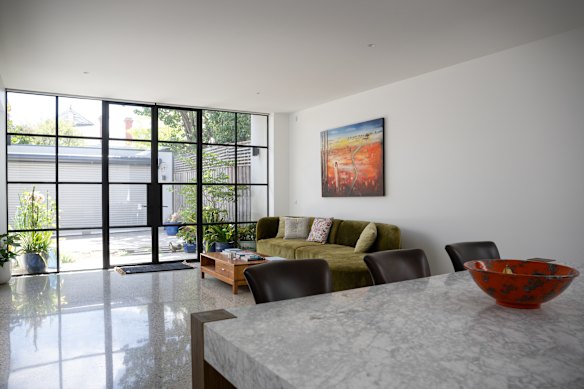
Yuan’s renovation was costlier than expected.Credit: PENNY STEPHENS
Jellis Craig chief executive Andrew McCann said many buyers saw homes with heritage overlays as having “good bones” that provided a good structure to expand upon.
“I think people really do enjoy the ability to blend that classic tradition with a more modern family experience to the rear,” he said.
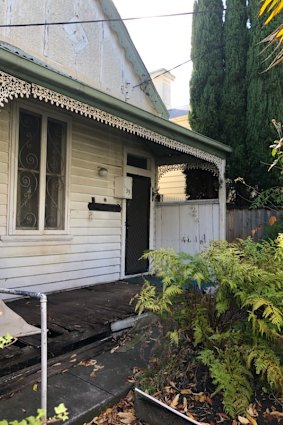
Yvonne Yuan’s home required significant renovations.Credit: Yvonne Yuan
Westbrooke argued retaining and updating an existing home to meet modern standards was more sustainable than demolishing.
“A lot of people don’t realise the quality of materials,” she said. “The timbers that were used back then were much more resilient than what we’re building now … People think that new is best, but new builds can often be cheaper materials.”
But YIMBY Melbourne lead organiser Jonathan O’Brien argued heritage overlays were often protecting homes in disrepair, blocking more sustainable medium-density housing.
“A lot of the inner-city heritage [homes] are one- maybe two-storey cottages that are share houses,” he said.
“They’re low energy efficiency, low-capacity floor plans that our regulations would block in a heartbeat getting built today. So on the one hand, we set high standards for anything new to be built, and then we throw those standards away in the name of protecting this small sliver of colonial architecture.”
Loading
Xuereb agreed it was sometimes difficult to see what heritage protections were helping to preserve.
“Some heritage houses that we work on are in very poor condition, are very altered from their original fabric and require almost a full reconstruction,” he said.
But he said his job was to illuminate the value in heritage restoration that made homes liveable for modern needs, not make decisions about overlays.
A spokesperson from City of Stonnington, Yuan’s local council, said residents valued the sense of place that heritage properties provided.
Heritage protections provided “certainty for landowners and the community, enabling more sensitive and enduring development outcomes”, they said.
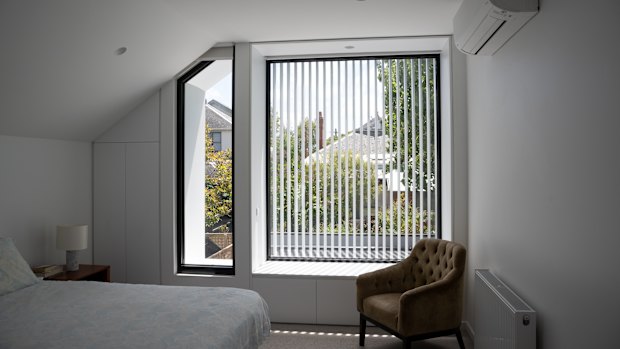
Yuan’s heritage-mandated pitched roof caused headaches for curtain installation.Credit: Penny Stephens
For Yuan, certainty wasn’t the experience.
Demolition revealed a crooked chimney which needed replacing. A requirement for an era-appropriate pitch at the front of the house meant expensive, custom-designed curtains.
Despite the cost and frustrations, she’s happy with the work her architects did to make her home comfortable and modern. However, she’s just not sure if she would do it all again.
“It’s much easier if you just build a new house,” she said.
“I’ve built a house from scratch… It was so easy, so simple. No issues. If I knew [a heritage renovation] was that hard, I probably wouldn’t do it.”
Most Viewed in Property
Loading