3 months ago
37
3 months ago
37
Authors doing the rounds of interviews, reader events and writers’ festivals tend to field the same handful of predictable questions: Where did the idea come from? How long did it take to write? What is your writing process? They are the polite queries that circle a novel without getting too close to the author herself.
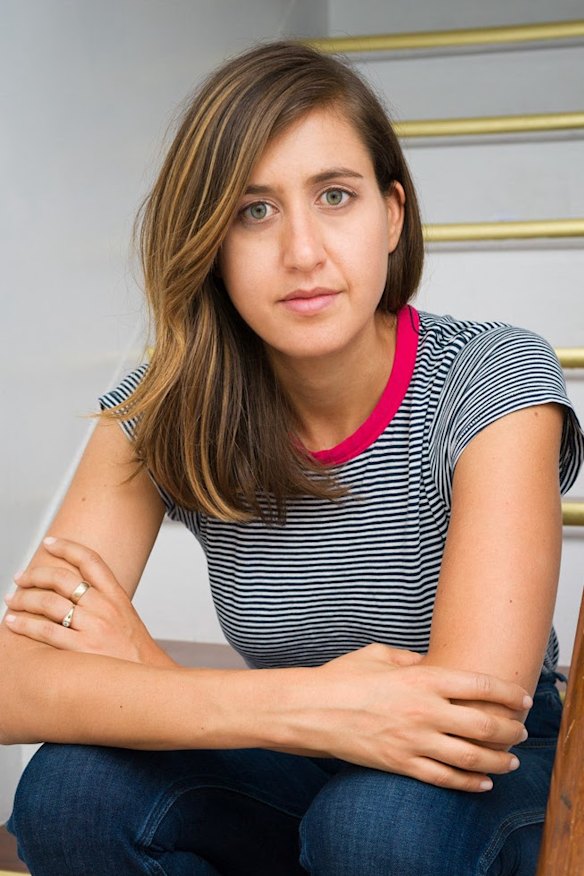
When it comes to Erin Somers’ new novel The Ten Year Affair, however, readers seem particularly interested in the intimate. But because it would be pretty socially unhinged to come straight out with the question they are dying to ask – did you have an affair? – most people take a scenic route instead.
“People find ways to ask,” Somers says, on video call, from the Hudson Valley. “They say, ‘How do you feel that people think this about you?’ And I know what they’re getting at. ‘People are relating it to your real life … is it true?’”
One reporter – Emily Gould, writing for New York Magazine – did ask directly. “I kind of have to admire her for being the only person to not dance around it … I sort of appreciated her directness and found it funny.”
For those still wondering, Somers now has a stock answer ready. On her website she addresses the question. “No, thanks! I’m good. The novel gave me a chance to think through the consequences in excruciating detail. Especially in a small town, it seems like it can only lead to catastrophe, scandal and embarrassment. Fun to read about for sure, but less fun to live,” she says there.
If the question is probably inappropriate, it is also a measure of the novel’s success. The Ten Year Affair perhaps feels a little too familiar; authentic enough that readers want to know where the fiction ends. It might just be the first great water-cooler novel of 2026 (if we still went to the office and had water coolers to talk beside); a bingeable book destined for group chats and book clubs. I had to buy a second copy and I like to imagine the first out there now, on a kind of grand tour of friendship circles.
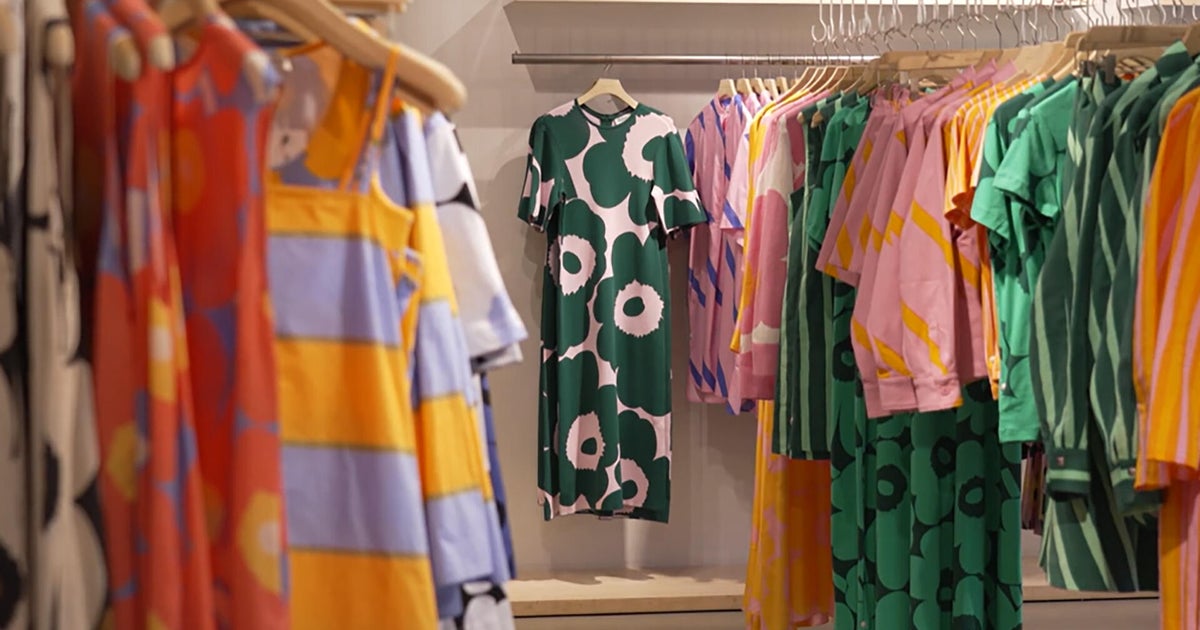
The novel follows Cora and Sam, two married parents who work in marketing and communications and meet at a baby group held twice-weekly in a bougie children’s clothing store, after moving from Brooklyn to a small town in the Hudson Valley, in upstate New York. There’s an immediate spark – “the two of them against Broccoli Mum” – but rather than a conventional physical affair, Somers traces a decade-long attachment in a kind of sliding-doors structure: the affair as it might happen, and the life that actually does. Then the tracks bend and the fantasy starts to look suspiciously like reality, with the same old lighting and laundry.
Somers is hilariously adroit yet never cruel about the self-indulgence of her modern, educated, well-off, white Millennial characters. There’s the drift from city to suburb and the slide into work that pays the mortgage but not the soul, and the persistent sense that the real thing – exciting, unregulated, sexy! – is happening elsewhere. There’s a mushroom that won’t stop growing in Cora’s bathroom as she yearns to get “f---ed into the astral plane and not think about her life for a second”.
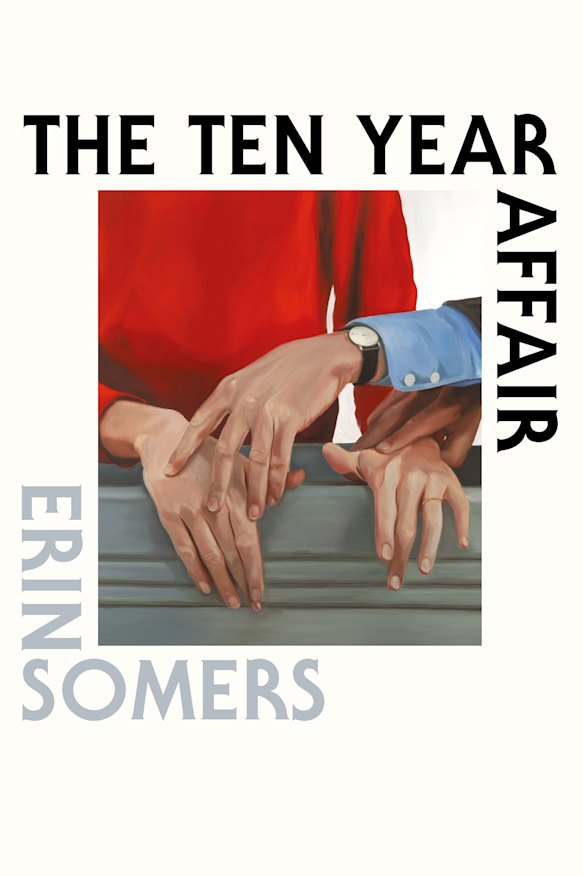
They are the generation that wanted it all, yet in reality there’s no time to find meaning when childcare logistics require the coordination skills of a minor military operation. “Another day had passed. No major casualties,” Cora reflects. In a review for The Guardian, critic Dina Nayeri perfectly summed up the novel as “the midlife adultery story our entire generation deserves: a propulsive, witty take-down of insufferable hand-wringers who’ve managed to ruin even sex”.
Somers says she wanted to write a Millennial update on infidelity fiction. After watching her peers age, move upstate and drift into parenthood and discontent she wondered whether a generation prone to self-analysis could get out of their own way long enough to even have an affair.
“I love all the classic mid-century infidelity fiction – [by the likes of John] Updike and [John] Cheever – these books we think of as classics on this topic,” she says. “It was ripe for an update because attitudes have obviously changed. The way women are portrayed in fiction has changed. I wanted to give that narrative to a Millennial woman and see what kind of freshness emerged.”
The idea for the novel started in the same place the story does. Somers was newly on maternity leave in New York and, by the standards of her friendship group, ridiculously early to the baby game, being pregnant at 29. Lonely and bored, she joined a baby group that met twice a week in a children’s clothing store. The scene struck her as ready-made for fiction.
“I was so fascinated by all the quirks of the parents there and all the different techniques they were trying, and I found them to be so funny and so out-there that I thought this would be great in a piece of fiction,” she says. “They’re not evil people but they’re just trying a bit too hard, and I thought it would be great for a piece of writing. So I put it in my pocket until I found an opportunity, and then eventually synthesised it with the infidelity.”
Nearly a decade later it became a novel. In between, after publishing her debut Stay Up with Hugo Best in 2019, Somers shaped the material into a short story. She struggled to get published but once the story found an audience the response was telling: the piece was anthologised in Best American Short Stories and read by Holly Hunter on NPR. Somers felt she was far from finished with the story, and without a publisher attached she kept writing the book over roughly four years.
“I didn’t feel done with it,” she says. “I was like, there’s more to say here. I have many, many more pages on the mum group and on what living in this town is like, so I expanded it into a novel.”
I don’t know how people do it if they aren’t writing something funny. What keeps you there if you’re not laughing at your own silly lines of dialogue?
That living-in-the-town part is pivotal. More than a scenic backdrop to the story, the setting proves a social Petri dish. In the novel, Cora and her husband Elliott leave their fifth-floor walk-up in Flatbush, Brooklyn, after an inheritance allows them to buy a rundown house in a nameless mountain town in upstate New York. They don’t like hiking but the nature walks are superb, the houses have what might be called “character”, and there’s a burgeoning social scene of middle-aged couples with growing families and rental-market exhaustion who have relocated from the city.
Somers herself now lives in a similar town, Beacon, about 90 minutes north of New York City. She jokes that the town has some cultural cachet: it’s the sort of place people move when they’ve left the city but still want to be considered interesting rather than suburban. Think college professors, not bankers.
“It’s great as a setting for a comedy of manners,” she says. “These people aren’t rich but they’re pretentious in this really specific way. They have pretensions and illusions that they are better than this or that group that lives in this or that town. I felt I could closely observe all of those quirky little vanities.”
The humour is pointed but never mean-spirited. Somers says her instinct is to push a joke as far as it will go, but in the novel she manages to pull it back just enough to keep the characters recognisable rather than ridiculous.
She says she found writing the novel as fun as it is to read. “I have so much fun writing. I don’t know how people do it if they aren’t writing something funny,” she says. “What keeps you there if you’re not laughing at your own silly lines of dialogue?”
The ear for dialogue isn’t accidental. Somers grew up in the American south and went to film school in New York, initially hoping to work as a screenwriter. After graduating she moved to Los Angeles but found breaking into the industry challenging. She turned to writing, completing an MFA program and then landing a job at Publishers Lunch, a large industry publication, where she still works. With a front-row seat to how books succeed (and disappear), Somers says the knowledge can make a writer self-conscious, though she tries to keep a firewall between that awareness and her work itself.
For those who have fallen in love with The Ten Year Affair, there are two pieces of good news. One is that there are discussions underway about adapting the novel for the screen. Second is that Somers isn’t done with the world of the novel. The next book is set in the same orbit, with possible glimpses of familiar faces, perhaps the start of something similar to Elizabeth Strout’s Maine-verse.
There’s a scene in The Ten Year Affair where the characters start gossiping about a swingers’ scene that centres on a figure-drawing class held on a rotating schedule at different houses. “I thought, I wish I were writing that novel, like the novel of the swingers in town,” Somers says. “And so now I’m writing that novel.”
As for all this Millennial malaise, Somers sees a broader wave coming.
“I think that we were waiting for Millennials to get old enough to write about it, and now we’re finally in our 40s and I think we’re going to see a lot more of it. Hopefully a lot of really good stuff and a lot of fresh perspectives from a bunch of different voices. I do think it’s a matter of this massive generation ageing into it.”
The Ten Year Affair is out now via Allen & Unwin.
The Booklist is a weekly newsletter for book lovers from Jason Steger. Get it delivered every Friday.