3 months ago
21
3 months ago
21
Opinion
November 28, 2025 — 11.00am
November 28, 2025 — 11.00am
There’s a fatal flaw in the idea that we can offset – or balance out – carbon emissions.
As we know, greenhouse gases (the most famous one being the colourless gas known as carbon dioxide) are key catalysts for climate change.
Most of the Coalition seems stuck in the ice age, perhaps thinking they can thaw themselves out of electoral irrelevancy by keeping coal power plants running … even if it means taking the rather non-Liberal stance of using taxpayer money to prop them all up.

Carbon credits can be useful in a handful of cases, but can also hinder our efforts at combating climate change.Credit: Matt Davidson
But there’s generally agreement that we need to strive towards achieving the global temperature targets set out in the Paris climate agreement. That means big cuts in emissions – largely through the quick phasing-out of fossil fuels.
As ANU professor of environmental law and policy Andrew Macintosh points out in a recent paper, a lot of things stand in the way of that. But one of the sneakiest? Carbon offsets.
Companies, countries or individuals can buy “carbon credits” to compensate for what they’re emitting and therefore, on paper, balance out their emissions. Typically, one credit compensates for one tonne of carbon – or the equivalent amount of any other greenhouse gas that leads to the same amount of warming.
In Australia, under what’s called the “safeguard mechanism”, some of the country’s biggest industrial facilities – including those used for mining, oil and gas production, manufacturing, transport and waste facilities – are forced to comply with a cap on the amount of greenhouse gases they are allowed to emit.
If they emit more than they are allowed, they can buy carbon credits to make up for it.
These “credits” are supplied by projects – such as renewable energy projects, reforestation or conservation efforts – that claim to reduce emissions, either by avoiding emissions or removing carbon dioxide from the atmosphere. So when a big emitter buys a carbon credit, they are essentially funding and incentivising projects that reduce or remove greenhouse gas emissions. Sounds reasonable, right?
Well, there are several challenges and shortcomings.
First, it’s difficult to make sure offsets actually represent real emissions reductions rather than the benefits that just exist on paper. The hypothetical nature of many of the calculations means people can manipulate or overestimate the emissions they have saved to generate more credits.
What’s also tricky is making sure that the emissions reductions from the “clean” projects wouldn’t have happened without the extra incentive offered through selling carbon credits: perhaps a “clean” project would have gone ahead anyway, even without the additional incentive, meaning the money from the credit could have gone to a use where it would actually make a difference.
The problem is that in many cases, only project leaders and developers – who are clearly keen to receive the money from carbon credits – really know whether their projects are dependent on money from carbon credits, making it hard for the people assessing these projects to select the ones truly dependent on the money to go ahead.
Then, there’s the need to make sure projects claiming to capture and store carbon dioxide do so and lock it away permanently rather than releasing it all back into the atmosphere later.
Some methods of capturing and storing carbon such as “carbon sinks” – natural or artificial reservoirs that absorb more carbon dioxide from the atmosphere than they release – can also be susceptible to natural disasters, making it difficult to guarantee the carbon will not be released back into the air in the near future. Carbon stored in trees, for example, may be released when there is a wildfire.
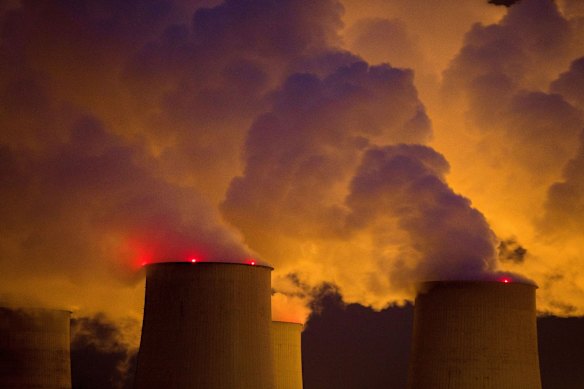
Heavy emitters use carbon credits in great numbers and traders look to profit from that trade.Credit: Krisztian Bocsi
Most offset schemes also only require these carbon sinks to be maintained for 40 years or less. But because carbon dioxide emissions take thousands of years to be reabsorbed by the Earth, carbon removed from the atmosphere needs to be locked away for a similar amount of time to really have an impact.
Macintosh says most carbon offset schemes fail at least one of these requirements.
A 2024 study of 2300 offset projects, for example, found that less than 16 per cent reduced emissions as much as the developers claimed.
Because of this, offsets can enable companies and countries to claim they have reduced emissions, when in reality, they haven’t.
Loading
That’s not to say all carbon credit purchases are made with bad intentions. And some schemes do meet all the requirements, meaning they can play a meaningful role in the climate transition.
This is especially the case if a country cannot keep the lights on while building the infrastructure necessary to transition towards a cleaner economy and meet net zero targets. Of course, the availability of offsets can also delay big emitters from making the changes they need to, giving them a way to continue polluting as usual, slowing down the process of phasing-out fossil fuels.
But the measurement of emissions and how much carbon is stored in certain places is also challenging and prone to error.
For example, carbon stored in soil can vary a lot across landscapes and over time, meaning it’s often hard to pinpoint exactly how much carbon emissions a project is saving.
Of course, that doesn’t mean we shouldn’t try, but it’s worth keeping in mind.
There’s also the issue of incentives not being aligned. In most markets, customers can identify low-quality goods and services reasonably easily, meaning they can seek a fix or choose better products when standards aren’t being met.
Things like air pollution, more frequent natural disasters and a warmer climate are hard to put a price on, but are costs we all pay.
But given the complexity and lack of transparency when it comes to carbon offsets, it’s incredibly difficult for buyers (the companies wanting to offset their emissions) to make informed decisions about the quality of most credits. Most also simply don’t care: it’s in their interest to buy credits at the lowest possible cost.
The problem with low-quality carbon credits is that they distort the price put on carbon. They essentially reduce the cost paid by polluters who can simply buy cheap, ineffective credits that do not actually reflect – or offset – the volume of greenhouse gases they are emitting.
Loading
The reason we need a higher price on carbon – whether through offsets or a carbon tax – is because many processes that release carbon come with a “negative externality”: costs that are paid by people not directly involved in producing or consuming the final product or service. Things like air pollution, more frequent natural disasters and a warmer climate are hard to put a price on, but are costs we all pay – even if it wasn’t our choice to buy or make the product that contributed to emissions.
Since prices and costs shape people’s decisions, including those of big emitters, a higher price on carbon more accurately reflects the true cost of emissions and incentivises businesses and countries to find ways to reduce them.
Low-quality carbon credits, including many government-approved offsets such as Australian Carbon Credit Units (ACCU), end up pushing down the price paid by large emitters. Carbon prices need to be above the minimum level of about $90 per tonne to keep warming well below 2 degrees, but since the middle of 2022, ACCU prices have fluctuated between $26 and $43 per tonne, weakening the incentive for facilities to cut emissions.
The other problem with low carbon prices is that they tend to drive out the more effective offset projects. Why? Because they need carbon credits to be sold at a higher price to be able to make a reasonable return and for the project to go ahead.
The more effective solution is to require emitters to pay a certain amount to the government when they’re unable to meet their emission-reduction obligations. It’s a more transparent system, sends a stronger message to industry, and generates tax revenue for government programs aimed at reaching our climate goals.
Offsets are not necessarily useless and can play a small role in a limited number of cases. But if we cosy up to them too much, we might find ourselves – and our climate – overheating.
Ross Gittins unpacks the economy in an exclusive subscriber-only newsletter. Sign up to receive it every Tuesday evening.
Most Viewed in Business
Loading