3 months ago
22
3 months ago
22
The controversial declaration banning protests on Sydney’s city streets has been partially lifted by NSW Police Commissioner Mal Lanyon, smoothing the path for planned Australia Day marches after a month-long ban.
In a compromise that will allow the annual Invasion Day protest to be staged on Monday, Lanyon has dropped the declaration order for streets in the Sydney CBD, while preserving the ban on all other Sydney streets for another fortnight.

NSW Police Commissioner Mal Lanyon will allow the January 26 march in the Sydney CBD.Credit: Sam Mooy
He exercised the first 14-day ban on December 24 under the powers introduced in response to the Bondi terror attack. It was extended by another fortnight on January 6.
The newly excluded area will include Darling Harbour, the suburbs north of Oxford Street and all the eastern suburbs north of Clovelly. It won’t include Hyde Park, Belmore Park and Victoria Park, among the areas included in the annual Invasion Day march.
“This is about getting the balance right,” Lanyon said on Tuesday afternoon.
“This is about ensuring that we are enabling people to protest, enabling free speech, but make sure that the community remains safe.”
Preserving the ban in the city’s northern streets is designed to support the tens of thousands of spectators expected to converge on Circular Quay for official Australia Day celebrations, Lanyon said, while blocking demonstrations in the eastern suburbs was deemed “appropriate” following the Bondi massacre.
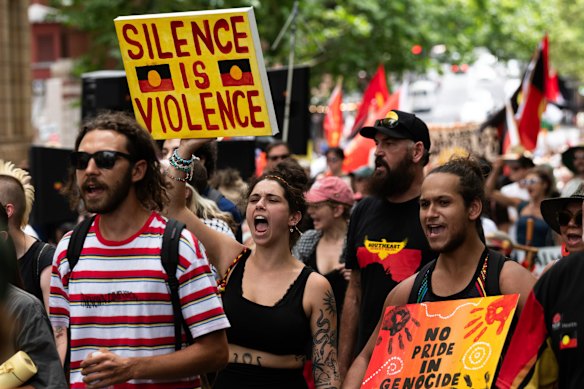
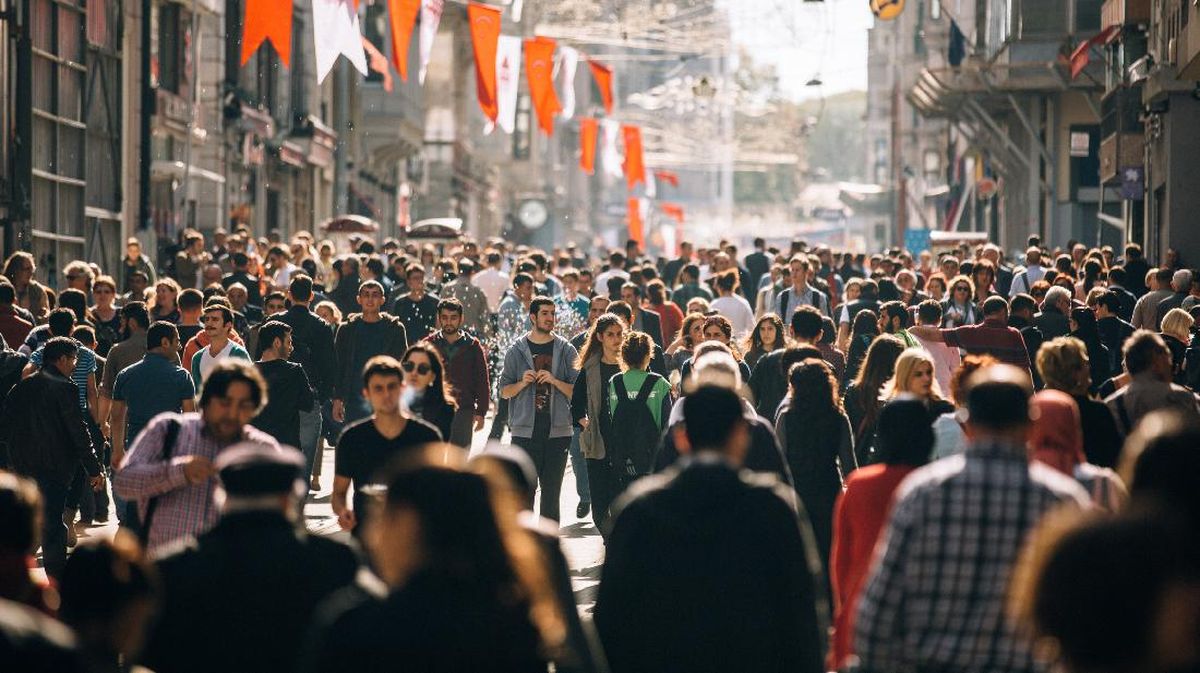
The Invasion Day protesters, pictured in 2024, typically march to Victoria Park in the Sydney CBD.Credit: Rhett Wyman
A March for Australia anti-immigration demonstration is expected to start at Prince Alfred Park on Monday, south of Central Station and out of the prohibited area, which will coincide with similar rallies taking place in other capital cities. Police are expected to closely monitor the March for Australia and Invasion Day rallies, which will be staged within streets of each other.
The tough protest powers were included in an omnibus bill passed during an emergency sitting of NSW parliament after the Bondi massacre, and were exercised by Lanyon in the hours after its assent.
Tuesday’s decision will allow protest groups to lodge applications to stage demonstrations on CBD streets across the next fortnight, which will then be assessed by NSW Police. A third consecutive total declaration would have extended the ban through to February, prohibiting the annual Invasion Day march staged through the Sydney CBD.
It comes four days after riot squad and mounted police descended on Town Hall to watch over demonstrators rallying against the new protest laws and the impending visit of Israeli President Isaac Herzog to Australia.
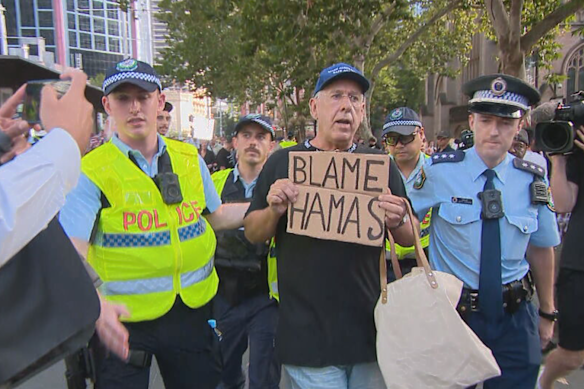
A man carrying a “Blame Hamas” sign was arrested at a rally against the NSW government’s protest laws on Friday.Credit: Nine News
A man wearing a “Make Australia Safe Again” cap and brandishing a cardboard sign that read “Blame Hamas” was arrested about 5.30pm for breaching the peace, before being released without charge.
Three other people were spoken to for similar breach of the peace incidents, and left the scene without any further action.
One protester was pictured wearing a T-shirt that bore the slogan “globalise the intifada” – a phrase NSW Premier Chris Minns wants to outlaw.
Lanyon backed the application of the month-long protest ban, saying it taken “the heat out of the community” in the weeks after the Bondi shootings.
“I think the fact we haven’t seen large-scale open protests, people marching through the streets of Sydney, has reduced the tension,” he said.
Acting Police Minister Paul Scully said the latest declaration was informed by intelligence gathering and risk assessments.
“The NSW Police’s highest priority is the safety of the community and the NSW government unequivocally supports this work,” Scully said. “We ask the community to respect the decision of the NSW Police, comply with the law and stay safe.”
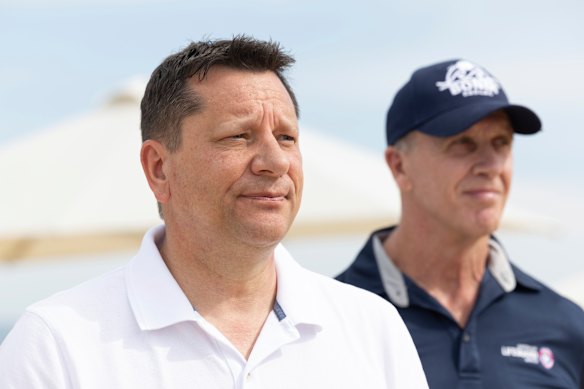
Acting Police Minister Paul Scully.Credit: Sitthixay Ditthavong
A coalition of activists, including the Palestine Activist Group and Jews Against the Occupation, has launched a constitutional challenge against the legislation restricting public assemblies.
Loading
Elizabeth Ann Jarrett, a member of the First Nations-led political organising group The Blak Caucus, has sued the state over the laws.
A short direction hearing on January 8 set down a timetable, with Justice Julia Lonergan fixing another hearing on January 29.
It will consider whether the case goes directly to the Court of Appeal, under the assumption any decision will be subsequently appealed anyway.
It also has allowed time for other Australian states and territories to weigh in on any arising constitutional issues.
Constitutional law expert Anne Twomey said the laws passed in December were more likely to survive the legal challenge than legislation that actually banned protests.
“There is still this problem that it’s a very unclear connection between what you’re actually doing, and what your legitimate purpose is and how you’re achieving that,” she said.
“It’s very messy.”
Be the first to know when major news happens. Sign up for breaking news alerts on email or turn on notifications in the app.
Most Viewed in National
Loading