
 4 months ago
82
4 months ago
82
Hundreds of Labor Party members, former MPs and factional allies have secured a disproportionate number of taxpayer-funded seats on Victoria’s most influential public boards. The finding has provoked accusations of a pervasive culture of political patronage from leading governance experts.
After 12 years of Labor government, a comparison of Victoria’s 6000 public board roles against a database of 12,000 ALP members has exposed an outsized number of seats held by party faithful.
Further roles are held by former senior staffers who are not party members, as well as direct relatives of serving or former politicians.
The findings raise questions about the integrity of an appointment system that is specifically meant to be merit-based and reflect community diversity.
The state’s 843 boards oversee everything from the pipes delivering the state’s water, to health services and cemetery trusts – with some director roles commanding annual salaries of up to $160,000 for part-time work.
The data reveals a disproportionate role for Labor figures steering massive transport builds, metropolitan hospitals, premier sporting grounds and arts boards, among others.
After more than a decade of Labor rule, Robert Redlich, a former commissioner at the Independent Broad-based Anti-corruption Commission (IBAC), warned of a culture where “party interests override the public interest”.
The pattern in Victoria reflects the levels of federal political patronage that former public service commissioner Lynelle Briggs called out in her No Favourites report, released by federal parliament in December. That report identified a 6 to 7 per cent rate of political appointments as it described a system lacking institutional integrity – a threshold the Victorian data suggests has been comfortably exceeded.
Across Victoria’s 1800 annual fee-paying positions, roughly one in every 10 seats is filled by a Labor Party member or someone with close ties to the party. Put another way that is about 10 per cent of top seats when Labor Party members make up just 0.17 per cent of the state’s population.
This does not necessarily mean that individual board members are unqualified for their roles – but rather that the high proportion of Labor-linked appointments points to a system failing to deliver the stated goal of reflecting the community, which has prompted warnings from experts such as Briggs and Redlich.
The cabinet-to-boardroom pipeline
The most prominent tier in the network is the recycling of former Labor politicians into oversight roles.
Former premier John Brumby serves on three boards, including as chair of the state’s multibillion-dollar venture capital fund Breakthrough Victoria, while former premier Steve Bracks chairs the high-profile Melbourne Cricket Ground Trust.
The network extends deep into the cabinets in the Andrews and Allan governments. Former Andrews government minister Martin Pakula serves as the first paid chairman of the Australian Grand Prix Corporation, while fellow Andrews cabinet colleagues Lisa Neville and Martin Foley have each secured two chairmanships: Neville heads Barwon Health and Greater Western Water, while Foley chairs Bayside Health and the Melbourne Arts Precinct Corporation.
The rapid transition of former deputy premier and education minister James Merlino is perhaps the most politically contentious board appointment of the current term.
Merlino left parliament at the end of 2022 and in June 2023 was appointed chair of the Suburban Rail Loop Authority. The organisation’s most recent annual report shows he is paid $160,000 a year for the role.
The opposition argues that appointing a former deputy premier to oversee the most expensive infrastructure project in Victoria’s history – one Merlino helped design while in office – fatally undermines the board’s independence because of his close and recent history with the government. Neither Merlino nor the government responded to questions put to them about his appointment.
The recruitment of party veterans is widespread across Victoria’s cultural and educational institutions. Former senator Robert Ray sits on the MCG Trust, former health minister Jill Hennessy holds board roles at Western Health and Victoria University. They are joined on the state’s registries by former ministers Marsha Thomson at Zoos Victoria and John Eren at the Kardinia Park Stadium Trust.
Bob Cameron, a former police minister from the Bracks-Brumby era, exemplifies the reach of the “class A” board member: he chairs both WorkSafe and Coliban Water, and also sits on the Transport Accident Commission’s board. All three are class A roles, the state’s most coveted.
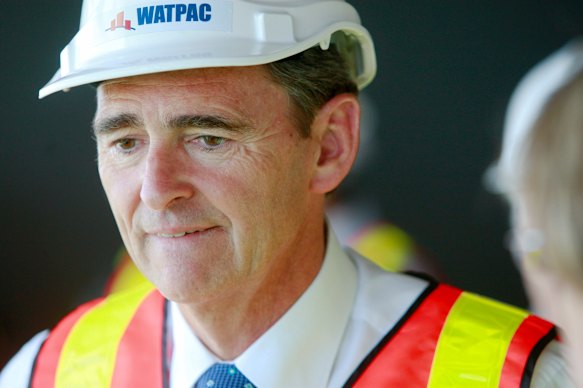
The network also extends to a layer of relatives. Several public board members are partners or siblings of high-profile Labor figures, including Chloe Shorten (the wife of former federal leader Bill Shorten), Victoria Marles (a sister of Deputy Prime Minister Richard Marles), Terry Bracks (the wife of the former premier) and Rosemary McKenzie (Brumby’s wife). While all are accomplished professionals in their own right and The Age is not suggesting any undue influence in their selection, their appointments again highlight the narrow social and political circles from which board members are often drawn.
There is also a phalanx of party-aligned former staffers and union activists on boards, among them ex-adviser Ari Suss, former top adviser Sharon McCrohan, former state president Greg Sword, former Fair Work commissioner Leigh Johns and ex-ACTU president Sharan Burrow.
The boardroom ecosystem has also become a landing pad for the upper echelons of the Victorian public service into government-appointed directorships. Among them is former senior bureaucrat and current Labor Party member Tom Considine. He was one of the architects of the Suburban Rail Loop while in government and now sits on the board of the Victorian Funds Management Corporation.
Board pay is tethered to strategic importance: At top-tier “A1” boards – overseeing assets above $1 billion – chairs earn up to $160,000 while members receive up to $70,000. Other group A and B chairs command between $14,000 and $120,000. While the roles are nominally part-time at 20 hours a month, those chairing major authorities often work well beyond their 40-hour allotment.
All board members named in this story were contacted either directly or via their board. None wanted to comment publicly on their appointment.
The erosion of independent oversight
“The result of The Age’s research should come as no surprise,” said Redlich, the former IBAC commissioner, noting the situation stemmed partly from Labor’s three terms in power. “It reflects the political process that a party on gaining government seeks to fill public boards and departments with senior people that are members of or are affiliated with the party. Where the party remains in power for a prolonged period, such an environment becomes more pronounced.”
Redlich acknowledged that many board members were appointed because of their previous roles and experience, but questioned whether all board members – faced with difficult decisions that might not favour the government’s interests – would carry out their role responsibly.
“Whether hard board decisions will favour the interests of the party at the expense of the public interest will depend on the integrity and independence of the senior board members,” he said, adding that the lack of transparency more broadly now on display in Victoria was disturbing.
“The prevailing political environment in which there is little transparency and effective accountability poses an increased risk that at board level, partisan political expediency may, with relative impunity, displace the public interest.”
Briggs in her report said the appointments of allies of the government of the day to federal public boards erodes institutional accountability.
While Briggs declined to be interviewed for this story, her findings only reached the public in December after a long battle by independent senator David Pocock to force their release. Federal Labor had sat on Briggs’ report for more than two years. While it ignored many recommendations of the report, the federal government has moved toward greater transparency by requiring ministers to publish the reasons for “captain’s picks”.
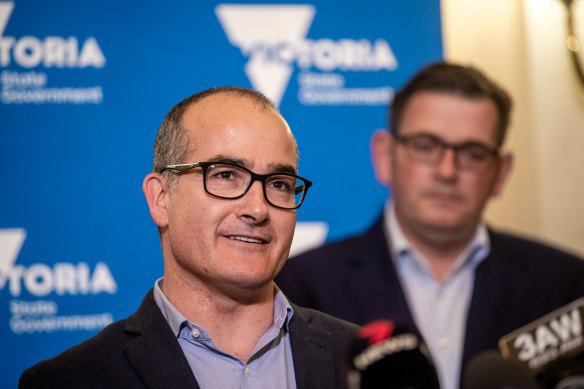
Pocock said the Briggs review had uncovered serious and systemic issues with how public appointments to boards are made. “These failings are not unique to the federal government – the problem is also far broader given the revolving door that operates between parliament and the private sector, which leads to an outsized impact of vested interests on policymaking.”
He said parliamentarians could in some circumstances be best placed to take up taxpayer-funded roles and contribute to public life. “But not always. We need processes that ensure expertise and experience are better recognised over political reward. Favouritism in public appointments is corrosive to good policymaking but also to people’s trust and engagement in democracy.”
Victoria’s Appointment and Remuneration Guidelines provide the legal scaffolding for board appointments. While the process is ostensibly built on merit, the system allows ministers’ discretion to pick candidates in their portfolios.
While small, unpaid community boards are populated via a department on behalf of a minister, any appointment deemed “significant” – including all high-level group A and B boards – must pass through the cabinet room.
This requirement ensures the oversight of the state’s multibillion-dollar infrastructure and health assets remains firmly within the government’s political grasp.
The guidelines mandate that the Premier’s Private Office must be consulted for all appointments requiring cabinet approval, and any appointments considered “important or sensitive”.
The requirement provides a direct line of political oversight for all boards, ensuring no appointment with the potential to impact the government’s broader agenda occurs without explicit sign-off from the premier’s senior staff.
Calls for structural reform
Colleen Lewis, an honorary professor at Australian National University and an expert in politics and governance, said this architecture of ministerial discretion must be dismantled.
“The way in which former MPs, chiefs of staff, ministerial advisers and senior members of the administrative wing of a political party are appointed to public sector boards needs to change, and now,” Lewis said.
She proposed the establishment of a parliamentary committee whose sole purpose is to interview and endorse public sector board appointments – to make the process entirely transparent.
It was important that the government did not chair this committee, she said. “It should consist of independents, members of minor parties, the opposition and government, and the government should not have the power to overturn the committee’s endorsement of a board member,” Lewis said.
Premier Jacinta Allan’s office did not respond to questions relating to board appointments, including why so many former MPs on state boards were from the Labor Party, or whether the lack of a “cooling-off” period for former ministers undermined board independence.

A spokeswoman for Allan said: “Victorian government boards are made up of individuals with a high level of expertise and integrity. They also reflect the diversity of our community because different perspectives help make better decisions for all Victorians.”
She said MPs applying to serve on Victorian public boards must, under state laws, be cognisant of their obligations in relation to post-retirement activities.
Opposition Leader Jess Wilson said the number of ALP-linked people being appointed to state boards had spiralled out of control.
“Under Labor, taxpayer funded board positions have become a retirement plan for Labor MPs and friendlies,” she said. “Victoria needs a fresh start and an end to the ‘grey corruption’ that has become increasingly commonplace under Labor.”
Wilson said that if she was elected premier in November’s state poll, board appointments under a Coalition government “will be based on merit and be made in a transparent manner”.
However, Wilson’s office would not elaborate on how appointments would be made transparently or how board membership would change under a government she led.
The case for experience
While critics decry a “closed shop”, some former MPs argue the system provides a vital outlet for under-utilised expertise.
Peter Loney is a former Labor MP for Geelong North and Lara who now sits on the board of the Victorian Registration and Qualifications Authority. He said the public perception of the “pampered” ex-politician was increasingly outdated.

Loney is also a past president of the Victorian Parliamentary Former Members Association, which has overseen research into life after politics. He said the transition was often fraught, particularly since the abolition of generous “defined benefit” pension schemes.
“There is this perception in the community that all former MPs have a substantial retirement income and they all get onto boards,” Loney said.
In reality, he said, many retiring members faced significant stress and employment hurdles. “Once the defined benefits scheme was wiped out, the people who followed had a much more difficult time,” he said.
For these individuals, board roles were not just perks, but a way to apply years of unique legislative and community expertise that might otherwise go to waste.
Veteran recruiter Kathy Townsend, who was consulted for Lynelle Briggs’ No Favourites report, said government roles were almost always advertised, and that transparency often triggered a massive logistical challenge. High-profile vacancies often attracted “hundreds and hundreds” of applicants who “have a view” but lacked relevant expertise, she said.
According to Townsend, boards must satisfy a complex “matrix” of criteria – ranging from regional representation to specific skills in law or accounting – which often forces aspiring directors into a cycle of repeated attempts. It was common, she said, for former public servants or ex-politicians to apply four or five times before securing a board seat.
Even when candidates lacked a specific sub-criterion for a vacancy, recruiters maintained “a massive database of people they think are good” to tap for future roles. Townsend described the processes she had been involved with for both Labor and Coalition governments as generally rigorous and skill-focused, but acknowledged that final selections could remain politically influenced.
While she had rarely seen ministers overrule a recruiter’s shortlist at the final hour, Townsend suggested that those intending to make a “captain’s pick” usually did so before a formal search was ever commissioned. “If a minister is going to do that, they do it before.”
Start the day with a summary of the day’s most important and interesting stories, analysis and insights. Sign up for our Morning Edition newsletter.

















































