3 months ago
17
3 months ago
17
But as shoppers hunt for bargains, the consumer watchdog is hunting for deceptive advertising – and scammers are hoping to exploit click-happy customers.
Here’s what you should know about Black Friday this year, and what to watch out for.
Black Friday FOMO is real: Moving earlier can pay off
Most retailers are now flogging deals well before November 28, earning the shopping phenomenon the nickname “Black November”.
“This year, the party has started even sooner. Amazon lit the fuse, launching its Prime Big Deal Days, and it was quickly followed by leading names like Myer, David Jones and Target - all before mid-October,” said Shippit joint CEO Rob Hango-Zada.
For the month, luggage brand July’s sales are 220 per cent higher than usual. “We wanted those cases, obviously, to last through Black Friday and the busy period, and we will be restocking, but not until December,” said Pitman.
Meanwhile, customer demands for lower prices, rapid delivery and seamless service are higher than ever, thanks in part to ultra-cheap ecommerce giants Shein and Temu’s low prices and Amazon’s same-day and next-day delivery times.
Gen Z, in particular, have grown up with expectations of infinite choice on demand, and those who meet the expectations of this demographic – which will be the largest retail spenders by 2030 – will find success, Hango-Zada believes.
“They’ve learned that they can buy a $12 outfit at midnight and have it on their doorstep the next day delivered free of charge. The implication here is that they expect that same level of convenience everywhere else,” said the ecommerce executive.
“Often, the difference between the retailers that are bustling and those that are struggling is the extent to which they understand - and meet the needs of - Gen Z shoppers.”
Geo-targeted ads: Promos are getting up close and personal
July luggage made a point of sending more personalised, targeted ads to encourage customers to shop in-store instead of online.
Why? People interact with the physical product, interact with store staff, encounter other items – like handbags or accessories – that they weren’t planning to purchase.

July encourages customers to shop in person, where people tend to buy more than they do online.
“What we see is a real opportunity to upsell customers,” said Pitman.
Customers tend to spend more when they come into physical stores and can touch and feel the range of products, she confirmed. “It helps to see it in real life and test out if that bag sits on that suitcase well.”
Loading
Meanwhile, some businesses have ditched sitewide sales to get customers to shop with them more than once through the sales season. For example, specialty sportswear store Pace Athletic has run daily November deals to keep customers coming back.
“Many brands have introduced early targeted offers and have been rotating these to encourage multiple purchase occasions,” said Carla Penn-Kahn, the chief of ecommerce software platform ProfitPeak.
“This is a smart strategy, by driving repeat purchases within a short period, brands can build customer lifetime value more quickly and make their customer acquisition costs more efficient.”
Small businesses are under pressure – and opting out
Markdowns are great news for consumers – but more than six in 10 small business owners report feeling pressured by the period of promotions driven predominantly by global and larger retailers.
Just 39 per cent of 500 small business owners surveyed by Xero say they plan to hold Black Friday sales this year, down from 50 per cent last year, while 30 per cent say they can’t afford to offer discounts.
“If you’re a smaller business, that discount is directly an impact on your bottom line, and you don’t have the benefit of being a larger business with purchasing power,” said Xero ANZ managing director Angad Soin.
“There’s a day-to-day cash flow reality that large businesses don’t always have to feel, or don’t always feel as acutely as small businesses do.”
‘Sitewide sale’, ‘everything 20% off’: The ACCC is watching
Loading
Jewellery chain Michael Hill, Webjet, MyHouse, and Hairhouse Online were some of the businesses found afoul of the law in the Australian Competition and Consumer Commission’s Black Friday blitz last year – and penalised for it.
For example, Michael Hill held a “25 per cent sitewide” sale that actually excluded some products, while Webjet’s advertised airfares “from $18″ that were actually three times as much by checkout after the addition of compulsory fees that were not disclosed.
“We expect the ACCC to go a step further this year,” said law firm Holding Redlich special counsel Emily Booth.
Sweeping “sitewide” claims, was/now pricing that lacked genuine previous sale history, and “up to X% per cent off” claims that only apply to a selection of products will be in the ACCC’s sights this year, Booth said. So will bait-and-switch tactics, like advertising pictures of clothing with a certain price tag, but finding that that item is not actually sold for the advertised price.
“Consumers prefer to know that everything is 20 per cent off rather than hunt through to find what is 40 per cent off.”
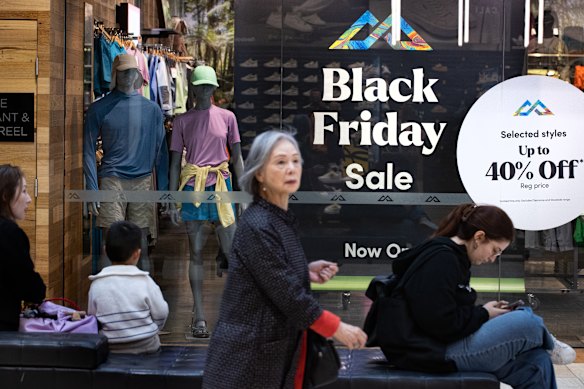
Most retailers are now flogging deals well before November 28, earning the shopping phenomenon the nickname “Black November”.Credit: Simon Schluter
If you spot a dodgy deal, the consumer cop on the beat is asking citizens to report them – and bring receipts.
“We are putting retailers on notice,” said ACCC deputy chair Catriona Lowe, who said customers waiting for a Black Friday deal should make a note of prices now so they can check they’re making a legitimate saving.
“Consumers shopping during the Black Friday sales are encouraged to report promotions or ads that raise concerns to the ACCC, including images of the potential misconduct.”
Scammers are lurking
The shopping frenzy is fertile ground for scammers, who will fabricate fake websites, sponsored social media posts and ads to cloned websites that will collect your payment data.
“In Australia, we’re seeing a rise in scam emails (which began to peak around November 5) and social media ads impersonating major brands and even luxury retailers,” said cybersecurity software Bitdefender security analyst Alina Bizga.
Scammers will exploit shoppers’ sense of urgency and trick them into acting quickly without verifying the deal’s legitimacy. “Australians can also expect a wave of fake delivery notifications and smishing texts as November 28 approaches,” said Bizga.
Shop through legitimate websites rather than ads or unsolicited emails, Bizga urged, and be wary of too-good-to-be-true promotions.
“When making online purchases, especially impulsive ones, it’s safer to use a credit card, which typically offers additional protections in case of fraud or disputed charges.”
The Business Briefing newsletter delivers major stories, exclusive coverage and expert opinion. Sign up to get it every weekday morning.