3 months ago
31
3 months ago
31
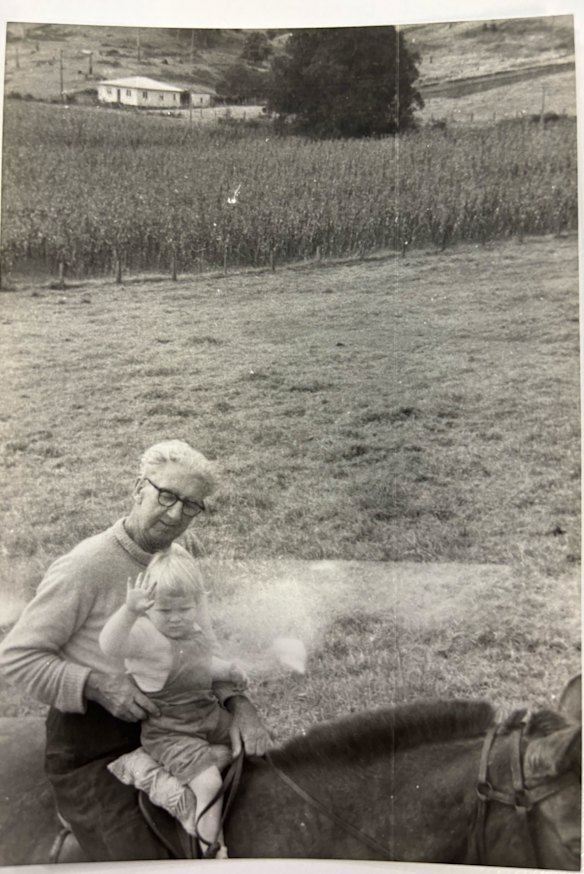
Reporter Julie Power with her grandfather on the family’s small dairy farm outside Nimbin in northern NSW.Credit: Julie Power
My childhood was one of watery contrasts: light Sydney beaches and the joy and fear of swimming in the small creeks of northern NSW that were filled with as many snakes as the curves of the banks.
The beaches were packed. But despite the sweltering, sweaty heat of northern NSW, we’d rarely sight another person in the creek that ran through the bottom of my grandparents’ long-defunct dairy farm, two kilometres north of Nimbin.
We children, three ranging from five to 10, would be dispatched out of the house for much of the day.
Out of sight of the farmhouse – a modest cottage with an empty dairy and a ramshackle piggery that later became home to some local hippies with what my grandmother described as a “lovely interest in gardening” – we’d remove much of our clothing and head west to the creek.
We’d hold barbed wire fences apart for each other, not always reliably. My brother Michael remembers the prickly Scotch thistles. We’d negotiate paddocks with bulls.
As we walked up and down the creek, we’d find bits of rusted farm machinery, fences that had toppled over, barbed wire, an old toilet, and bones picked clean. My younger brother Bill jumped in part of the creek and landed on a corrugated iron canoe. He ended up with stitches and a tetanus shot.
Cows grazed nearby. Sometimes we’d stop and stare at a cow that appeared to be as equally fixated on us. Wet cowpats dotted the banks. Dry ones floated by.
There was little resembling a beach but it was shady under the she-oaks. Sunbaking inevitably meant getting ticks from the grass and leeches in your cracks.
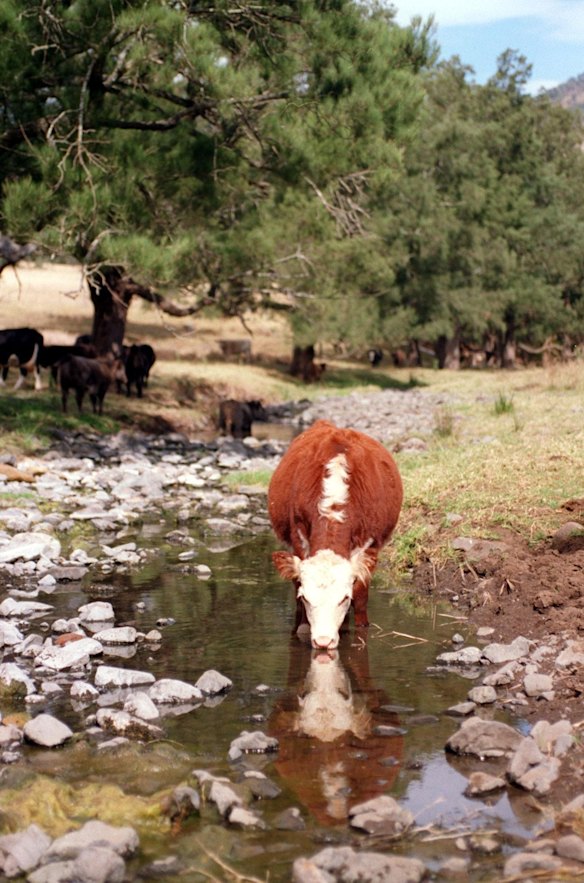
Cows aplenty around the swimming creek.Credit: Fairfax Archive
Occasionally we had rare sightings of the bubbles of the playtpus that my grandmother, Big Julie or Julia, swore were there. Eels were routine, so were fish, birds and reptiles.
Getting in was a relief. The water under the shadows of the overhanging banks was as cold and dark as a dungeon. We’d bomb each other, and jump if we could find a handy branch to climb on.
Staying in for long was a trade-off, the cold of the fresh water versus the threat of snakes and eels.
The snakes weren’t only in the water, they were in the toilet, home to a house python that ate vermin, and the occasional red-bellied black snakes.
Checking under the rim for snakes was a safety precaution. But not enough to assuage my fear.
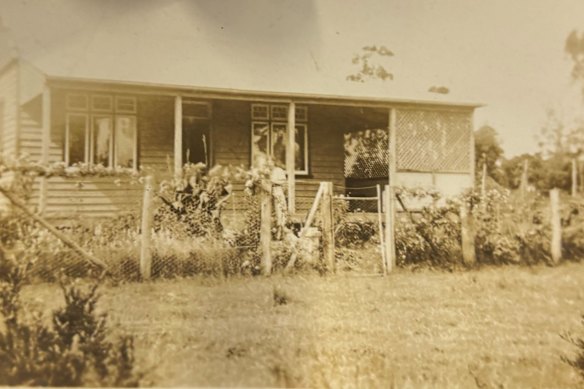
The farm house outside Nimbin in northern NSW where reporter Julie Power spent Christmas holidays. Credit: Julie Power
For the duration of these trips I was constipated. I would “hold on” for the time that we were there, before my grandmother pulled out some ancient device for delivering enemas that struck a fear worse than the snakes.
When my grandfather was alive, there were dead snakes every morning around the cattle’s trough, drawn to the water. He’d beheaded them with a spade or shot them.
They were in the grass and the old dairy. And the boys who lived on the farm across the road loved to taunt me. “Juuulieee,” they’d say in the particular northern rivers drawl, “snaaake.” That would frighten me enough that I would clamber on their horses to escape.
In my mind the snakes were in our old car, which had holes in the floor that we could stick rubbish through. I feared they were curled in the engine and under my feet. I sat cross-legged to avoid them.
Even now, I hear a rustle in our car and I think, snake! In our overgrown backyard I stomp my feet to tell them to stay away. Before jumping in any pool I check for snakes, in the same way I look for rips and sharks at the beach.