
 4 months ago
77
4 months ago
77
The kidney and liver waiting for Frank Giamarelos were still alive when he arrived at the Austin Hospital in the middle of the night for an Australian-first double transplant.
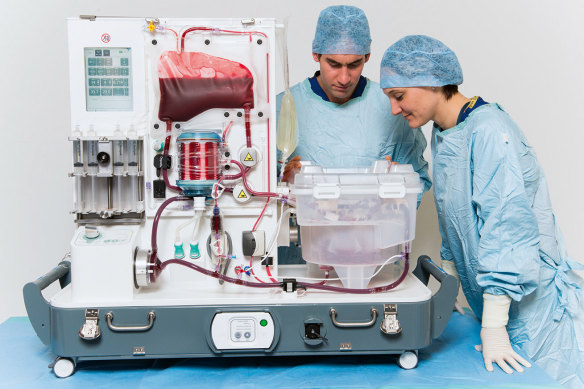
No longer inside a human body and sitting in a plastic box, the liver was being fed sugars and nutrients it would normally receive from the digestive system through normothermic machine perfusion.
The dark reddish-brown organ was also being pumped with warm, oxygenated blood through plastic tubes, allowing the liver to make its own bile and clear it of any toxins.
Nearby, another machine hummed away, keeping a donor kidney in active hibernation; its cells still breathing and processing oxygen as if it had never left a body at all.
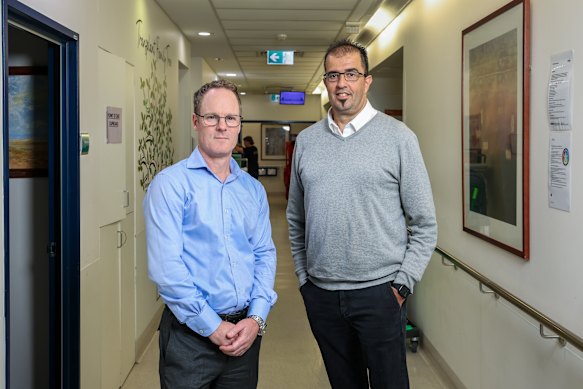
Austin Health’s kidney transplant service’s medical director, Associate Professor John Whitlam said perfusion technology was transforming every aspect of organ transplants in Australia and across the world.
This included the way surgeons operate, the types of patients who can donate organs, and even the outcomes for recipients.
“It’s quite science fiction this idea that basically you have an organ outside the body, and it’s being kept alive by a machine,” Whitlam said. “It is super cool, it’s super weird.”
Crucially, organ perfusion is allowing doctors and transplant surgeons at the Austin Hospital to test the viability of donated organs before they are transplanted. The technology works by being able to replicate the conditions inside a human body.
“It is super cool, it’s super weird.”
Austin Health’s kidney transplant service’s medical director, Associate Professor John WhitlamFor the first time in Australia, a team at the Austin Hospital in Melbourne used pioneering perfusion technology to undertake a double transplant for 51-year-old father of two Frank Giamarelos, who was on the brink of organ failure.
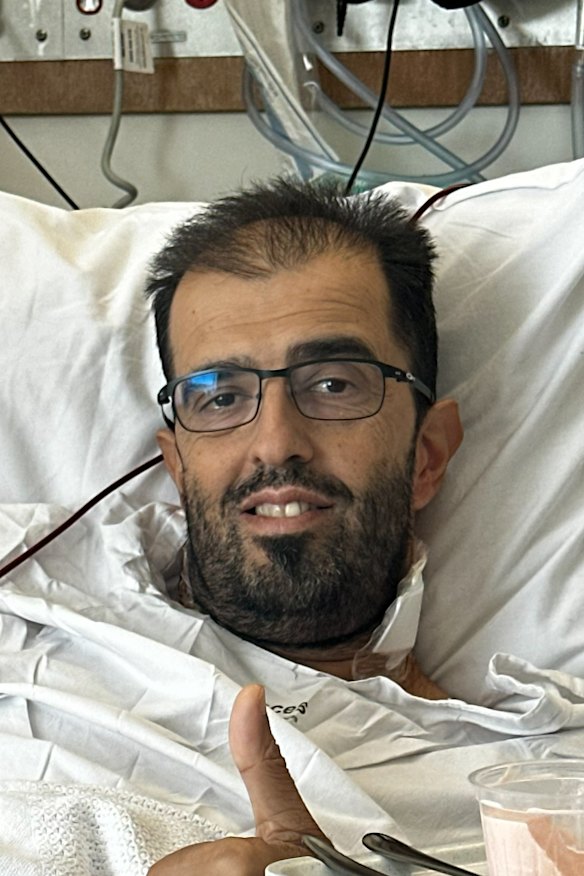
Giamarelos had been diagnosed with a rare genetic disorder known as hereditary polycystic liver and kidney disease. He was living in debilitating pain, his stomach protruding as his liver swelled to more than nine kilograms, while his kidney grew to 1.2 kilograms.
He was left struggling to breathe, suffering from severe back pain, and some days he was so exhausted he could barely move.
Giamarelos’ kidney function was hovering at six per cent. He had been on the organ waitlist for almost two years, until a late night phone call in October last year, when he was told a kidney and liver from a donor had finally become available.
Before this call, Giamarelos had consented to being part of landmark research at the Austin Hospital, which meant he could be the first recipient in the country to have both organs perfused before transplantation.
Giamarelos, who works in medical diagnostics, did not hesitate to sign up to the study.
“I was aware of the risks, but I was willing to take those risks,” he said. “These experiments, if you want to call them that, are crucial to modern medicine, and they can help so many people in the future.”
Austin Health transplant surgeon Graham Starkey said by the time Giamarelos underwent the gruelling and complex 16-hour surgery, his kidney and liver were enlarged and riddled with fluid-filled cysts.
“The cysts were like little water balloons,” he said. “It looked like an alien thing, like the surface of the moon.”
Starkey said perfusion allows organs to be safely stored for many hours longer, extending the window of time in which they can be transplanted.
“The main thing is this is stripping away barriers to someone like Frank getting a transplant,” he said.
“It means we can do complex cases that take a longer time without compromising the outcome for the patient.”
Whitlam said while normothermic machine perfusion was used for the liver, (which keeps the organ at the human body temperature of 37 degrees) hypothermic machine perfusion was used for the kidney.
“That’s a simpler technology because it uses a cold fluid, sort of like a fancy salt water and oxygen is added to that fluid, and it’s perfused through the organ, and it keeps it in a state of hibernation,” he said.
“The benefit is that it doesn’t deteriorate at the same rate as it would at room temperature.”
This meant kidneys can be stored safely for up to 30 hours. Previously, he said the process for storing organs was “essentially keeping them in a cardboard box with ice.”
“We call that static cold storage, and it is sort of basically like an esky,” he said.
Austin Health is the first hospital in the country with both liver and kidney perfusion machines, incorporating normothermic and hypothermic oxygenated technologies that keep organs preserved so more transplants can be successfully performed.
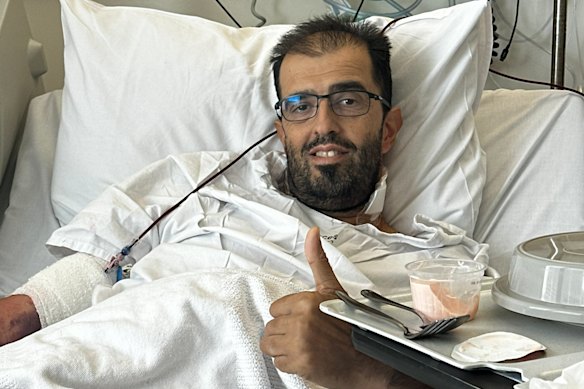
Following Giamarelos’ landmark surgery last year, staff at the hospital have successfully performed another double transplant where both organs were perfused before being transplanted.
Since the technology was introduced to the hospital it has been used for more than 200 transplants. In some instances, the hospital has perfused organs before shipping them to other transplant centres across Australia to save lives.
Victoria is facing critically low organ donation registration rates, with only about 23 per cent of eligible people registered as organ donors, compared to the national state average of 36 per cent and South Australia’s 72 per cent.
“All of this is really dependent on the generosity of families,” Starkey said.
“The real heroes of the story are the hidden, anonymous donors and their families.”
Giamarelos remains acutely aware that for him to have been given a second chance, a family somewhere in Australia lost somebody they love.
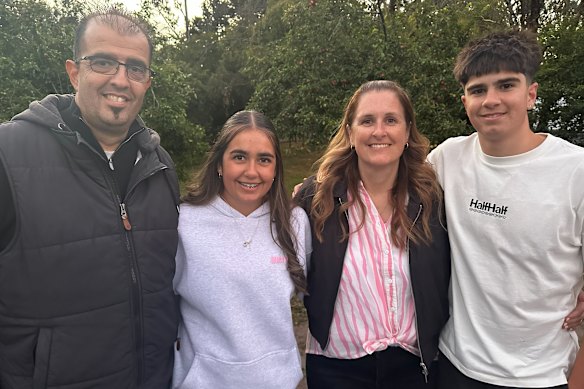
“I am just so grateful to that family for making that decision in one of their worst moments,” he said.
“It is the most amazing thing. They’re giving people like myself a second chance in life.”
He wants to make the most of his second chance. He loves being able to kick the footy again in the park with his 16-year-old son Jordan, and he is planning to travel overseas to the United States and a boat cruise to Mexico with his family this year.
“When something like this happens you learn to never take a moment for granted,” he said.
To learn more about organ donation in Australia visit DonateLife.
Be the first to know when major news happens. Sign up for breaking news alerts on email or turn on notifications in the app.

















































