3 months ago
28
3 months ago
28
This week’s reviews traverse everything from literary coming-of-age and experimental fiction to a history of palm reading and a celebration of lesser known Australian war heroes.
FICTION PICK OF THE WEEK
The Bitter Water of the Lake
Guilia Caminito
The Indigo Press, $34.99
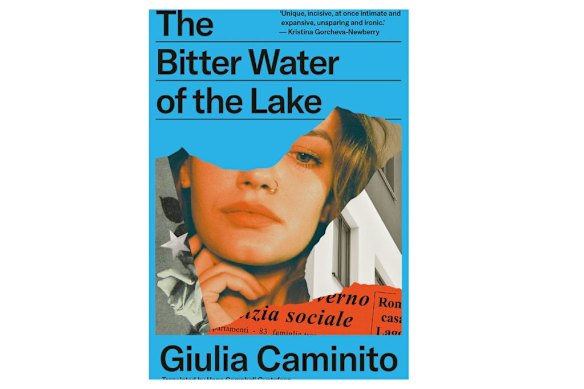
Few coming-of-age narratives tackle the psychology of growing up poor with the acuity of Guilia Caminito’s The Bitter Water of the Lake. Narrated by the adolescent Gaia, we follow an impoverished Italian family in the 1990s, as they move from derelict housing on the outskirts of Rome to a picturesque lakeside town. The upgrade can’t change deeply ingrained domestic dynamics. It even amplifies Gaia’s profound sense of difference – from her wolf-mother, whose dramatic attempts to improve her children’s lot are an embarrassment to her daughter; from her crippled father; from the friends she makes in a world so unlike the one her parents knew. Gaia’s a born writer, bearing cool-eyed witness to familial disintegration, and giving sharp poetic voice to her own intuitions of unbelonging. On the MSN chats that obsess her friends: “I didn’t know how to participate or what to share. I felt damaged, injured by my inability to join in – by my unspoken but obvious, boundless modesty.” It’s a literary portrait of an outsider, marked by an unsparing sensitivity to the harsh but complex emotional valences of childhood poverty.
Queen Esther
John Irving
Scribner, $36.99
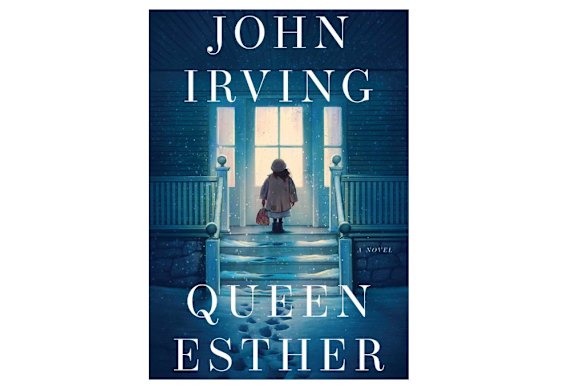
In his heyday, John Irving gave us The World According to Garp and The Cider House Rules. This late-career novel revisits the setting of the latter, although not in a way so substantial that it could count as a prequel. We begin in St Cloud’s orphanage in Maine, decades before the events of The Cider House Rules, with Dr Wilbur Larch struggling to find a family to adopt a Jewish teenager, Esther. The blue-blooded Winslows step up to the plate, but, as Gentiles, worry they won’t be able to help Esther discover her Jewish identity. A fascinating plotline that takes Esther to Palestine and membership of Haganah is, sadly, not followed through, as Irving shifts to focus on her son Jimmy, whose coming-of-age dominates the narrative until Esther crops up as an old woman by way of epilogue. Queen Esther isn’t as complete a novel as you’d hope. It does feel like a wasted opportunity to explore a strong character who becomes immersed in Zionism, and the Bildungsroman that overtakes Esther’s story, while streaked with characteristic humour, does deflate into predictability in terms of the author’s preoccupations. One of Irving’s lesser works, best read for completeness.
Else
Rose Michael
Es-press, $29.99
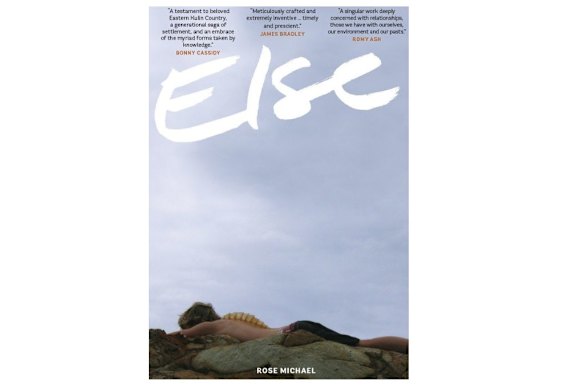
Rose Michael’s Else is experimental speculative fiction set in Boon Wurrung Country on the Mornington Peninsula, south of Melbourne. That’s where I grew up, so I expected a stronger sense of emotional engagement. It is, however, an intentionally difficult work, stretching familiarity into profound estrangement at multiple levels. Locale, language and literary convention are rewrought in a near-future world battered by climate catastrophe. As Leisl and her neurodivergent daughter, Else, flee a flood on “the Ninch”, other extreme weather events loom, and a role reversal transforms the close central relationship. Lacunae, bold poetic strokes, eccentric syntax and unusual orthography all create a sense of rhythm and disintegration. They’re so pervasive I wondered if this wouldn’t have been a more approachable, aesthetically liberated book if it had abandoned prose altogether and been reconceived as a cli-fi verse novel. As it stands, Michael’s radical vision can feel occlusive without being revelatory. It tries to inscribe a sort of colonial-settler dreaming, then to remodel language and decentre and expand our understanding of the human. Such ambition almost demands the ambit of poetry in full flight.
Dirt Trap
Michael Burge
MidnightSun, $34.99
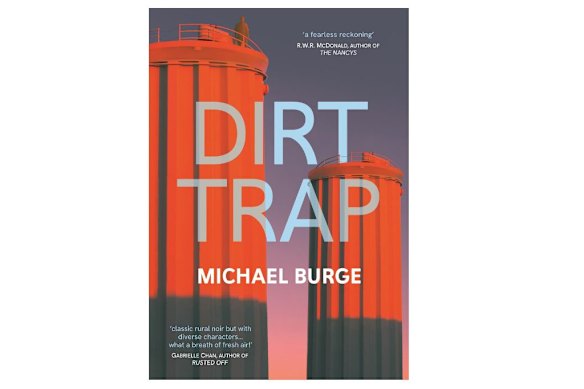
Sequel to Tank Water, Michael Burge’s Dirt Trap continues a rural noir series imagined through a queer lens. Journalist James Brandt uncovered homophobic attacks in his hometown of Kippen in the first book. No one wants to talk about that now. James and his partner Dylan live quietly, but old wounds reopen with an official inquiry into historical hate crimes against LGBTQ+ people. At the same time, Bobby Jones – a man from a notoriously homophobic family whom James believes to be a murderer – returns to Kippen. Bobby has a non-binary child and claims to have been converted from bigotry to queer ally. James doesn’t buy that, and when a member of the Jones clan winds up dead, and bodies begin to pile up, it looks like someone from the queer community’s taking revenge for past hatred and violence. James is the prime suspect, teaming with an under-resourced cop, Theresa Lin, to investigate, while facing media scrutiny himself. Burge is at pains to write progressive, socially conscious fiction, and although the sleeping nightmare of prejudice proves a dark spur to his rural noir, a lack of subtlety creeps into this one, undermining atmosphere.
Catch
Sarah Brill
Allen & Unwin, $24.99
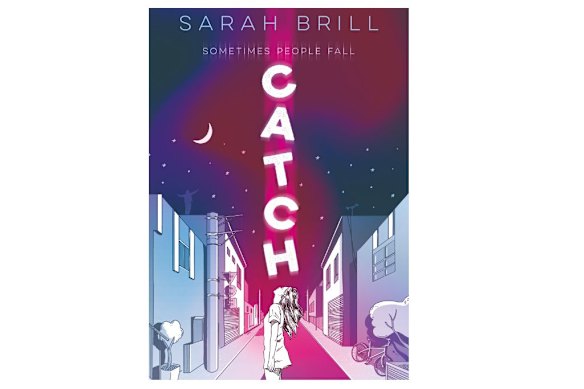
YA fiction with a teen heroine might be a dime a dozen, but Sarah Brill’s Catch imbues its main character with a rather strange superpower. Beth has turned 16 and the accompanying growth spurt will see her picked for a basketball team. But her newfound height comes with a… catch. She begins to experience intense bursts of nausea – a weird sixth sense that leads her unerringly to someone falling from a high place. Beth can always catch them and prevent strangers from accidents and deliberate self-harm. But her altruism is tested when the cost of helping – to her academic performance at school, to her basketball team, to her friendships and a budding romance – becomes clear. Can she balance caring for others with self-care? Brill’s swift, dramatic storytelling should hook teen readers. (It begins with Beth’s older sister Meg, in year 12, announcing her pregnancy to her parents over dinner.) Typical coming-of-age themes – friendship, identity, first love – come wrapped in a story that refuses to patronise its readership, exploring as it does the mature question of making judgments between worthy and conflicting goals.
NON-FICTION PICK OF THE WEEK
Decoding the Hand
Alison Bashford
University of Chicago Press, $79
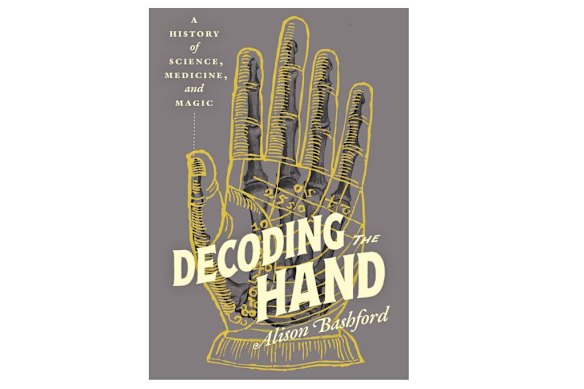
Over the centuries some of the finest minds of a given age have been drawn to reading palms and just what the lines may signify. Alison Bashford, history professor at the University of NSW, traces the long and colourful story of palm reading in what she calls a “history of bodily semiotics” and what these signs might tell us medically, scientifically or psychologically. The Simian Crease, for example, may or may not indicate the presence of Down syndrome. Of course, it’s also a tale of magic, charlatans and public suspicion, but Bashford, among other things, examines the modern conceit of patronising the practice – even esteemed medical journal The Lancet said in 1964 “interpreting the palms of the hand … is now a respectable science”. And the likes of Newton, Darwin and Francis Galton (inventor of fingerprinting) agree. An intriguing history of the human quest to discover the inner life in the outer signs through the prism of palmistry.
Guts
Melissa Leong
Murdoch Books, $34.99
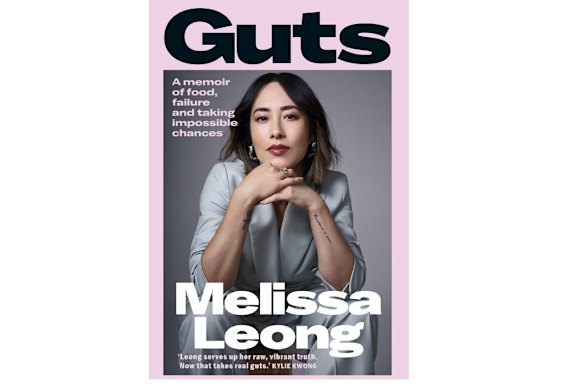
James Joyce’s offal-loving character Leopold Bloom may have eaten the inner organs of beasts and fowls with great relish – but he’s got nothing on Melissa Leong, whose boast is that she will eat anything once. Including tarantulas. Her memoir charting her career as a food writer, TV presenter and the first female judge on MasterChef Australia is what we call a success story. But it’s a candid memoir – she has suffered anxiety and serious depression most of her life and was raped in her twenties – that takes the reader backstage to see the vulnerability and fragility behind the polished performance. She also describes the impact of growing up in a tough-love Chinese/Singaporean family (detailing severe corporal punishment) in 1980s Australia, and negotiating these two cultures in school and the workplace. But, running through all this is the smell and taste of food, which for her transcends mere sustenance to become a life-sustaining art. Referring to herself as something of an outsider, she talks about her philosophy of life, among other things, and all of it interspersed with her favourite recipes. Passionate and as straight-talking as the title.
Australian Heroes of World War II
Mark Johnston
New South, $39.99
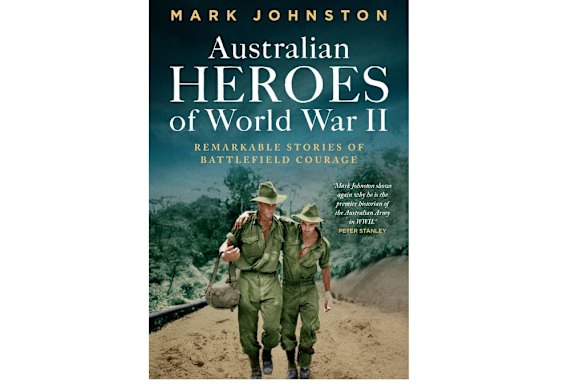
VC winner Tom “diver” Derrick, the archetypal heroic digger who wound up on a postage stamp, is the most famous of the hundreds of cases of heroism documented here by seasoned WWII commentator Mark Johnston. But Johnston is primarily interested in bringing to public notice the heroic exploits of the lesser known – such as Bren gun carrier driver Jack Spavin, who was part of an action in Tobruk that netted 800 Italian prisoners – while also emphasising that the “spectacular” exploits of individuals are dependent on the fighting effectiveness of their unit. In fact, many soldiers complained of the stinginess of the army in handing out decorations and not recognising soldiers who fought consistently well, if not spectacularly. He doesn’t glamourise or romanticise the heroic type either, at one point quoting US Army psychologist Eli Ginzberg, who wrote that “many outstanding combat soldiers [had] unstable personalities who might well be termed clinically ‘psychopaths’.”
The Grade Cricketer
Sam Perry & Ian Higgins
Allen & Unwin, $34.99
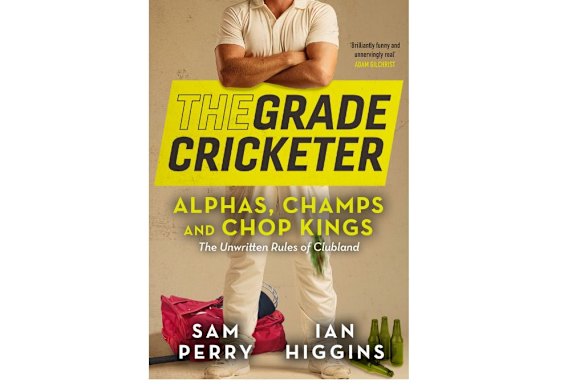
Anyone who has ever given up Saturdays and mid-week training evenings for their local club will recognise the rituals explored here as well as the characters. Perry and Higgins, the eponymous grade cricketer (building on their podcast), take the reader on an affectionately satiric journey into the absurdist world of clubland and its “unwritten” rules. Take the unlikely art of parking your car at training, for instance. You must, suggest our two intrepid guides, swing into the space with just the right “hint of aggression” and “intent”. The authors, who much of the time see cricket as the reality and life as its reflection, cover a wide range of dos and don’ts – from altering the scorebook to make yourself look better so your ex-girlfriend will take you back, to parading the club’s successes on social media. Sometimes they strain a bit hard for comic effect, but this is amusing summer cricket fare.
Just Go
Saya Sakakibara
Simon & Schuster, $34.99
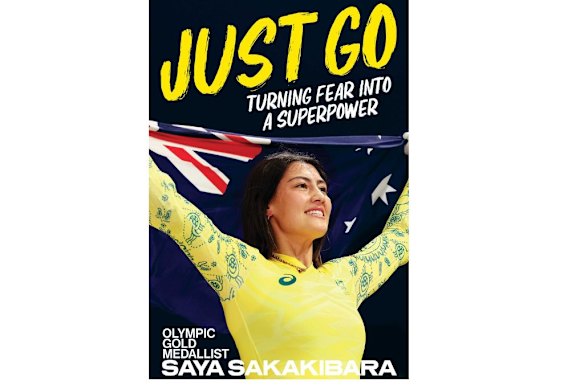
Winning can look destined, afterwards – but what Australian 2024 BMX Olympic gold medallist Saya Sakakibara documents here is the fraught, uncertain nature of the journey. Her memoir is not so much a record of overcoming fear as harnessing it and putting it to positive use so that the demons of doubt do not prevail. The years leading up to the Olympics were marked by a succession of traumatic events: her brother and fellow BMX racer almost dying after a racing accident and his painfully slow recovery, as well as Saya herself having multiple accidents and back-to-back concussion – bad enough to make her quit BMX racing for a while, before quelling her doubts and eventually winning in Paris. Along the way we get something of a family portrait (and the importance of her family in reaching her goal), as well as her early years growing up in Japan (Japanese mother), the shift back to Australia and learning English – her second language. An elite athlete, but a down-to-earth, easy reading style.
The Booklist is a weekly newsletter for book lovers from Jason Steger. Get it delivered every Friday.