3 months ago
27
3 months ago
27
Chantal Nguyen and Kate Prendergast
January 25, 2026 — 12:47pm
DANCE
SISA-SISA
Bankstown Arts Centre, January 23
Reviewed by CHANTAL NGUYEN
★★★★
The double bill SISA-SISA (Indonesian for “the remains” or “remnants”) marks the Sydney Festival debut of the extraordinary husband and wife duo Murtala and Alfira O’Sullivan, co-directors of the Indonesian cultural company Suara Dance.
Comprising two autobiographical solos, SISA-SISA represents long-awaited recognition for the couple, who have spent years channelling their energy into dance troupe choreography.
Both husband and wife possess an artistic maturity that makes its presence felt immediately: the kind that sears with intense honesty and a stage presence earned after only decades of experience.
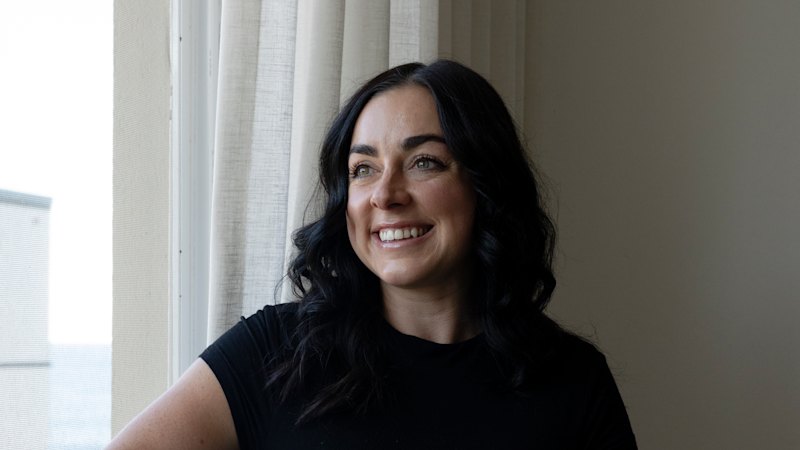
O’Sullivan’s work, Jejak & Bisik (which can be translated to “traces and whispers”), explores O’Sullivan’s life as an ageing female dancer caught in the crosshairs of unrelenting professional demands, motherhood and community leadership, and a traumatic misdiagnosed miscarriage.
As O’Sullivan changes costumes and fixes her hair on stage, her mobile phone buzzes with voice messages while emails from a management company pop up on-screen. A polite corporate voiceover reads them out: As O’Sullivan’s profession is relegated to “the multicultural stage” and deemed unsuitable for “mainstream” white Australian audiences, it will be subject to various constraints including a fee reduction. Could she create a dance piece for a conference, sandwiched between the Monday morning speaker and the keynote speaker, designed to keep people awake? Using her community troupe? For less than $500? During a period when she is recovering from reproductive surgery?
O’Sullivan, blessed with a striking natural glamour, demonstrates a beautiful sense of embodied theatricality and poise as she communicates this emotional journey.
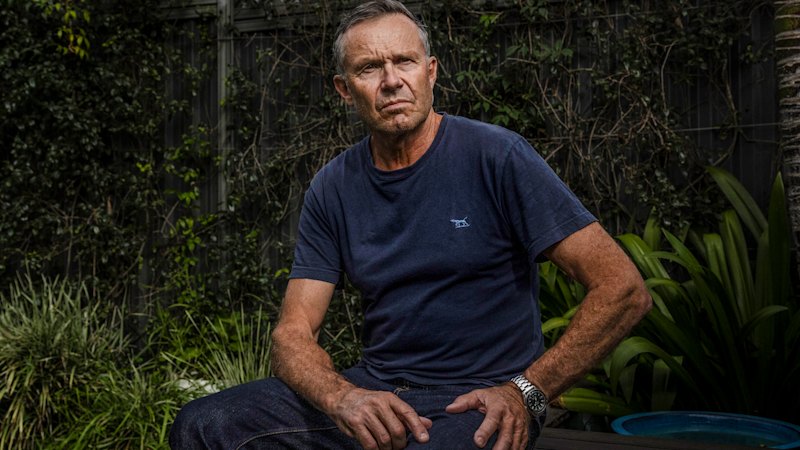
Murtala’s piece, Gelumbang Raya (which can be translated as “the Great Wave”), is his danced memory of recovering the bodies of victims of the Boxing Day Tsunami. A local of Aceh, Murtala returned after the tsunami as a disaster relief volunteer, working with survivors and — quite literally — staring death in the face as he carried thousands of bodies out of the mud.
Gelumbang Raya is haunting in its rawness and urgency, performed on a stage strewn with sand and visual projections of tides washing in and out. It incorporates Acehnese body percussion, singing, and the frame drum — 11 of which lie buried in the sand, like lives frozen in time by the tsunami. One of the piece’s final images — Murtala, lifted upside down in a head stand amidst the sand, singing in a piercing tenor as the drums lie around him — lands like a rip in your gut.
THEATRE
ASSES.MASSES
Drama Theatre, Sydney Opera House, January 24, until January 25
Reviewed by KATE PRENDERGAST
★★★½
By the fourth hour, you’ve entered a state of trance. Your communal gaming herd is cheering on a self-elected temporary controller who’s playing a version of Guitar Hero in the Sydney Opera House to get a donkey to maximise who’s playing a version of Guitar Hero in the Sydney Opera House to help a donkey maximise its fornicating delights.
This is Sick Ass, one of many donkey avatars, who’s just reached the Astral Plane (aka donkey heaven) as a casualty in the worker-animal uprising. What began as a peaceful protest against the human overlords’ exploitative machine-first system went horribly wrong, leading to death, displacement and disunification within the movement.
Your own ass is getting sore. Level complete, you all break for snacks.
The audience may have thinned after the third interval, with another four hours to go. But those who are spiritually invested for the long haul in this multidisciplinary, multidimensional epic and graphic radical allegory are all in – and rewarded for their loyalty. Travelling through farm and village, circus and abattoir, nightmare and nirvana; through hundreds of ass puns and inventively obscene animations, while conquering button-mashing challenges and philosophical puzzles, we become a pack immersed through live social experiment in a stunningly rendered universe – comrades in a common goal towards “true progress”, united by the liberating mindset of play.
Canadians Patrick Blenkarn and Milton Lim are behind the asses.masses project, brought to Sydney Festival for one weekend, and touring as far as Finland, Istanbul and Chicago next. Conceived with vast ambition, a collectivist sensibility and total nerd passion, it’s a unique animal of modern participatory theatre, using the language of video games and dorm-room humour to tell its staunch and timeless revolutionary tale.
The game art is truly dope. The “material world” is built with nostalgia-infused pixels, its textures, dialogue boxes, tessellated realms and soundscapes recalling Legend of Zelda or Pokemon. The “astral plane” is of the realism style, transporting us to sublime desert canyons (where donkey souls rave) and rolling infinity pathways (where the player-crowd yells “don’t do drugs!” when a power-boost orb appears). Classics games such as Space Invaders and Pac-Man are built into the narrative to either create obstacles, or simply offer fun little inconsequential diversions.
For example, we spent a gleefully inordinate amount of time in the mines getting the donkey foal avatar (whom we voted to name Bitch Ass) to play a version of Pong called Rocks. Later, another controller has Hard Ass hoof-kick a swarm of riot policeman dead a la Karate Champ. The difficulty level ramps up on our quest, with veteran pros stepping up to earn our thunderous applause.
Far closer to Animal Farm than Animal Crossing, there are some intentionally lurid depictions of violence, particularly against humans – from the life-like screams of burning villagers, to a factory worker getting eviscerated by his own meat hook. Most hilariously macabre is a grim, surreal sequence in which Hard Ass has to sacrifice himself many times to create a corpse bridge for/of himself over a bloody trench.
Obviously, with scores of people in the room, not everyone gets (or wants) a go at the controller. The majority are basic spectators – our ‘agency’ limited to adding to the cacophony of yelled dialogue options and directions, jokes and commentary. More theoretically than actually active, the player-herd moves through cycles of elation and fatigue, agony and ecstasy, frustrated boredom and shared jubilation. The durational aspect can take you to the edge: at one point I found myself cry-laughing at the excessively cautious way a controller was moving a mutinous gang of equines hidden inside packing boxes. During the seventh hour, we spontaneously rose to our feet to sing the “song of ascension”, a donkey funeral dirge.
Would I have better enjoyed this marathon on a friend’s sofa, where we could have a more equitable share of the controller, and partake of snacks superior to Doritos and dry vegan buns? Sure. But enjoyment isn’t the only marker of a worthwhile experience. Sometimes you have to endure the discomfort to come out the other side, finding yourself, in some way, new.