3 months ago
30
3 months ago
30
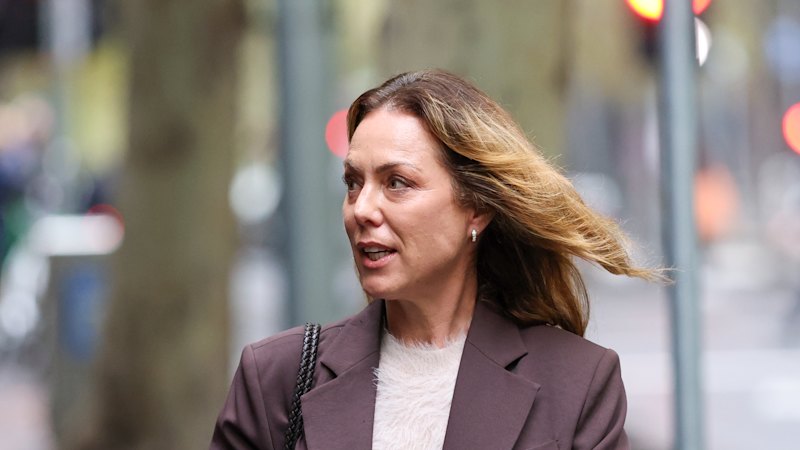
Ella Caldwell must have moments when she wakes up and reels at the sheer ambition of her current project. The artistic director of Red Stitch is staging Ray Lawler’s The Doll Trilogy, centred on the iconic play that upended local theatre back in 1955.
Summer of the Seventeenth Doll is feted as the first authentically Australian play, with quintessentially Australian characters speaking a quintessentially local vernacular.
Less well-known are the two accompanying plays that Lawler wrote 20 years later, but which act as prequels to the story of Queensland sugarcane cutters Barney and Roo and the Melbourne women they court every year between harvests. For the first time since 1985, the three plays are being staged together, including the option of an all-day marathon that starts at noon and goes well into the night.
“Oh, look, I think there’s a healthy amount of respect and a healthy amount of fear,” says Caldwell, “Not only about how big the project is and what it’s asking of all the artists in it – but also the sort of significance of the work to Australian playwriting and – I hope – to Australian audiences as well. I think it’s a rare and special thing to travel with ... characters over such an expanse of time and to understand them with such great writing. It’s just been thrilling.”
Lawler wrote Summer of the Seventeenth Doll in 1955; Kid Stakes, set in 1937, and Other Times, set in 1945, followed in the mid-1970s. Caldwell says the playwright “felt he had more of the characters of the Doll in him ... He must have had some love or some longing to revisit them.”
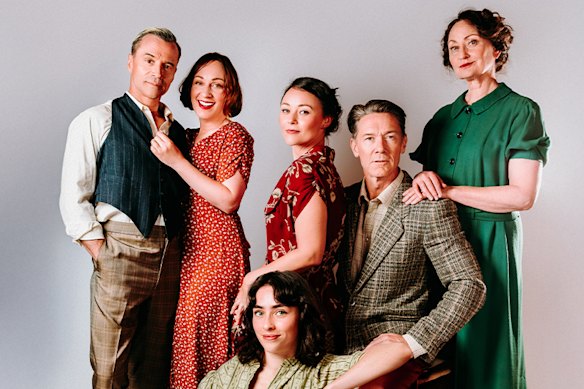
Ngaire Dawn Fair plays the lead role of Olive, one of the two Carlton women who await the annual return of the cane cutters for five months of sex, fun and freedom. Each year, Boo brings her a kewpie doll, from which the trilogy takes its name. But in their 17th year, things have changed. Roo is tired of cane-cutting and wants to settle down. Olive wants the fun to continue.
“There are parts of Olive’s personality that I really relate to, but I certainly feel like I’m stepping into Olive and it’s quite removed from me,” Fair says. “When I first saw the Doll I was probably a bit too young for it. I saw a lot of old people complaining and being nostalgic. But I think if I had seen the relationships building I would have realised Olive is not just delusional. She actually did have this really fun, incredible life and they did all go through so much together.”
Fair’s real-life partner, Ben Prendergast, plays Roo in this production. “He has a lot of Roo qualities,” she says.
The cast also includes Caroline Lee as the matriarch, Emma, and John Leary as Barney. Previous productions of the Doll have starred Zoe Caldwell, Noel Ferrier, Robyn Nevin, Genevieve Picot, Frankie J. Holden and Steve Bisley.
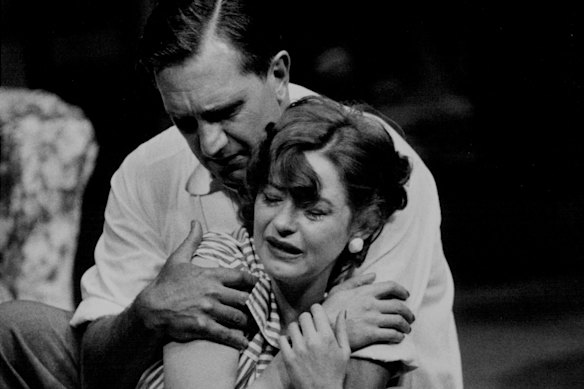
Aside from the burden of theatrical history, another challenge of staging the plays now centres on the speech patterns that were common among working-class Australians of the period.
“It is very true to the way people used language at the time,” says Caldwell. “It’s natural and attuned to the actors and we worked a lot at evolving it once they knew their characters. It was like the vocal persona of who they are.”
Fair chips in: “I have a line, for example: ‘Just as well or that drunk could have been more in my mother’s black books than he is now.’ It’s almost Shakespearean in that you have to work hard to get your head around it but once you do, they roll off the tongue.” She laughs. “But I’ve started saying them, we’ve all started saying them, in our everyday lives.”
As for the trilogy’s themes, Caldwell points to “the impact of the war that’s always part of Other Times. We get to come in contact with them when they’re starting to discover their dreams. And there’s so much in these plays about the battle for love ... The kind of vision Olive has is very different to the life her mother has lived, but Emma also has a great strength.”
Fair adds: “The mother is a quite oppressive, mature woman who struggled through the Depression and then there’s Olive, who really strives to live a joyful, in-the-moment life and finds people she can do that with.”
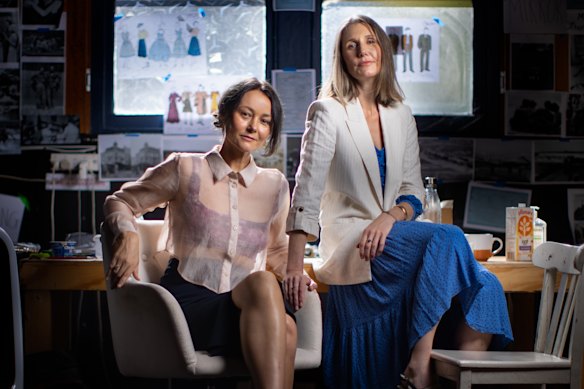
Fair and Prendergast, who have been living in LA for the past few years, have a daughter who turns five this weekend. Does being a mother feed into her characterisation of Olive?
“I think something happens to me with a kid,” says Fair. “I don’t watch horror films any more ... I’m more available to be emotional and that’s something that’s useful with this play because Olive really wears her heart on her sleeve.”
Caldwell says the trilogy is “about working-class people in Carlton across this era and across this family”. She is conscious of the long haul of history in these plays and sees them as “really like a love letter to Melbourne”.
She says she is offering a kind of elegy to the theatre warriors who first tackled Summer of the Seventeenth Doll and its prequels.
“Sadly,” she says, “right now most of the people who were in those original productions … there are not many of them who are still alive.”
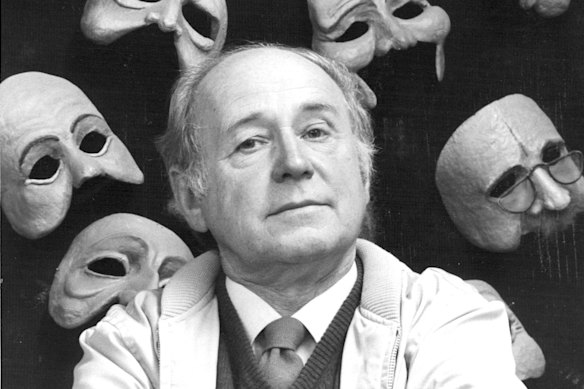
While many people have studied the original Doll at school, few people know the other two plays. Red Stitch under Caldwell’s aegis clearly wants to honour the theatre tradition that produced these treasures and what was achieved when Melbourne Theatre Company founder John Sumner encouraged Lawler to delve into the prehistory of his great play.
It’s a confronting archaeology. The negative case would say that while the prequels have their own sweep and power, they don’t reflect contemporary life and can never have the energy that animates Summer of the Seventeenth Doll, making it a play that bears comparison with Tennessee Williams.
But for Fair, the payoff of seeing all three plays “is so much greater”.
“We’re so involved in it now that we feel that if you only see the Doll you don’t know what you’re missing.”
The Doll Trilogy is at Red Stitch from February 10 to April 11.