2 months ago
30
2 months ago
30
What, to briefly dip into the world of Monty Python’s Life of Brian – did the Romans ever do for us? Apart, of course, from palaces and temples, amphitheatres and arenas, aqueducts and public baths, churches and villas and the myriad other important landmarks and buildings.
They all took root during the half-millennium when the Roman Empire moved beyond the Eternal City and left sophisticated and lingering fingerprints across three separate continents.
What if you were to rank these structures into some sort of order? What would that list look like? Can you weigh and measure the Roman ruins in Libya or Algeria in relation to those in Croatia or France? Can you really compare the Colosseum to the Pont du Gard?
Well, this cover story, for what it’s worth, is an attempt to do just that – casting its gaze across 50 Roman sites, in 24 countries.
(Note that some sites and the countries in which they’re located, are sadly, if not tragically, off-limits, as deemed by our federal government’s Smart Traveller website and denoted, below, by an asterisk).
Aghast at a glaring omission or affronted by a ranking? Please let us know your thoughts and suggestions at [email protected]
Here, in our countdown from 50 to one, are the contenders.
50. Tower of Hercules, Spain
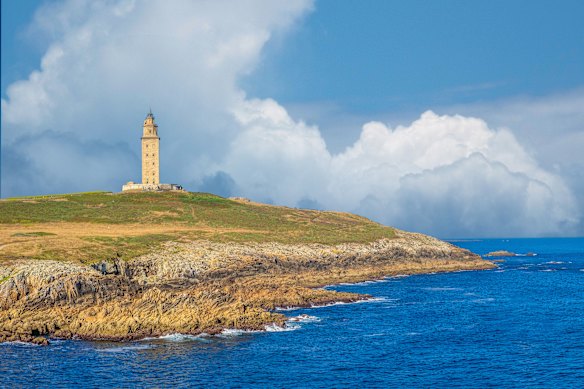
Set on a bluff just outside La Coruña, this 57-metre granite bastion – also known as the Farum Brigantium – is the oldest surviving Roman lighthouse (built in the first century AD). See spain.info
49. Felix Romuliana, Serbia
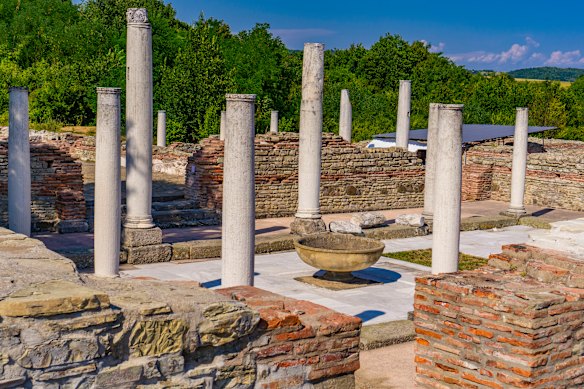
Rome’s control over the Balkan peninsula is still apparent in the remains of this imperial palace – built by the Emperor Galerius in what is now eastern Serbia in AD 298. See serbia.travel
48. Capidava, Romania
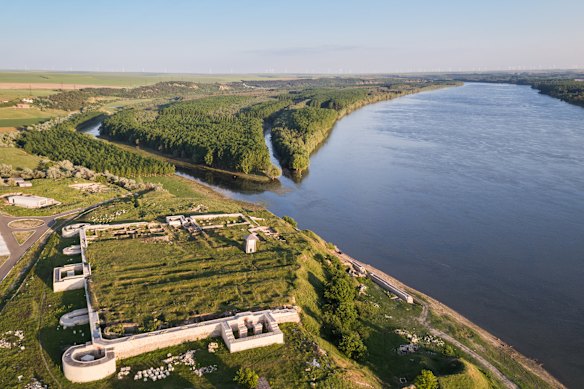
Ever alert and opportunistic, first-century Rome expanded this existing settlement – 48 kilometres inland from the Black Sea – into a snarling military watchdog on the north bank of the River Danube. See visit-romania.eu
47. Garni Temple, Armenia
Way out in the Caucasus, the Garni Temple – built around AD 77 and dedicated to the god Mithras is generally accepted as the easternmost reminder of the Greco-Roman era. See armenia.travel
46. The Walls of Lugo, Spain
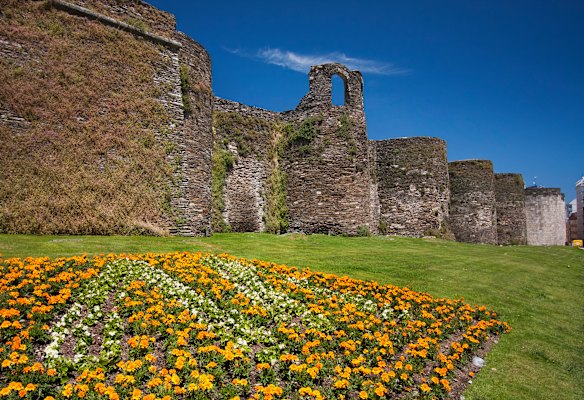
Back in the third century, the Walls of Lugo were built to protect a small city in Galicia, the Roman colony Lucus Augusti. Its nearly two kilometre circle of walls built to protect the city are barely changed by the passage of time. See spain.info
45. Temple of Évora, Portugal
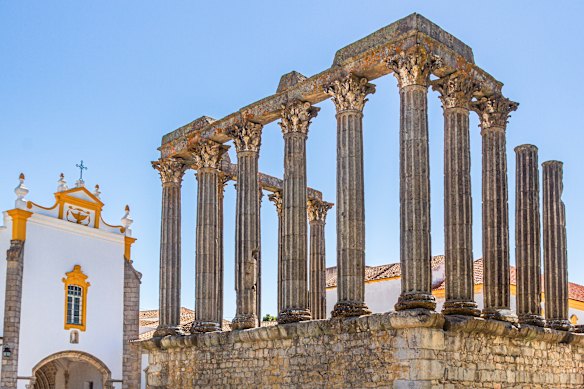
The capital of Alentejo was once the Roman colony of Ebora Liberalitas Julia. Its first century temple – probably built in deification of Augustus – is its clearest link to the era. See visitportugal.com
44. The Basilica Cistern, Turkey
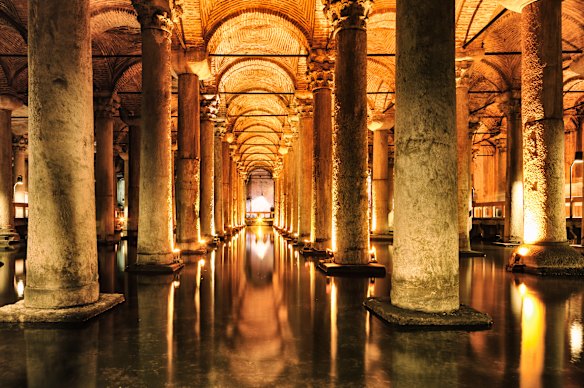
Istanbul is a jumble of epochs and empires, but peer below street level, and you find this cathedral-like water feature – founded by Emperor Constantine, and later expanded by Justinian. See goturkiye.com
43. Theatre of Philippopolis, Bulgaria
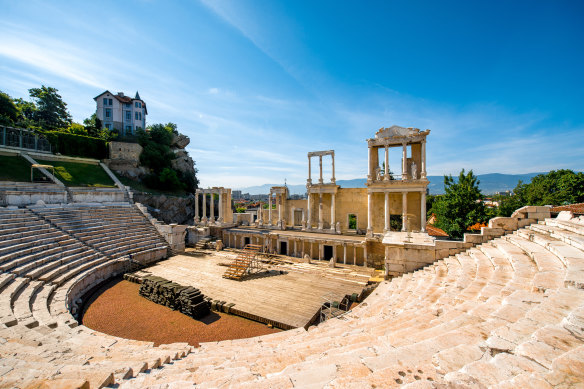
The word on the road signs is “Plovdiv”, but, in its basic DNA, Bulgaria’s second city is forever the Greco-Roman Philippopolis – an era this 1st-century arena remembers well. See visitbulgaria.com
42. Butrint, Albania
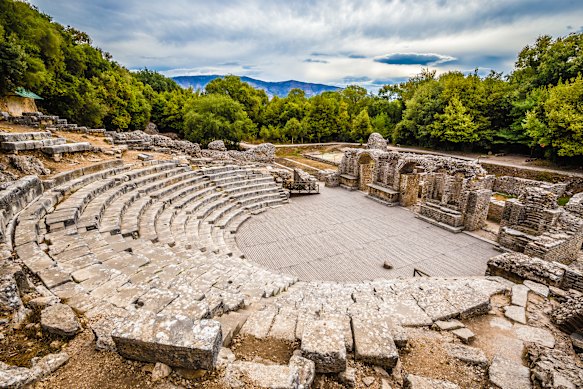
Or “Buthrotum”, as its Roman citizens would have known it – a cluster of tumbled villas and temples that, set just north of the Greek border, is Albania’s main archaeological site. See albania.al
41. Paphos Archaeological Park, Cyprus
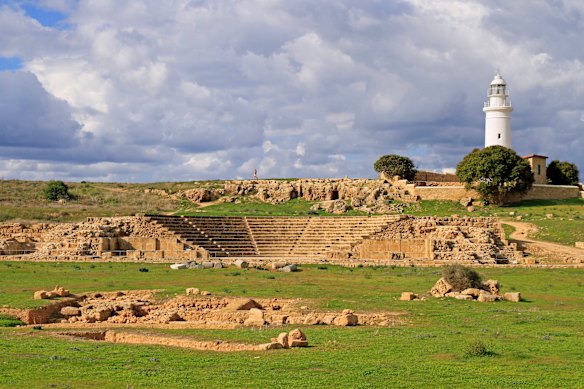
While the Mediterranean’s biggest island nation owes much of its heritage to Ancient Greece, the House of Dionysus and its mosaics are unquestionably Roman treasures. See visitcyprus.com
40. The Antonine Wall, UK
At 63 kilometres, it is about half the length of Hadrian’s Wall, but this fortification – running between the Firth of Forth and Clyde – served the same defensive purpose, albeit in timber and turf. See antoninewall.org
39. The Temple of Jupiter, Damascus, Syria*
An Aramaean then Greek shrine before Roman conquest in 64 BC (and later a church and mosque), the still-visible Temple of Jupiter is ancient Damascus distilled into one edifice. See smartraveller.gov.au
38. The Theatre of Vienne, France
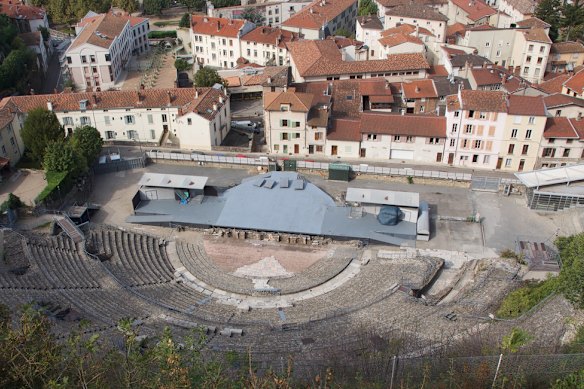
So sturdy is this first century theatre on the banks of the Rhone that this less-heralded Isère town uses it as the venue for its annual jazz festival, which takes place every July. See theatreantiquedevienne.com
37. Kom el-Dikka, Egypt
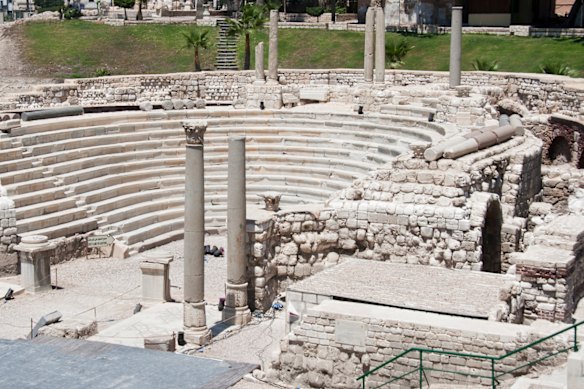
Egypt has a hallowed ancient story of its own, but the temples and theatre of the Kom el-Dikka site in Alexandria are a reminder of what happened when one empire vanquished another. See visitegypt.com; smartraveller.gov.au
36. Palmyra, Syria*
War and terror have desecrated this Silk Road satellite in the last 15 years, but Palmyra is still a pearl in the Syrian Desert, and its second century theatre was one of Rome’s finest. See smartraveller.gov.au
35. Ostia Antica, Italy
Landlocked Rome could not have hit such heights without its port at the mouth of the Tiber; a case-study in first century urban planning, at the hands of Tiberius and Claudius. See visitostiaantica.org
34. Arena of Nîmes, France
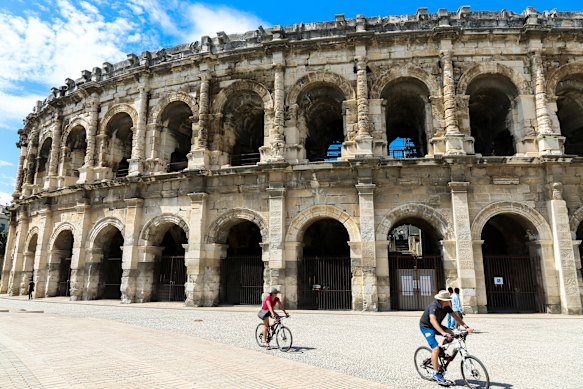
Built around AD 100, the Arena of Nîmes can perhaps claim to be the amphitheatre with the closest link to the gladiator fights of yore. It still stages bull fights. See arenes-nimes.com
33. Arles Amphitheatre, France
Just 32 kilometres and a single decade (it was built about 10 years earlier, in AD 90) separate Arles Amphitheatre from its close friend in Nîmes; a case of good things coming in pairs. See provence-alpes-cotedazur.com
32. Roman Carthage, Tunisia
So vicious was the Roman destruction of its African enemy in 146 BC that what remains of the ancient city-state – baths, temples, theatres – was largely built by the conquerors. See discovertunisia.com; smartraveller.gov.au
31. Antium, Italy
A coastal resort 64 kilometres south of Rome, Antium was an oasis for the rich. Not least Emperor Nero with the ruins of the Domus Neroniana recalling the first century villain in question. See italia.it
30. Sabratha, Libya*
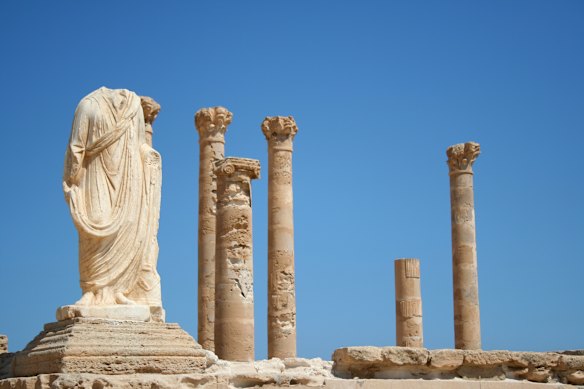
A seaside sibling of the more venerated Leptis Magna, Sabratha was another jewel of Roman North Africa. Its theatre, carefully restored in the 1920s, was built in the second century with a capacity for about 5000 spectators. See smartraveller.gov.au
29. Djémila, Algeria
Tucked into the hills of northern Algeria, Djémila owes much to the “Libyan emperor” Septimius Severus whose temple still dominates its romantic ruins. See visitalgeria.dz; smartraveller.gov.au
28. Verona Arena, Italy
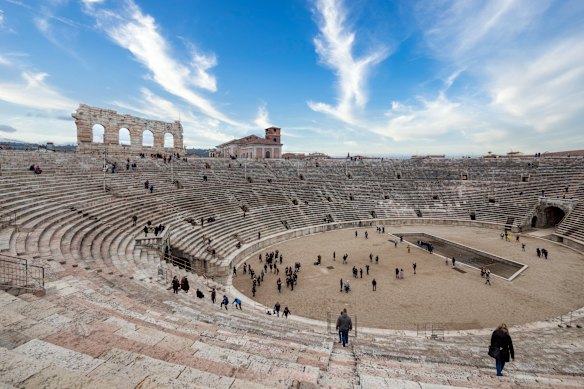
A wholly perfect circle that has brightened the city of Romeo and Juliet since the first century, and is still a cultural heartbeat via its annual summer opera festival. See visitverona.it
27. Amphitheatre of El Jem, Tunisia
While only half the size of its obvious inspiration, the Colosseum, this wonder from the third century was – and is – a giant. In its prime, it could hold a crowd of 35,000. See discovertunisia.com; smartraveller.gov.au
26. Aqueduct of Segovia, Spain
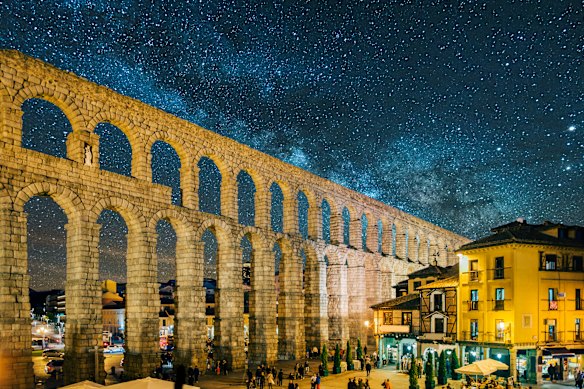
Two figures illustrate the glory of this icon from the first century in Castile and Leon. The first is 167: its number of surviving arches. The second is 1973; the year until which it was used as an aqueduct. See turismodesegovia.com
25. Pula Amphitheatre, Croatia
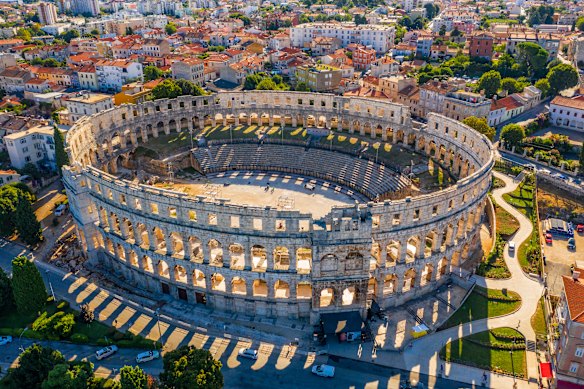
A near-contemporary of the Colosseum (it was completed in AD 68), Pula Amphitheatre is also better preserved than Rome’s greatest landmark. Its three tiers are still a full circle. See croatia.hr
24. Villa Adriana, Italy
Hadrian’s legacy went far beyond a wall. His private villa – built in Tivoli, 32 kilometres east of Rome, in AD 120 – still salutes its creator in its elaborate gardens and water features. See italia.it
23. Tarraco, Spain
Modern-day Tarragona was the first Roman settlement on the Iberian Peninsula, founded in 217 BC. Its soul lives on in its dazzling array of arches, baths, theatres and monuments. See spain.info
22. Herculaneum, Italy
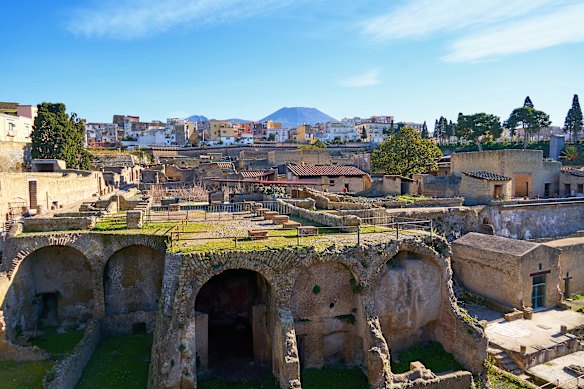
Pompeii’s partner in destruction is less eulogised than its neighbour – but just as well-preserved. Herculaneum was richer, a seaside resort – as its ruins still demonstrate. See ercolano.cultura.gov.it
21. Jerash, Jordan
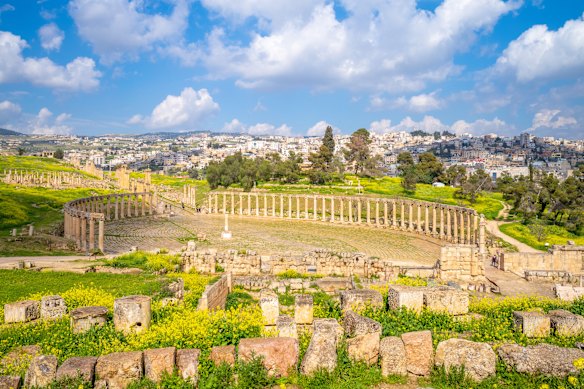
Somewhat overshadowed by its ancient compatriot, the Nabatean citadel Petra, Jerash is Jordan’s main contribution to the Roman story; a site whose Oval Forum is breathtaking. See visitjordan.com; smartraveller.gov.au
20. Aula Palatina, Germany
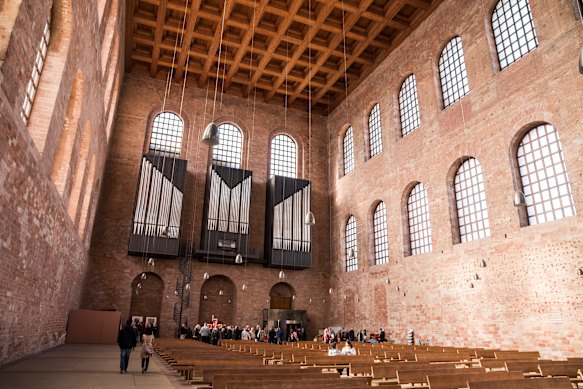
Evidence indicates that the Aula Palatina, a first flourish of Christianised Roman life, was built during Constantine’s reign. Still used as a church today, the building’s vast interior – a 67 metre hall of largely unadorned brickwork – is scarcely changed from the fourth century. See germany.travel
19. Volubilis, Morocco
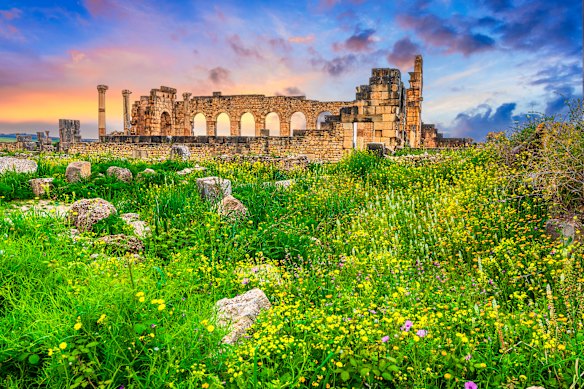
An outpost at the edge of empire – the ghost of Volubilis sits roughly 240 kilometres inland from Tangier. Founded as a Berber settlement, it took on Roman trappings from the first century onwards, with public baths, temples and houses whose ornate mosaics. See visitmorocco.com
18. Theatre of Aspendos, Turkey
Aspendos – by the south coast, 77 kilometres outside Antalya – was a city of significant stature. Its 13,000-seat theatre, crafted while Marcus Aurelius was on the throne, was a classic of the genre. Converted into a palace by the Seljuk sultans more than a millennium later, it is still used for opera and ballet performances. See goturkiye.com
17. Theatre of Bosra, Syria*
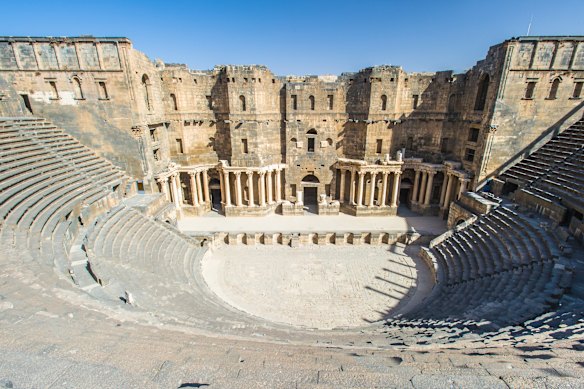
Of all the ancient treasures that have fallen from the travel list amid the bloodshed of Syria’s recent history, the 17,000-seat auditorium that sits amid the dusty ruins of southerly Bosra may be the most graceful. This relic of the time of Emperor Trajan, is sadly on UNESCO’s “List of World Heritage in Danger”. See smartraveller.gov.au
16. Temple of Bacchus at Baalbek, Lebanon*
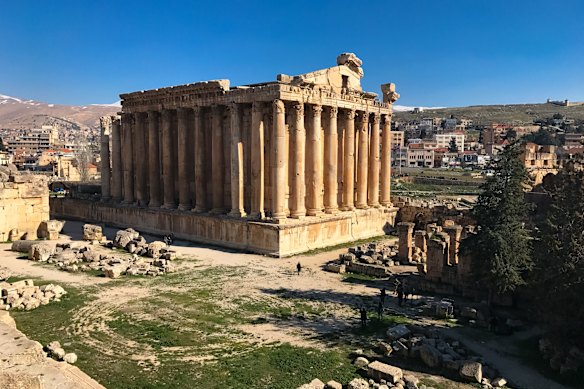
Middle East tensions have also enveloped these ruins. This is a small tragedy, as the Temple of Bacchus is among the most stunning traces of the Roman epoch; a colossus with columns soaring to almost 20 metres. Many of the sculptures and reliefs inside are intact having survived religious revolution and earthquakes. See smartraveller.gov.au
15. Hadrian’s Library and The Odeon of Herodes Atticus, Greece
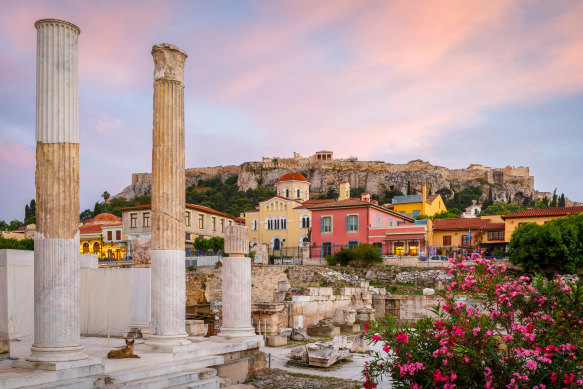
Hadrian’s Library remembers the eponymous Emperor on the north side of the Acropolis (even if the papyrus scrolls it once held have long been lost). The Odeon of Herodes Atticus, built by the titular Roman senator three decades later, is a glorious example of an ancient theatre, and still used for concerts today. See visitgreece.gr
14. Caesarea Maritima, Israel*
A Phoenician acorn in its earliest incarnation, Caesarea grew to be the capital of Roman Judaea following the annexation of the region in 63 BC. Two millennia later, it is not difficult to understand why. The remains of the port are still pinned to the Mediterranean’s edge, some 48 kilometres north of Tel Aviv. See smartraveller.gov.au
13. Leptis Magna, Libya*
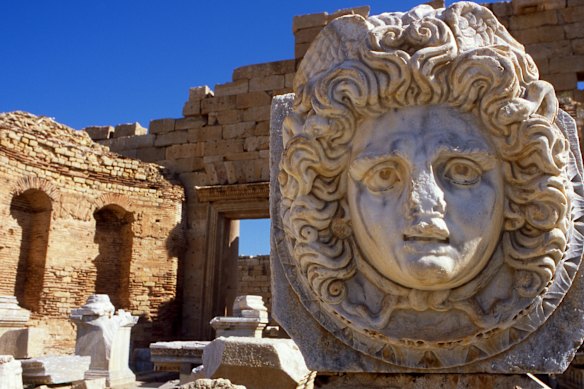
Abandoned in the seventh century, Leptis Magna was swallowed by coastal sands, and preserved in the process. Its inaccessibility – amid the political and humanitarian crisis that has held Libya in its clutches since 2011 – is a source of sorrow. See smartraveller.gov.au
12. Timgad, Algeria
This city’s reputation as the “Pompeii of North Africa” is not a reference to volcanic disaster, but to its being abandoned and forgotten for more than a millennium. Now extensively excavated, it has all the infrastructure and wow-factor of its Italian cousin – but crucially, only a tiny fraction of its visitors. See visitalgeria.dz; smartraveller.gov.au
11. The Roman Baths, UK
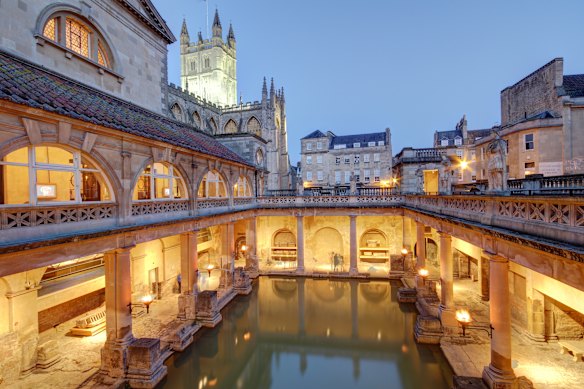
You can probably say that a building project has been a success when, 2000 years on, it lends its name to an entire town. Even with the Georgian and Victorian changes to the complex that have made Bath such a rosy image of English gentility, the ingenuity of that ancient channelling of its hot springs still shines through. See romanbaths.co.uk
THE TOP 10
10. Pont du Gard, France
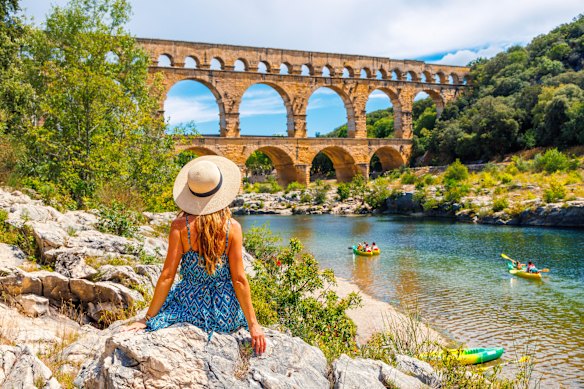
Constructed: AD 40-60
There are, of course, other surviving examples of the Roman aqueduct (including Segovia, above) – but none quite as adored as the marvel that still spans the River Gardon in southern France. Built to supply the baths and fountains of Nemausus (Nîmes), the Pont was so much more than a literal water-carrier. It was a honeyed vision in three tiers of sandstone arches, each layer smaller and more delicate than the one below. After the fall of Rome, it was repurposed as a bridge – before Unesco status was bestowed in 1985. See pontdugard.fr
9. The Baths of Caracalla/The Circus Maximus, Italy
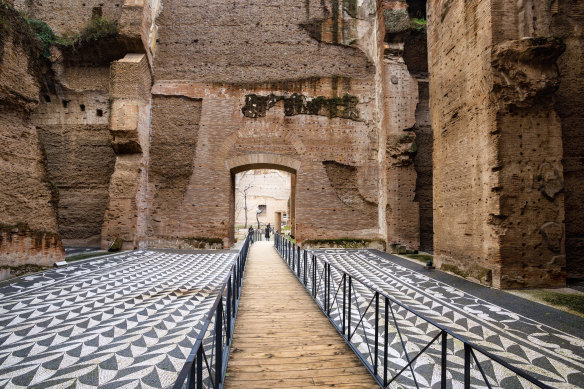
Constructed: AD 212-217/6th century BC
The image of Rome at play is enshrined in two keynote locations, less than half a kilometre apart, in the short valley between the Palatine and Aventine Hills. The huge ruins of the Baths of Caracalla are the most visible reminder of the city’s elevated hygiene levels (the bigger Baths of Diocletian are now the Basilica of Santa Maria degli Angeli) amid the stink of ancient times. A stroll away, the Circus Maximus is now largely reduced to a grassy space, but still clearly resembles the arena where chariot-racers thrilled the crowd. See turismoroma.it
8. Augusta Emerita, Spain
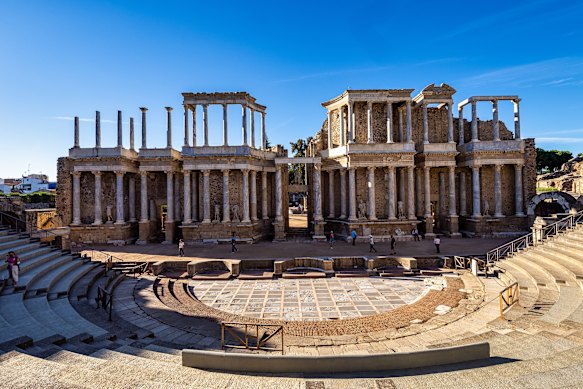
Founded: 25 BC
Emperor Augustus had only been crowned as the first Roman emperor for two years when he ordered the construction of a purpose-built home for military veterans in the west of the freshly conquered Iberian Peninsula. Augusta Emerita – now the Spanish city of Mérida – was suitably grand, and remains so in the present day. That it had both a 6000-capacity theatre (for stage shows; now restored) and an amphitheatre (for gladiatorial fights; now ruined) indicates that the old soldiers who settled here were expected to cool their boots. See spain.info
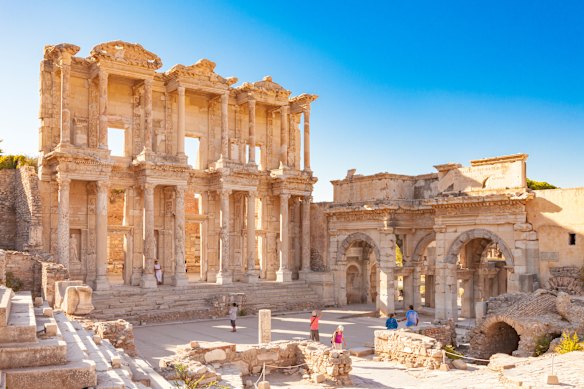
7. The Library of Celsus, Turkey
Constructed: cAD 110
Ephesus was an ancient Greek city at birth, its first stones laid in the 10th century BC. However, its most feted structure was Roman (named after the Tiberius Julius Celcus Polemaenus) – and, in its pomp, it was one of the most important libraries on the planet, stuffed with over 12,000 scrolls. It would later suffer at the hands of Germanic invaders and ruinous earthquakes – but, while the facade which now shines in Instagram feeds is an example of 1970s reconstruction, you have to applaud the quality of the work. See goturkiye.com
6. Theatre of Orange, France
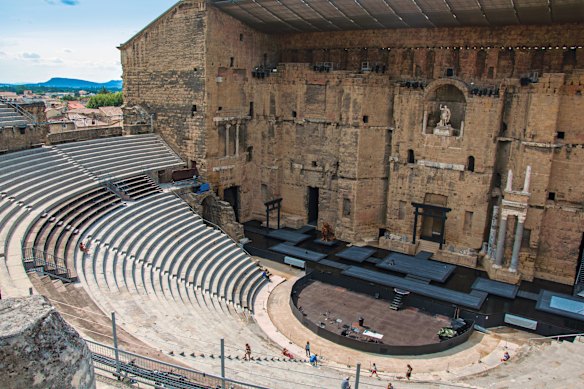
Constructed: AD 10-25
The Roman strategy of using culture as well as force to quell its new subjects took physical form in numerous epic arenas – none of them quite as spectacular as the elegant edifice built on Provencal soil in the reign of Augustus. Poetry, pantomime and “attelana” (a sort of farce), as well as drama, all played out on the stage in the colony of Arausio. Time has done little to the plan. The theatre’s summer opera season, Choregies d’Orange, is just as well-attended now that the city has a more recognisable moniker. See theatre-antique.com
5. The Pantheon, Italy
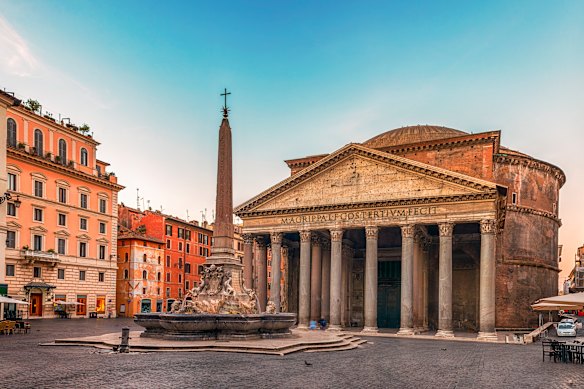
Constructed: c29-19 BC/AD 126
There can be no doubting the glory of a building that has been in near-continuous use for 2000 years, and is still as revered as it was when its doors first opened. This, in short, is the story of the Pantheon, the “temple of all the gods” that was constructed by the Roman general Marcus Agrippa in the time of Augustus, was rebuilt by Hadrian in AD 126 after a series of fires. It has operated as the Basilica of St Mary and the Martyrs since 609. The rounded marble of the church interior is iconic – the open oculus of its roof even more so. See turismoroma.it
4. The Palace of Diocletian, Croatia
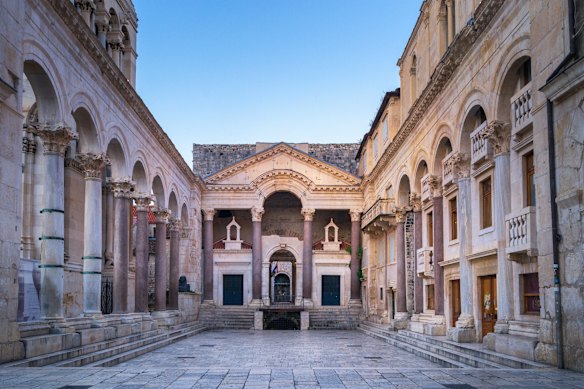
Constructed: cAD 295-305
You know you have had a fulfilling life if your retirement plan becomes a city. Diocletian was a big achiever – a poor boy who climbed the military ranks – even before he became emperor in AD 284. But his reign was so stable that he was able to abdicate in 305 – after commissioning a retirement palace, in his native Dalmatia. He would only live there for six years, but the complex has far out-lasted him. It is now the Old Town core of Croatia’s second city, Split – a nest of churches and courtyards that wears its past vividly. See croatia.hr
3. Hadrian’s Wall, UK
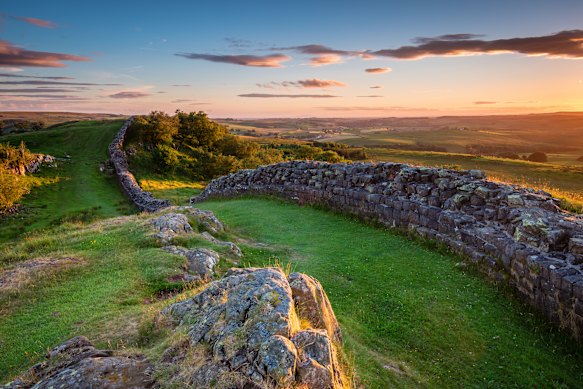
Constructed: cAD 122-128
For all Rome’s capacity to conquer and subjugate, it was a defensive fortification which left the greatest imprint on Britain. Whether Hadrian’s Wall was built purely – as any proud Scot will tell you – to repel the fierce Picts (it was also a hard statement of imperial power), it has proved to be an indelible relic of the ancient world. The full walk – from Bowness-on-Solway to Wallsend – is a matter of 135.2 kilometres and two seas. A pause at Vindolanda – the first century fort midway along – will put you in a centurion’s sandals. See english-heritage.org.uk
2. The Roman Forum/The Colosseum, Italy
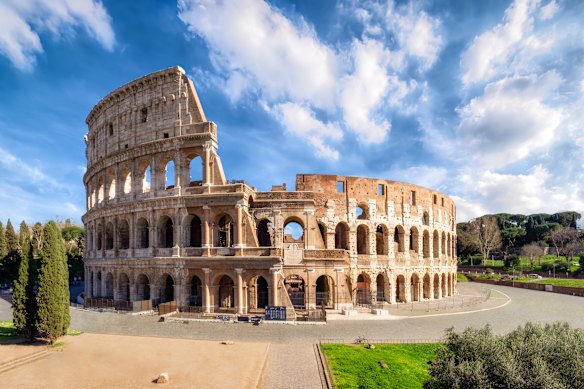
Constructed: 8th century BC/72 BC-AD 80
In many senses, a search for the soul of ancient Rome goes back to the start, and to the centre. The city’s earliest structures sprouted around its main plaza almost three millennia ago; the Temple of Julius Caesar would take up a key slot within it after his assassination in 44 BC. The arrival of “the Flavian Amphitheatre” – an arena that, for all its Christians, lions and gladiators, became the template for every sporting arena that came after – on the Forum’s east edge completed an image that is now familiar to billions. See turismoroma.it
1. Pompeii, Italy
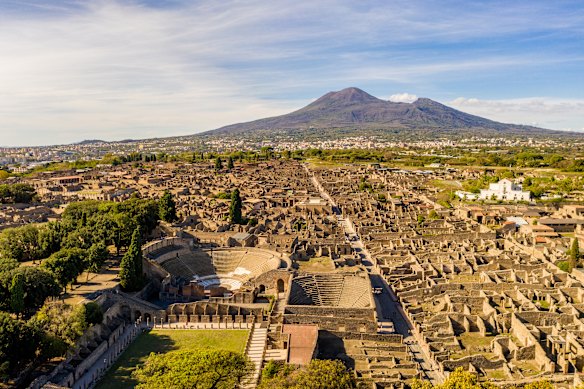
Founded: 7th century BC
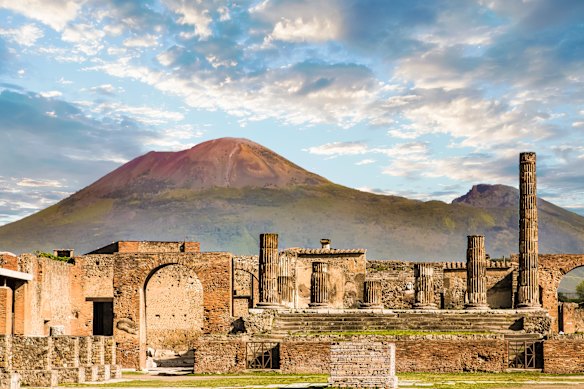
True, this small city in modern Campania would not have made this list were it not for August 24, in the year 79. But the eruption of Mount Vesuvius preserved Pompeii so utterly that there is no greater time capsule of Roman life. The shroud of ash that choked then buried everything in its path left an unmatched legacy; a perfect picture of the first century, with its temples and theatres, villas and mosaics. Even the dead are still there, their ghostly forms captured in pale plaster-cast, as if their personal cataclysms were almost incidental. See pompeiisites.org
This cover story is an edited version of an article which originally appeared in The Telegraph, London.