3 months ago
5
3 months ago
5
By Kathleen Felton
November 25, 2025 — 5.00am
No one ever wants to get a root canal. But if you do need one, a new study suggests the dental procedures may have an added bonus: They seem to offer both short- and long-term protective benefits that extend beyond the mouth, including potentially lowering cholesterol and the risk of heart disease or Type 2 diabetes.
In the study, published this week in the Journal of Translational Medicine, researchers followed 65 patients who had a common dental infection called apical periodontitis. Around half of all adults have had at least one tooth with apical periodontitis, according to some estimates.
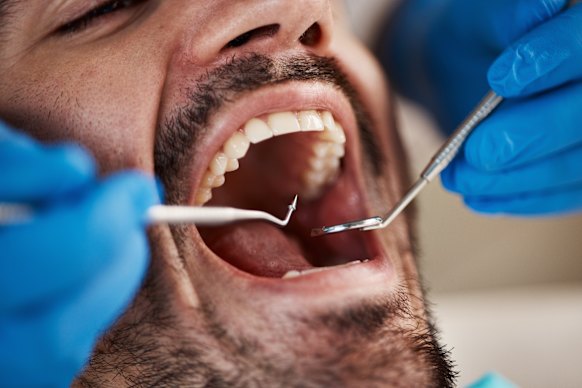
Anyone fancy a visit to the dentist? It could mean better heart health.Credit: Getty Images
The patients had an endodontic treatment, either surgery or a root canal, on the infected tooth. During a root canal, a dentist or endodontist cleans out the inside of a tooth – including all the nerves and blood vessels – to combat an inflammation or infection and save the tooth. The patients were then followed for two years.
The researchers found that treating apical periodontitis was associated with improved cardiovascular and metabolic health, including better blood sugar and cholesterol levels, and less inflammation.
“The presence of apical periodontitis can raise the risk of diabetes, heart disease and other systemic conditions,” says Sadia Niazi, a senior clinical lecturer/consultant at King’s College London and lead researcher on the study. “However, successful treatment promotes healing and leads to measurable improvements in patients’ overall health and wellbeing.”
This new research “is a breakthrough at the moment,” she says. “It is the first longitudinal study conducted on the largest patient cohort to date in this area.”
Loading
What did this research find?
In the study, Niazi and colleagues used nuclear magnetic resonance (or NMR) spectroscopy on blood samples from the 65 patients, all of whom had been referred to the Dental Institute of Guy’s Hospital in London with apical periodontitis. Samples were collected at five different points: before treatment, and at three months, six months, one year and two years.
Before being treated for apical periodontitis, the patients – even those who were otherwise healthy – had elevated “markers linked to cardiovascular risk,” Niazi says. These included blood sugar levels, lipid profiles and indicators of chronic inflammation that can affect heart health.
Those markers improved once the patients were treated, either with a root canal or periapical surgery, which is sometimes recommended for more severe cases. “After two years, these levels were markedly lower compared to baseline,” she says.
Some improvements were noted even earlier: Major changes in lipid metabolism were observed at the three- and six-month marks, including lower levels of cholesterol and fatty acids.
Loading
This study does not show cause and effect, and it’s possible some of these metabolic improvements could be explained by routine or lifestyle changes patients made during the two-year period, notes Karim El Kholy, an associate professor at Columbia University College of Dental Medicine. El Kholy has studied the link between oral health and cardiovascular disease, and he wasn’t involved in this new study. Because all the patients received treatment, there wasn’t a control group.
“But on a positive note, I think this study confirms what a lot of us in our own corners of the world have found,” he said.
How are root canals, heart disease and Type 2 diabetes connected?
Bacteria and other germs exist in your mouth all the time, but your body usually has a defence system in place. “If you look at the surfaces of the body, they are covered by an epithelial [a layer of cells] that is a protective barrier,” says Dana Graves, a professor in the department of periodontics at Penn Dental Medicine who has studied the connection between Type 2 diabetes and periodontal disease.
There are no such barriers at the tip of your tooth’s root, making it a perfect access point. Unlike the outer tooth, this area isn’t accessible with floss or a toothbrush, and the infected pulp can serve as a reservoir for bacteria to flourish. In this recent study, researchers detected bacteria in patients’ blood before treatment started.
Once these bacteria enter the bloodstream, they can spread. “Your mouth is connected to the rest of your body, and that link matters,” Niazi says.
Germs in a person’s mouth, for example, may travel to the lungs, where pneumonia or other respiratory infections can develop. Endocarditis, a rare but serious heart infection, can also be triggered by germs from the mouth that enter the bloodstream and travel to the heart’s valves.
A common denominator, experts say, is inflammation. When bacteria enter the blood, they can trigger chronic inflammation in the body. The concern is that long-standing inflammation can eventually aggravate certain health conditions, including cardiovascular disease and Type 2 diabetes, both of which have a known oral health link.
A number of studies “show if you have good, rigorous periodontal treatment, you can improve the glycemic control, or your blood glucose levels can be significantly improved,” Graves says.

Good oral health has known links with cardio health.Credit: Getty Images
Research also shows an association between oral health and cardiovascular disease, says Salim Virani, the vice provost of research and a professor of cardiology and population health at Aga Khan University who has studied cardiovascular disease and oral health. But a question mark – and something this new study seeks to answer – has been whether treatment helps, he says.
“We know from a lot of prior studies that poor oral health is associated with heart disease,” he says, “but we don’t know what happens when you treat these individuals. Does it lead to improvement in heart health?”
Regular dental checkups are essential
Routine dental care is critical, El Kholy says. “Sometimes these conditions that appear in the mouth can be silent,” he said. “It’s very important to detect these things and nip them in the bud before they start being a focal infection.”
It’s also important to eat a healthy diet, get enough physical activity, not smoke, and take any medication for high cholesterol or blood pressure your doctor prescribes, Virani says.
Make the most of your health, relationships, fitness and nutrition with our Live Well newsletter. Get it in your inbox every Monday.
Most Viewed in Lifestyle
Loading