3 months ago
26
3 months ago
26
From psychological thrillers to politics and Dolly Parton – this week’s books have something for every reader.
FICTION PICK OF THE WEEK
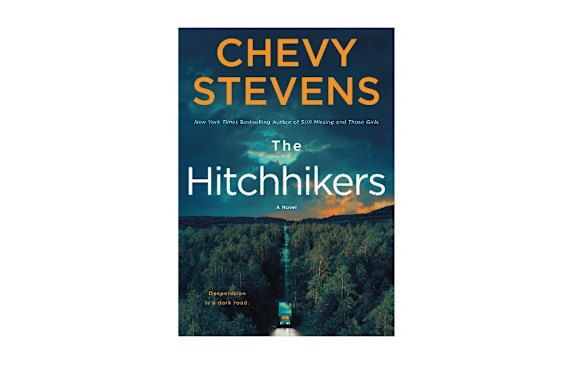
The Hitchhikers
Chevy Stevens
Macmillan, $34.99
Chevy Stevens’ The Hitchhikers is a period psychological thriller that takes us on the road and back in time. It’s the 1970s, in the Pacific Northwest, where Seattle couple Alice and Tom Bell have set off in their mobile home. They’re trying to process the grief of a stillbirth, after several miscarriages, and the forbidding wilderness of the north is part of that journey. When they meet Ocean and Blue – a young hippy couple – they pick them up without a second thought. But snatches gleaned from the news soon reveal the hitchhikers aren’t who they claim to be. They’re wanted by police having left a bloody scene behind them north of Vancouver, and the sense of menace grows as Alice and Tom discover they’re in a hostage situation, unwilling accomplices to fugitives on the lam. Stevens ratchets up the tension on this stark and suspenseful road trip, evocatively sprinkled with 70s cultural touchstones. Twists are expertly driven home, and it’s the kind of novel that will keep you guessing until the final page.
Gone Before Goodbye
Harlan Coben and Reese Witherspoon
Century, $34.99
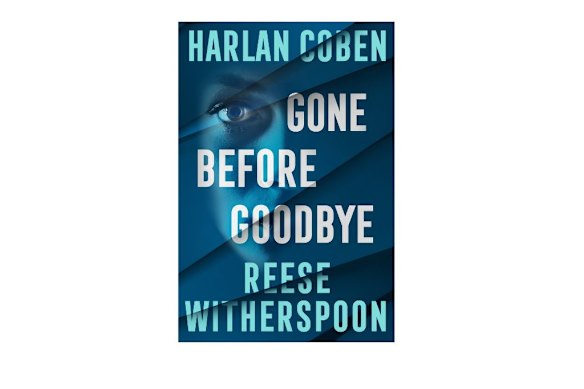
Novels co-written by celebrities and bestselling authors have become a publishing fad. Bill and Hillary Clinton pumped out books with popular writers, and Keanu Reeves joined forces with China Miéville for The Book of Elsewhere last year. The latest high-profile collab comes to us from the slightly odd pairing of Harlan Coben, well-known for his action thrillers, and Reese Witherspoon, although in some respects the latter’s long-running Book Club makes her a more credible candidate for co-authorship than most Hollywood A-listers. Gone Before Goodbye is a tense thriller with a strong female protagonist. Formerly an idealistic combat surgeon, Maggie McCabe gets sucked into a moral quagmire after a series of personal and professional disasters leave her bereaved and floundering in debt. Suddenly, she finds herself accepting a shady but lucrative offer from a Russian oligarch to perform a cosmetic procedure on his mistress. It was always going to be a Faustian pact. Maggie’s patient goes missing, and she’s ensnared in a web woven by a corrupt and callous billionaire class whose obsession with extending lifespan might well shorten her own. There are hard-to-swallow elements, but it’s a cinematic and propulsive page-turner, nonetheless.
The Heir Apparent
Rebecca Armitage
HarperCollins, $34.99

Speaking of Reese Witherspoon, the December pick for her Book Club is this Australian novel – a juicy melodrama set within a fictional British monarchy. Third in line to the British Crown, Princess Alexandrina has become estranged from the Firm, these days going by Lexi Villiers, trained as a doctor and living in Tasmania. Lexi is happy with her choices, and about to pash the man of her dreams on New Year’s Eve, unaware her life is about to be turned upside down. Within a day, tragic news arrives and Lexi suddenly finds herself heir apparent, destined to be Queen once her elderly grandmother dies. Returning from voluntary exile, the princess – who developed a reputation as a black sheep – always hated life in a gilded cage. But duty calls her back to the palace and a world of relentless scrutiny, traumatic secrets, and behind-the-scenes intrigue. The Heir Apparent plays unashamedly into the gossipy devotion the modern monarchy attracts. Yet it derives most of its dramatic energy from hard decisions Lexi must make, as she grapples with conflict between the life she would choose and a role thrust upon her.
Gravity Let Me Go
Trent Dalton
4th Estate, $34.99
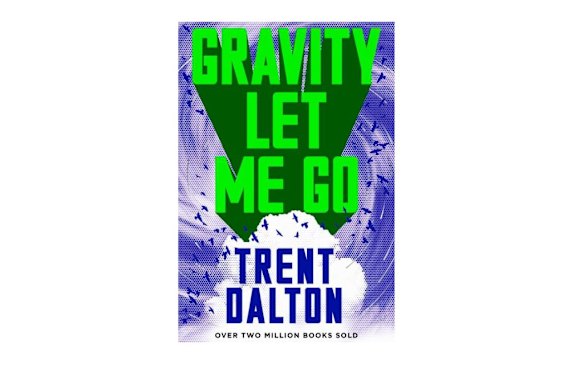
When someone is full to bursting with self-pity or self-fustigation you stop caring. So it is with Noah Cork, narrator of Trent Dalton’s fourth novel Gravity Let Me Go. The forty-something journalist has bashed out a true-crime book in record time after an anonymous tip-off. It’s an icky thing to do – to the family he ignored to write it, to the victim’s loved ones, to the workings of the justice system – and he knows that. Full to bursting – just like his right testicle, the pain in which he talks about endlessly, as if all his sins and anxieties had been gathered and focused into a karmic laser aimed at his scrotum. You can’t avoid criticism by pre-empting it, though. Nor do you get to be a good bloke by confessing you’re not. You’re … a dick with a bit of self-awareness, and neither blokey humour nor idealising the women in your life will save you, especially if your imagination of the latter is as skimpy and one-noted as Noah’s seems to be. It’s a cop-out of a novel, ethically speaking, though readers who can no longer distinguish between ethics and optics mightn’t twig to that.
The Ex-Boyfriend’s Favourite Recipe Funeral Committee
Saki Kawashiro
Simon & Schuster, $29.99

This novel has its origins in the author’s relationship breakdown. Saki Kawahiro’s quirky road to emotional recovery turned into a viral sensation and the fictionalised version of events became a bestseller in Japan. In the book, 29-year-old Momoko is dumped unexpectedly by her boyfriend in a love motel. It’s a shattering experience. She imagined he was her soulmate, and that the love motel thing was an excuse to propose marriage,. After Momoko gets plastered and regains consciousness on the floor of a café, she pours her heart out to Iori, a hot manager, and Hozumi, a habitué of the café and novice Buddhist monk. Upon learning she loved to cook her ex’s favourite meal, Iori suggests she whip it up for them in the kitchen. It’s a hit with customers, especially once they learn the story behind Momoko’s butter chicken recipe. And the idea soon catches on, transforming into an unusual support group inspiring strangers to cope with their grief through meals of personal significance. A cute bulwark against loneliness and a light guide to reclaiming agency and connection for the broken-hearted.
NON-FICTION PICK OF THE WEEK
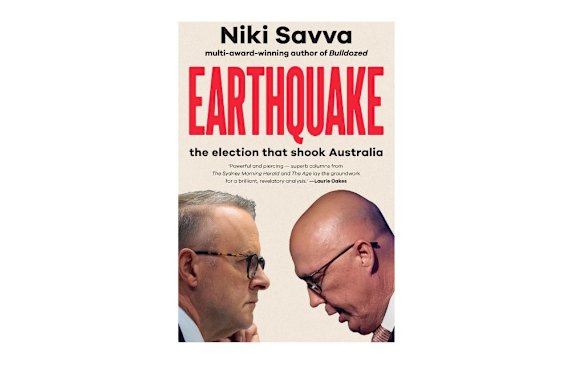
Earthquake
Niki Savva
Scribe, $36.99
This year’s federal election was an earthquake indeed. Nobody saw it coming. Even such a seasoned observer as Niki Savva, in her last column for this paper before polling day, was talking in terms of a narrow Labor victory or minority government. Her dissection of the event – which is also something of a portrait of the political mood of the country – is divided into two parts: a selection of her perceptive and astute columns, mini time-capsules that catch the wheels of the Dutton bus falling off, and the post-election analysis of just how such a coalition train wreck could have come about. It’s a layered tale of policy laziness, daily backflips, complacency and inevitable recriminations on one side, and a super slick Labor machine plus “an almost flawless” performance from the PM, on the other. One theme running through it is that of under-estimating your opponent: Labor, at first with Dutton, and Dutton incorrectly reading the referendum result and thinking the campaign would be a “doddle”. And there-in lies the cautionary element of the tale – take nothing for granted, not even a 94-seat landslide!
World of War Crimes: Eyeless in Gaza … and Beyond
Geoffrey Robertson
Penguin, $36.99
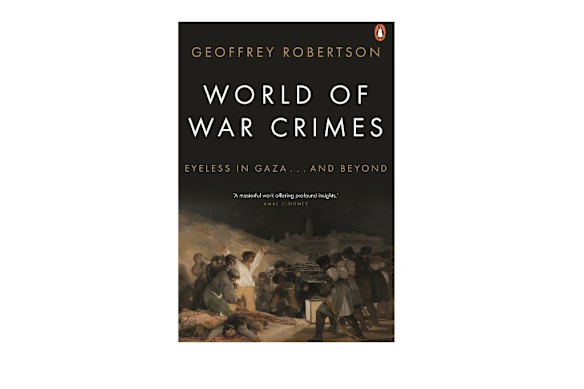
Few commentators on human rights abuses throughout history cut to the chase with the clinical clarity of Geoffrey Robertson. His focus here is on the “fraud” of international humanitarian law concerning the conduct of war, war crimes and the all too rare prosecution of war criminals – names on his list including Putin and Netanyahu, both indicted by the ICC. Current laws about the conduct of war are, he says, “unfit-for-purpose” and the UN is incapable of protecting democracies: the General Assembly is a “talking shop”, and the Security Council is basically rigged because its five powers (particularly Russia and the US under Trump especially) veto anything that doesn’t suit their purposes. We need, he argues, to establish a new organisation – a coalition of democracies (most of Europe, the Commonwealth, including Australia, as well as India and others) with enough “soft power” to deter illegal wars and criminals. The killing of civilians in war, justifications like pre-emptive self-defence (he is merciless in his condemnation of Putin in this regard), torture and war law, are all subjected to forensic examination.
Sisters of Scandal
Ainslie Harvey
Affirm, $34.99
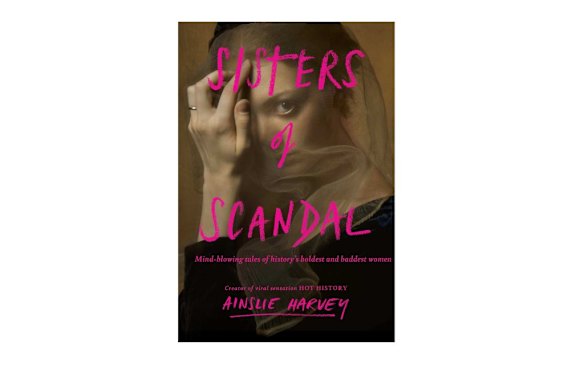
Taking her cue from US historian Laurel Thatcher Ulrich (who said “Well behaved women seldom make history”), Ainslie Harvey has compiled a gallery of women throughout history who have either courted scandal or had it thrust upon them. Harvey has a popular TikTok account, Hot History, and the style of the book, peppered with qualifiers such as “hot”, and “badass” and “slut-shamed” is mostly breezy fun, but can be annoying – tales of the dead tickle her “titties”. Her gallery includes femmes fatales such as Mata Hari, seductress, belly-dancer and executed double agent, Eleanor of Aquitaine, who after being, yes, slut-shamed by her husband Louis VII (following a possible affair with her uncle), got her revenge when she was “thirty, flirty and thriving” by re-marrying and becoming Queen of England, and Josephine Baker who danced into fame and scandal wearing only her trademark banana skirt, eventually moved into espionage and later in life became a champion of racial equality. Entertaining cameos of women who were anything but “well-behaved”.
Why Things Feel F*cked
Andrew Sloan
Hardie Grant, $35.99
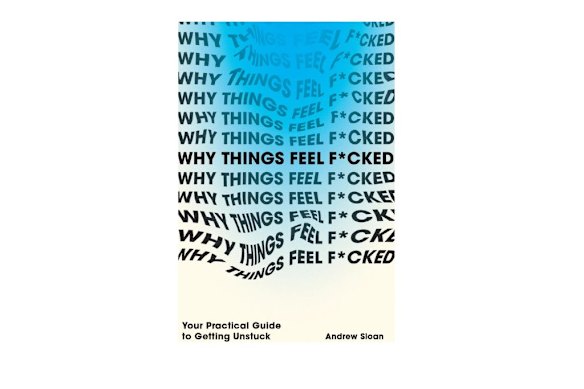
Andrew Sloan, psychotherapist and leadership coach, was bullied, abused and excluded from the mainstream at school for being gay – something he intuited from a very early age. And much of what he writes about (including his panic attacks and therapy), as well as his generalisations about negotiating a world in a constant state of flux, follows from that personal experience. His main contention is that in response to the constant of change and chaos humans have, over the centuries, constructed systems of order – be it in politics, schooling, workplaces, families or faiths – that often as not turn out to be alienating “systems of disconnection” that leave the individual feeling powerless, like being trapped in a machine (similar to what in 60/70s political parlance was called “the system”). His self-help manual, based on years of experience in psychotherapy, is a “compass”, a guide to disconnecting from inhibiting prevailing structures (often patriarchal, emphasising rigid hierarchies and binaries) and becoming “unstuck”, through what he calls “self-leadership”.
Dolly Parton
Dolly Parton (with Tom Roland)
Ebury Press, $85

Although Dolly Parton talks a fair bit about God (she is deeply Christian), she also knows how to take the mickey out of herself, at one point in this autobiography saying she regularly thanks her audiences for buying tickets – because it takes a lot money to look this “cheap”. From a poor family in Tennessee, she and her 11 siblings made their own entertainment, Dolly and guitar the main attraction. Naturally, she always dreamed of being the star of her own show, and the book charts her path to achieving just that. It’s elaborately illustrated, with family and gig shots from the Grand Ole Opry to New York, numerous photos of costumes over the years, as well as the stories behind the hits like Jolene. As bold and self-consciously brassy as Dolly herself.
The Booklist is a weekly newsletter for book lovers from Jason Steger. Get it delivered every Friday.