3 months ago
34
3 months ago
34
From the chaotic evolution of a rock legend after the Beatles to the bone-chilling mysteries of the New Zealand bush, our reviewers cast their eyes over recent fiction and non-fiction releases.
Fiction
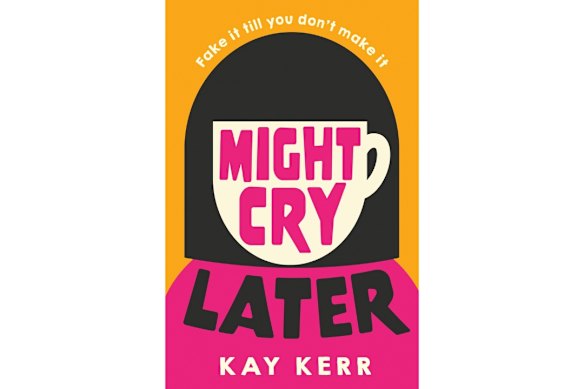
Might Cry Later
Kay Kerr, Macmillan, $34.99
Autistic author Kay Kerr has two YA fiction titles and the nonfiction Love & Autism under her belt; Might Cry Later is her adult fiction debut. We follow Nora Byrne, a 21-year-old who’s just blown up her life in Melbourne and, in the prologue, gives an eccentric inside view of the burnout she’s experiencing, alone on the top floor of her South Yarra terrace. Nora retreats to her ancestral home in Queensland, shiny new autism diagnosis in hand. It’s the week before Christmas – a time of peak dysfunction for many families – and living with her parents again brings back childhood memories that Nora reinterprets, taking her freshly discovered neurodivergence into account. Also brought back is neighbour Fran, a childhood bestie whose heart Nora broke. Awkwardness ensues as Nora can’t avoid Fran due to festive social occasions, which are always a little awkward but don’t tend to overwhelm neurotypical folk the way they do Kerr’s protagonist. Although Nora often feels like crying, throwing up, or that she’s on the verge of total humiliation, she has a winning narrative voice. A blunt, often witty, observer of herself and others, Nora makes heavy mental health themes relatable, as she tries to regain balance post-crisis.
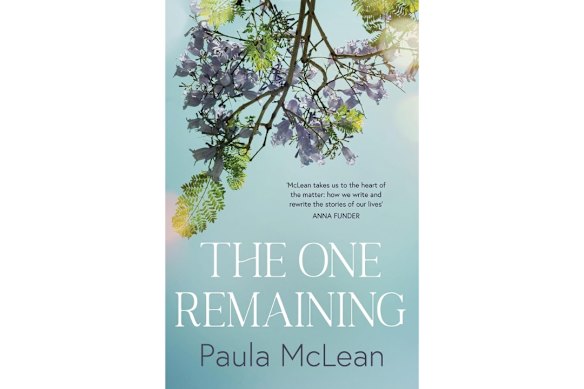
The One Remaining
Paula McLean, Fearless Press, $34.99
A patron and former deputy chair of the Stella Prize, Paula McLean turns from advocating for Australian literature to writing some herself. In The One Remaining, Hilary Mason, a successful novelist in her 50s, decides to write a memoir. A traumatic tale begs to be told – her sister Elaine vanished when Hilary was a teenager and, despite suspicions a family member was involved, nothing was said at the time. Drawn by old diaries she kept, Hilary re-examines that loss and the silence surrounding it. Her pursuit of truth leads to painful revelations, but also a meditation on a storied life dedicated to fiction. Philosophical and feminist concerns inform McLean’s narrative structure, which functions to probe the vagaries of memory and the ways context can change it, as well as foregrounding its traumatic repression, both at an individual level, and – especially in relation to silence surrounding family violence – a societal one. Such complexity allows this novel to speak as poignantly and elegantly as it does to the necessity of storytelling and its liberating power.
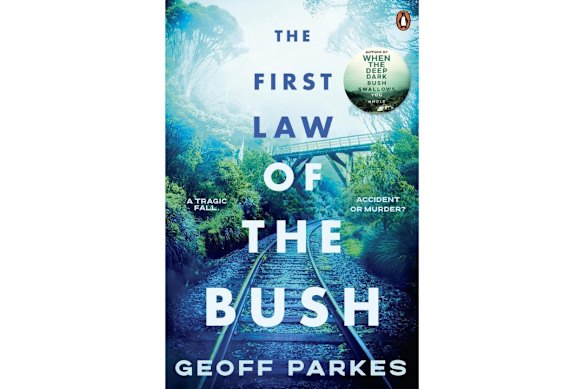
The First Law of the Bush
Geoff Parkes, Penguin, $34.99
This rural noir from Geoff Parkes takes us to rugged King Country, New Zealand, in the 1990s. A year previously, Bill Dickerson plunged to his death from a viaduct, but his employer denies responsibility, the coroner returned an open finding, and neither the local police sergeant nor Bill’s fellow workers Wati Reynolds and Gav Coates have been much use in illuminating what happened that fateful day. At a loss, and still without compensation for the accident, Bill’s widow Carol turns to lawyer Ryan Bradley. As the dogged, if naïve, Ryan begins to ask questions, he uncovers a secret that’s darker – and potentially more deadly – than a workplace safety issue. Parkes’ The First Law of the Bush does take some time to gather speed, largely due to scene-setting chapters from multiple perspectives, but the device does build suspense and immerses us in small-town ambience – rural decency, as well as secrets and menace. The pace picks up as Ryan’s investment in the case deepens, various players in it become more defined, and legal legwork veers into murder mystery terrain. An atmospheric crime novel from across the Ditch, it should appeal to readers seeking something Oz noir adjacent.
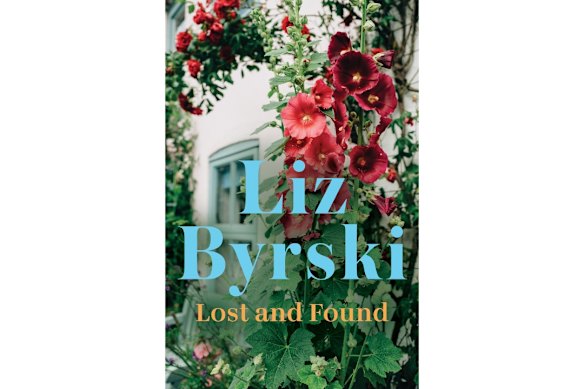
Lost and Found
Liz Byrski, Macmillan, $34.99
Former journalist turned prolific author Liz Byrski delivers a tender tale of lost love and found friendship between women. Rose Walters has always been left wondering at the sudden end of her first romance with one Tom Stutchbury. Thirty years on, and now a middle-aged politician living in Perth, Rose makes an impulsive decision to visit her old flame in the UK. She’s tantalised by what might transpire (perhaps a second chance?) but begins to feel foolish as fantasy and reality collide. When Tom’s elderly mother Dora tells Rose the last thing she was expecting to hear – that Tom is dead – the two women develop an equally unexpected fondness for each other. Rose learns to see her youth with fresh eyes; Dora sees another side to her lost son. As hidden histories emerge, their companionship brings answers and acceptance. What begins with a slightly shaky premise (and implausible behaviour from Rose) soon transforms into a likeable page-turner as the more grounded Dora enters the scene, and the practised ease, warmth, and emotional directness of Byrski’s writing get a chance to carry the reader along.
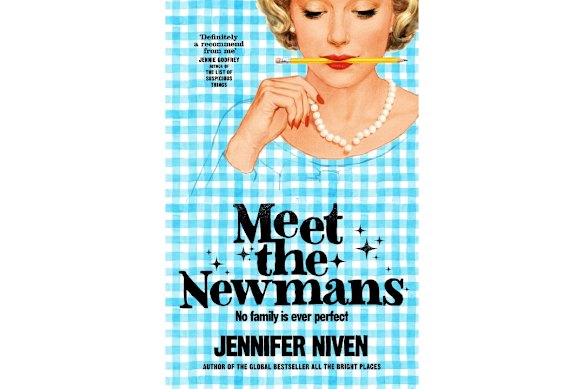
Meet the Newmans
Jennifer Niven, Macmillan, $34.99
It’s 1964, and the Newmans are rapidly becoming the face of the past. This picture-perfect American TV family have starred for years as “themselves” in a popular CBS sitcom. When husband and father Del has an accident and winds up in a coma, Dinah – homemaker extraordinaire in the series – must take the reins. She collaborates with Juliet, an outspoken young journalist, to write a script for a final episode that will project a more forward-facing image. Meanwhile, the show’s famous sons Guy and Shep – one a closet homosexual, the other a budding rock star who impregnates a fan – have their own issues behind the scenes. Unfortunately, Meet the Newmans is too tame for effective satire. It’s clunky, heavy-handed (perhaps deliberately so) in its narrative artifice. And it succumbs to period nostalgia without enough humour or authentic subversion to fly as a comedy of cultural collision between ’50s repression and conformity, and the second-wave feminism, sexual revolution and counterculture that challenged and replaced them. Jennifer Niven undermines a viable idea with beige execution. Honestly, Leave It to Beaver is funnier, and that’s a problem.
Non-fiction
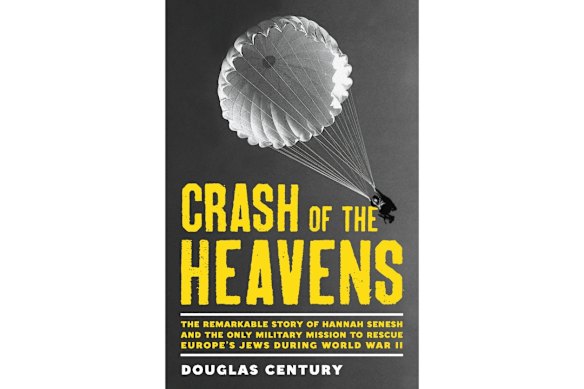
Crash of the Heavens
Douglas Century, Scribe, $36.99
In the spring of 1943, as word filtered through from Nazi-occupied Eastern Europe about the mass extermination of Jews, David Ben-Gurion and others (including Golda Meir – all living in British Mandatory Palestine), formed an elite paratrooper group of 2000 volunteers (the Palmach) to go into Europe and rescue as many Jews as possible. But there was a problem. They had neither planes nor arms and needed the British with whom they eventually reached an agreement – to rescue downed RAF crews and Jews destined for the death camps. In the same year 22-year-old Hungarian-born Jew Hannah Senesh – a committed socialist/Zionist since she was 17– volunteered and became an elite paratrooper. And this is her story, a compelling one of an intellectually gifted young woman (her father was the playwright Bela Szenes) with a degree of self-certainty and sense of mission way beyond her years. And courage. Tasked with being the radio operator transmitting in British codes, she was captured, tortured (refusing to give up the codes), tried for treason in her birthplace of Budapest by Hungarian judges and shot. A dramatic, often gripping account of Senesh’s short, concentrated life.
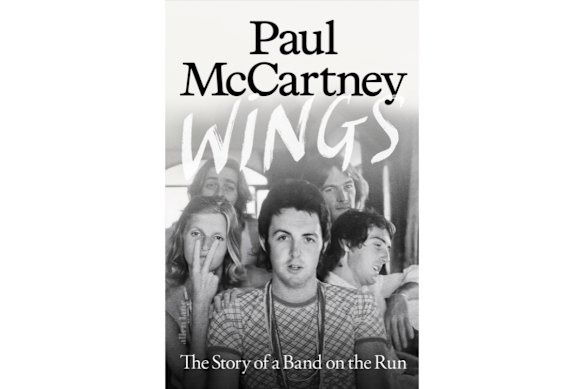
Wings
Paul McCartney, Allen Lane, $79.99
In late 1969, as Paul McCartney notes in his foreword to this oral history of Wings, “… the strangest rumour started floating around” – that McCartney was dead. And he came to accept that there was a kind of truth in it. The Beatles were breaking up, the old Paul was dying and a new one was evolving. And central to that metamorphosis was Wings. Of course, nothing was ever going to come even close to the other band, but what comes across in this compilation of recollections (the McCartney family, the band, friends and associates, the major and the minor), is the excitement of doing something new. It takes us from when the still unnamed Wings (the name came to McCartney during his daughter’s difficult birth) hunkered down on the family’s remote farm in Scotland, eventually emerging to do live gigs (often unannounced) at universities and pubs – to the end around 1980. Given they spent so much time in the Wings bus, it’s tempting to call this a sort of magical mystery tour. No, Wings weren’t the Beatles, but they were a bloody good band (albeit on the run) and this record of events captures the spirit of both the project and the times.
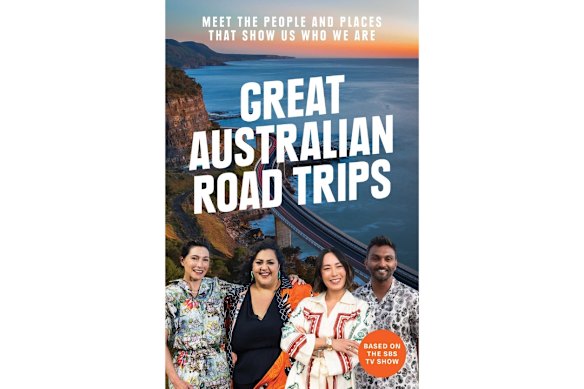
Great Australian Road Trips
Smita Kunvarji, Simon & Schuster, $36.99
Great Australian Road Trips, the book version of the SBS travel show, features four guides: actor Claudia Karvan, writer Steph Tisdell, comedian Nazeem Hussain and food critic Melissa Leong. Together, they go on adventures. There are six trips in the book, in most of the states and the NT, and their range, in both the landscapes they pass through and challenges involved, reflect the diversity of the country. Melissa and Nazeem, for example, take the Red Centre Way, covering over a thousand kilometres, starting at the Alice and finishing at Uluru. Meanwhile, Claudia and Steph take the Grand Pacific Drive, which includes Thirroul (where D.H. Lawrence lived and wrote his Australian novel Kangaroo) and Kiama (where Charmian Clift grew up) – sadly neither Lawrence nor Clift get a mention. It comes with lots of photos, tips regarding recommended cars and permissions required. Good value for those ready to jump behind the wheel – as well as all those armchair travellers out there.
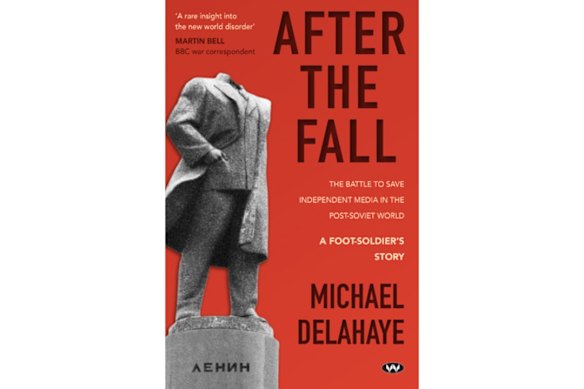
After the Fall
Michael Delahaye, Wakefield Press, $39.95
Delahaye, a former BBC TV reporter who worked in Russia as a broadcast consultant during much of the post-Soviet era, refers to himself as “a foot-soldier in the West’s attempt to ensure free, independent media across the former Soviet Union”. In the wake of the collapse of the Old Order, TV news stations – often in a most bizarre and ad hoc manner – sprang up across the country. His job was to advise them and it brought him in contact with what you might call some interesting characters – like “Sergei”, who financed a TV station by selling off truckloads of old kopeks and making a tidy profit, not from their market value, but from the copper, zinc and nickel they were made from. Delahaye’s record of the time is not just a very engaging boots-on-the-ground documentation of trying to establish an independent media in Russia, but a snapshot of the Wild East in transition – that interregnum between one dictatorship and another – that rings true (I was there in 1992). An intriguing portrait of a collapsed empire and the West’s reaction.
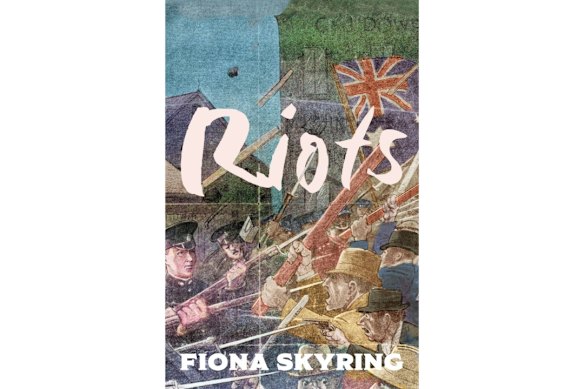
Riots
Fiona Skyring, UWA Publishing, $39.99
Armistice Day, 1918, is often depicted with cheering crowds in full, patriotic song. However, historian Fiona Skyring, in her study of the immediate post-war years, paints a different picture: of social disorder and riots across the country. In Adelaide, days after November 11, striking tramway workers, strike-breakers and “loyalist” returned soldiers clashed violently. Likewise, at the same time, in Broken Hill and Townsville, unionist/ “loyalist” clashes (often fuelled by alcohol) took place: a VC winner in Broken Hill giving an incendiary public speech about unionist, Bolshevik “mongrels”, and military intelligence in Townsville being used to spy on IWW (Industrial Workers of the World) members. Through 1919/20 in Melbourne and Fremantle and Sydney’s Domain (the last of the riots), there was more of the same, all emblematic of a “deeply divided society”. A very accessible academic work that evokes a world of damaged, “broken men” in a country dealing with the traumatic impact of war.
The Booklist is a weekly newsletter for book lovers from Jason Steger. Get it delivered every Friday.