8 hours ago
3
8 hours ago
3
Editorial
November 1, 2025 — 5.30am
November 1, 2025 — 5.30am
Over the past year, The Age has brought readers the voices of women subjected to the most appalling misogyny within the medical system. An inescapable conclusion of that coverage is that any model of treatment must make a woman’s account of her own condition, and expression of her own needs, central to every decision that follows.
In no area is this question more fraught than that of childbirth. In August last year, NSW Health Minister Ryan Park issued an apology on behalf of the state to women who had experienced trauma while giving birth. The inquiry that prompted him was the first of its kind in Australia, and one of the recurring themes of its harrowing accounts was the need for better-informed consent, as well as informed consent training for maternity health practitioners.
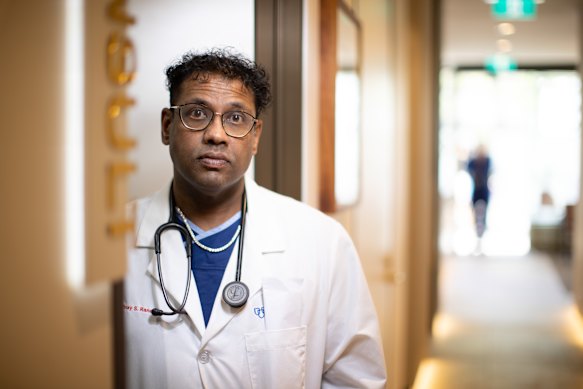
Associate Professor Vinay Rane says birth attendants need to be better regulated.Credit: Simon Schluter
The quality of information available to pregnant women is once again in the spotlight after the death of Melbourne woman Stacey Warnecke after complications during a home birth. When Associate Professor Vinay Rane, an obstetrician and gynaecologist, wrote for us about the possibility that Warnecke gave birth without qualified medical support as a result of exposure to “freebirthing” influencers, the response from readers was massive.
While to many it may seem inexplicable that a woman would opt out of relying on the medical profession to guarantee her wellbeing during pregnancy and birth, the NSW inquiry and others like it have raised questions about whether potentially traumatic medical interventions such as caesareans, the use of forceps and episiotomies might be avoided if women’s input was prioritised over scheduling concerns and efforts to legally safeguard practitioners. “Obstetric violence” may not be a term the public is familiar with, but for many women it is all too real.
This long-standing issue was in some cases compounded by the outbreak of the COVID-19 pandemic. At one level, the problems the pandemic created were practical: limits on the number of people who could accompany a pregnant woman to the birth in a hospital, strain on both hospital resources and the services of midwives for home births.
But on another level the upheavals of the pandemic left some people, in the search for information, choosing an anti-medicine, anti-science route in the name of “natural” or “sovereign” childbirth. Some of those who operate in this space without formal medical qualifications – whether they call themselves doulas or “birthkeepers” – understand themselves as “liberating” women from the control of hospitals and what they call “medwives”, suggesting midwives are agents of the medical industry.
Regulation in this space is a patchwork with worrying holes, though there are signs that this may now change. The medical practitioners’ regulatory body, the Australian Health Practitioner Regulation Agency (AHPRA), cannot currently sanction people who are not working in one of the 16 professions under its jurisdiction. (Indeed, AHPRA sometimes seemed unable to properly regulate even midwives conducting home births, as in the case of Melbourne midwife Martina Gorner and her private service Ten Moons.)
Loading
AHPRA can, and has, acted against people advertising themselves as midwives without the required qualifications. While many doulas are clear about the distinction between their role and that of doctors and midwives, South Australia has since 2014 also outlawed people who are not registered practitioners from performing 19 key birthing practices. In Western Australia, doulas are encouraged to get certification, yet the law also states that a doula may legally practise without being certified.
The Age believes there is a strong case for health ministers across the nation to adopt the South Australian model in legislation. But it is also vital that publicly funded midwifery services, particularly in regional areas, are better resourced so that women who are deemed at low risk of complications can opt for home birth if it suits them, with the assurance of qualified medical support.
In its recently published Principles for supporting women’s choices in maternity care, Britain’s Nursing & Midwifery Council does not rule out freebirths but emphasises the importance of having a clear plan with “local maternity services” should medical help be required. It also stresses the importance of communication “to enable women to make evidence-informed decisions”.
For years, and even during the NSW inquiry, debates over best practice in birthing were dogged by the rivalry between obstetricians and midwives. Now it would seem they are united in their concern over the growing role of online influencers. But to secure the best outcomes for women at what is already a challenging and uncertain time of their lives this can’t simply be a “war on doulas”. Improved legal and professional regulation must be accompanied by an approach that is collaborative and inclusive.
There is a role for doulas and (as is the case in some cultures) family members in supporting women during pregnancy and childbirth, but clarity regarding the limits of that role is essential. The lives of mothers and babies depend on it.
Start the day with a summary of the day’s most important and interesting stories, analysis and insights. Sign up for our Morning Edition newsletter.
Most Viewed in Lifestyle
Loading