3 months ago
15
3 months ago
15
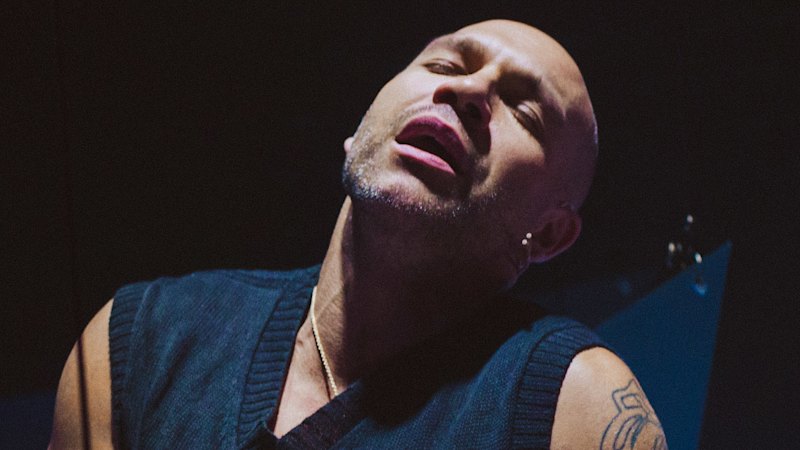
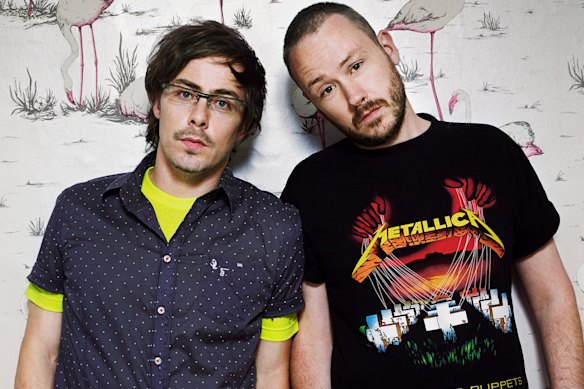
In the world of largely instrumental dance music, standing out requires something undeniable. Few have achieved this as consistently as Basement Jaxx, the British DJ and production duo behind some of the most familiar and beloved club tracks of all time.
Some 25 years after their release, these songs still inspire seismic reactions at clubs and festivals around the world. (Even if you’re not the clubbing type, you might have heard Red Alert in a Coca-Cola commercial, or Where’s Your Head At? in video games and on the Lara Croft: Tomb Raider soundtrack.) Far from aiming for timelessness, in the mid ’90s they were just trying to “make something good to play,” says Felix Buxton, one half of the duo (alongside Simon Ratcliffe).
Stiff competition doubtless improved the results – their club music contemporaries at the time included fellow hitmakers Daft Punk (who they supported on their first UK tour) and Armand van Helden, while Pharrell, The Neptunes and Timbaland were innovating hip-hop and R&B. These acts fed off each other’s creativity while forging their own unique sounds. “There was a shared feeling that we were pushing production forward and that seemed really exciting,” Buxton says.
As with Daft Punk and van Helden, Basement Jaxx was borne out of a reverence for the original house music produced in Chicago and New York. “When we started Basement Jaxx, that was really to capture the spirit of the first house music,” says Buxton (they are named after the basement studio where they began producing music and the parties they used to throw in Brixton, playing “jacking” house tracks). “That was the goal for me because there was a rawness and a truth — and also a message which got kind of lost as it got more commercialised.”
Not everyone gelled with their maximalist, genre-mulching confections initially. Their first two albums, Remedy (1999) and Rooty (2001), were panned by US taste-making music site Pitchfork, which awarded them a 3.5 and 3.8 out of 10 respectively upon their release. But the records were acclaimed elsewhere, had club kids and elder DJs in raptures, and are now considered classics, including by a new generation of fans just discovering their music.
Cutting-edge British R&B/dance artist Pink Pantheress, who sampled Basement Jaxx heavily on her 2025 Fancy That mixtape, raved about Remedy in an interview with Apple Music’s Zane Lowe last year. “It literally blew me away,” said the 24-year-old of listening to the album for the first time. “I felt things I’ve never felt before. I was like, I’ve never heard anything like this.”
It’s high praise from one of the most inventive musicians working today and testament to Basement Jaxx’s singularly loud, bright and chaotic production style that, while much-imitated, has never been bettered. “She sampled us in four tracks on her mixtape, so that’s really nice,” says Buxton, with typical humility. On the day of our interview, the duo received an invitation to join PinkPantheress on stage at Coachella this year. “She’s part of the new generation, so it’s nice to get the props,” says Buxton.
In 2002, Buxton and Ratcliffe struck remix gold with their bumping, sped up version of Missy Elliott’s 4 My People; the duo themselves have been remixed hundreds of times, including by ascendant UK-based producer Salute, who released his remix of their first hit Fly Life in 2025 after teasing it at festivals the year prior. The reason for their decades-long resonance is simple, according to Buxton. “I think it’s probably because we were always authentic with what we did and what we’re into,” he says. “And maybe new generations can connect to that, or people do generally.”
First proving themselves as excellent DJs, then wildly imaginative producers, earning two BRIT Awards and a Grammy, Basement Jaxx went on to distinguish themselves as one of electronic music’s best live acts. Their shows are renowned for their colour and extravagance that matches the fun and frivolity of their music, aided by a large band of singers, dancers and musicians who transpose their productions into full-bodied songs played live with instruments. Some of their band have been with them for over a decade, others have joined in the past couple of years or so. “We’re trying to bring the average age down a bit as we’re getting a bit older, particularly myself and Simon,” Buxton jokes.

In March, they’re bringing their full live show to Australia for the first time in over 15 years. Following the release of their seventh studio album Junto in 2014, Basement Jaxx took a 10-year break from making music and touring with the band, whose productions were becoming increasingly elaborate.
“It felt like we got to a point with the live show where it couldn’t go anywhere else unless we had a huge worldwide hit because the budget would have had to go down on the show,” says Buxton. After two decades of playing parties in Ibiza, Berlin and Miami, Buxton also felt like he needed to “grow up a bit”. He spent more time with his ageing father, who eventually passed away, and became a father to two girls, now aged one-and-a-half and four-and-a-half.
Initially, Buxton was worried that parenthood might spell the end of writing dance tracks for young people. “When the first child came along, I said to Simon, ‘I haven’t got the things to say any more’,” he says. Inspiration arose in unexpected moments, however.
“I was on the motorway driving, the baby was in the back, and that’s when I started conceiving a track called Escape,” he says. “There were traffic jams for miles and there was no way out.” Bambina, featuring Colombian singer Martina Camargo singing in Spanish, was released last year and celebrates a baby girl as a symbol of joy and hope. “The creativity came back and I realised, actually I do have things to write about,” says Buxton. “Just not the same things as before.”
Having performed their tracks for 25-odd years, Basement Jaxx’s continually expanding and evolving live act allows for the songs to be presented in novel ways. In 2019, they performed at the Sydney Opera House with the Metropolitan Orchestra, and will play a classical-adjacent set at London’s prestigious Royal Albert Hall in April.
Beyond their work with Basement Jaxx, Buxton and Radcliffe have also branched out with other projects: Radcliffe has collaborated with jazz musicians, while Buxton has written music for contemporary dance productions. “Bringing bits of all of that into the live show as much as possible is great,” says Buxton. “I really enjoy creating a wider show than what people would expect to see based on the history of our music.”
Buxton is as aware as anyone that most crowds just want to hear the hits, but as he and Ratcliffe work on their upcoming eighth album — their first in 12 years — he’s hoping some of the unreleased tracks will make it to the live set and be embraced by audiences. “It’d be nice to create some new music and carry on the story and do something that connects to people,” he says. “That’s the goal, really — not to please oneself necessarily, although yes, that too, but to carry on in service to humanity, making some good music that’s life-affirming.”
Whether DJing or playing live, the Jaxx have a knack for creating life-affirming moments. At a recent DJ set at the Drumsheds events venue in London, they played one of their favourites – a brass band instrumental version of Queen’s Bohemian Rhapsody – while a crowd of 15,000 young ravers provided the vocals. Having studied sound healing while on the live tour hiatus, Buxton strongly believes that music has the capacity to build bridges and facilitate dialogue, perhaps more so than anything else.
“At that gig at Drumsheds, there was this amazing atmosphere because when people sing together, their heartbeats start to align,” he says. “If you’re creating a physical sense of harmony, that must result in some kind of unified feeling, which can be a positive step towards peace. For humanity, for us moving forward, it’s definitely the stuff we should be looking towards.”
Basement Jaxx perform at Brisbane’s Riverstage on March 1, Adelaide’s Hindley Street Music Hall on March 3, the Sydney Opera House Forecourt on March 5, Melbourne’s Sidney Myer Music Bowl on March 7, and Fremantle Prison on March 11.
To read more from Spectrum, visit our page here.