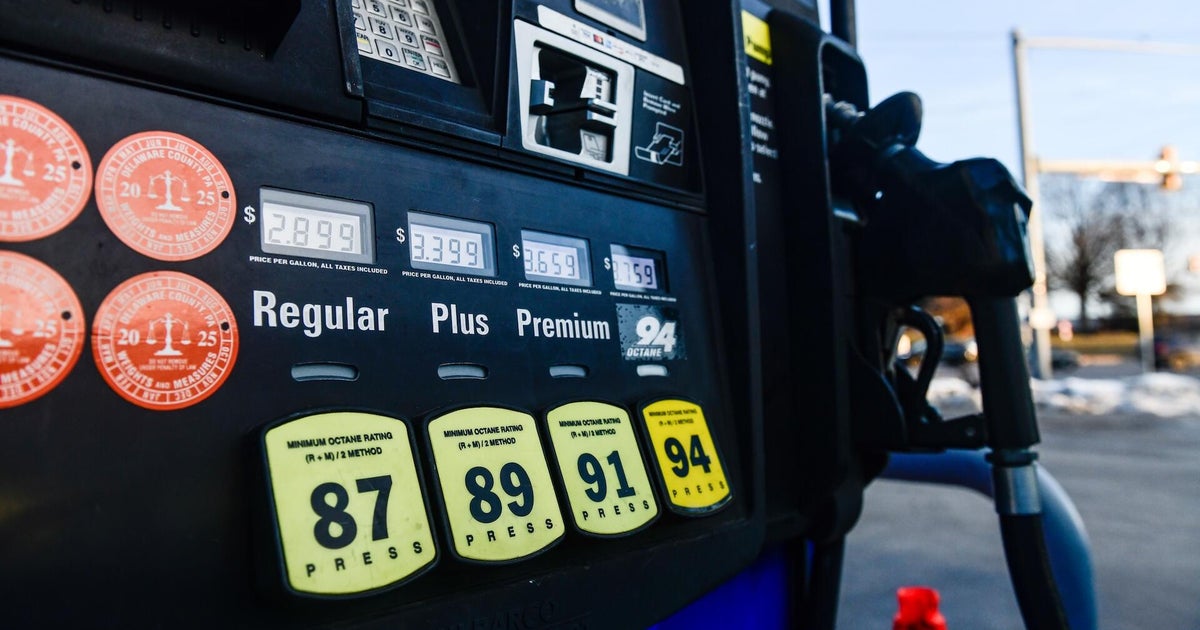
The threat of Iranian attack on ships in the Strait of Hormuz is disrupting global energy supplies and could soon send the price at the pump to a new record high.
With the passage of oil tankers and cargo ships all but halted in and around the strategically vital waterway, the price of food, transported using oil and diesel, is also expected to climb if the closure persists, according to Bob McNally, a former White House energy adviser. Problems could continue even if President Trump were to declare an end to the war tomorrow.
"It's not like there's a big gate that swings open in front of the Hormuz and Iran locks the gate," McNally said. "All Iran has to do is demonstrate every day, every other day, that it has the means and the ability to attack ships in the strait, and that will be enough."
Strait of Hormuz situation stranding ships
About one-fifth of the world's oil supply passes through the Strait of Hormuz, a narrow waterway at the mouth of the Persian Gulf. It is around 21 miles wide at its narrowest point. Each day, around 130 ships sail through, according to the Joint Maritime Information Center. That changed on Feb. 28, when the U.S. and Israel started airstrikes across Iran.
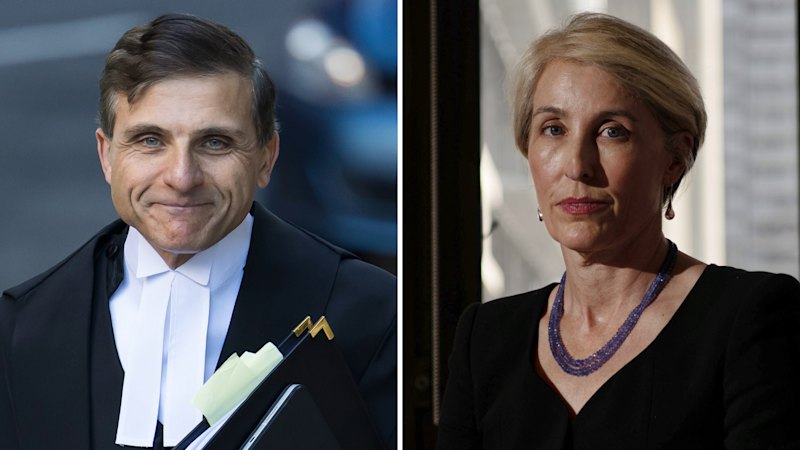
Traffic has nearly ground to a halt, leaving an estimated 20,000 crew members on stranded ships in the area. Some of those crew members are aboard cargo ships operated by Hapag-Lloyd, a German shipping giant for which Capt. Silke Lehmköster oversees a 300-vessel fleet.
Six of her cargo ships carrying items like furniture, electronics and clothing – anything you can find in your home – were headed toward the strait when the war began. Iran's Islamic Revolutionary Guard Corps sent a broadcast to ship radios, making it clear it would attack any vessel passing through the Strait of Hormuz.
 Capt. Lehmköster
60 Minutes
Capt. Lehmköster
60 Minutes
Lehmköster took the message seriously and called off her ships' journeys. Yet one of her six stranded cargo ships was struck off a port near Dubai on Thursday, March 12 . The ship caught fire. No crewmembers were injured.
Some ships have tried crossing the strait. On Wednesday, a Thai cargo ship that dared to cross the strait was struck by a projectile . Since the war started, there have been 16 confirmed attacks on ships in and around the Strait of Hormuz , according to the International Maritime Organization, resulting in at least eight deaths. Iran has claimed responsibility for several of them.
Lehmköster and a team at an operations center in Hamburg watch over Hapag-Lloyd's six stranded ships day and night. Crews have been ordered to stay below deck as much as possible for their safety.
Why is the Strait of Hormuz so important
Around 400 oil tankers holding 200 million barrels of oil are among the roughly 700 ships at a standstill in the region, according to Matt Smith, who monitors ship activity for Kpler, which tracks global trade and shipping. The Strait of Hormuz is the only route connecting oil rich countries in the Persian Gulf to the rest of the world.
On a normal day, more than 100 ships pass through the strait, according to Smith. It dropped to 70 when the bombing started, then into the teens. Now it's just a few ships a day, largely coming from Iran and loaded with Iranian crude oil headed to China.
According to Smith, Iran has exported 100,000 more barrels of oil a day than it did before the war. Nine Iranian ships traveled through the strait by turning off transponders that reveal locations, sneaking by undetected.
The U.S. Energy Information Administration says "most volumes that transit the strait have no alternative means of exiting the region." McNally, who was an energy adviser to President George W. Bush during the Iraq War and now advises clients on oil and gas markets, called the strait "the mother of all choke points."
"Imagine your heart has one artery taking that lifeblood to the rest of your body," McNally said "That is what the Strait of Hormuz is."
On Thursday, the country's new Supreme Leader Mojtaba Khamenei said in a statement read on Iranian state TV that "the leverage of blocking the Strait of Hormuz must continue."
Impact on prices
With the Strait of Hormuz closed, gas prices in the U.S. have increased by more than 65 cents per gallon since the war began. It's the fastest weekly spike in 20 years.
The most consumers ever paid, on average, was in 2022, following Russia's invasion of Ukraine, McNally said.
"If we don't open up Hormuz soon, I can see us making new records," he said.
 Bob McNally
60 Minutes
Bob McNally
60 Minutes
It's not just gas prices. The cost of jet and diesel fuel has risen 25% and, as a result, higher plane tickets and grocery prices are expected to follow.
"The gasoline we pay for at the pump, the price of that gasoline is set in a global oil market," McNally said. "A supply disruption anywhere leads to a price spike for consumers everywhere, including here."
What is the U.S. doing about the choke point?
McNally, who said he supports the president's actions in Iran, said that if he were advising Mr. Trump, he would "emphasize the need to manage the oil and gas market implications. And that means making sure from day one we are attacking Iran's ability to do what it has done for some 12 days now, and may apparently do for an entire month."
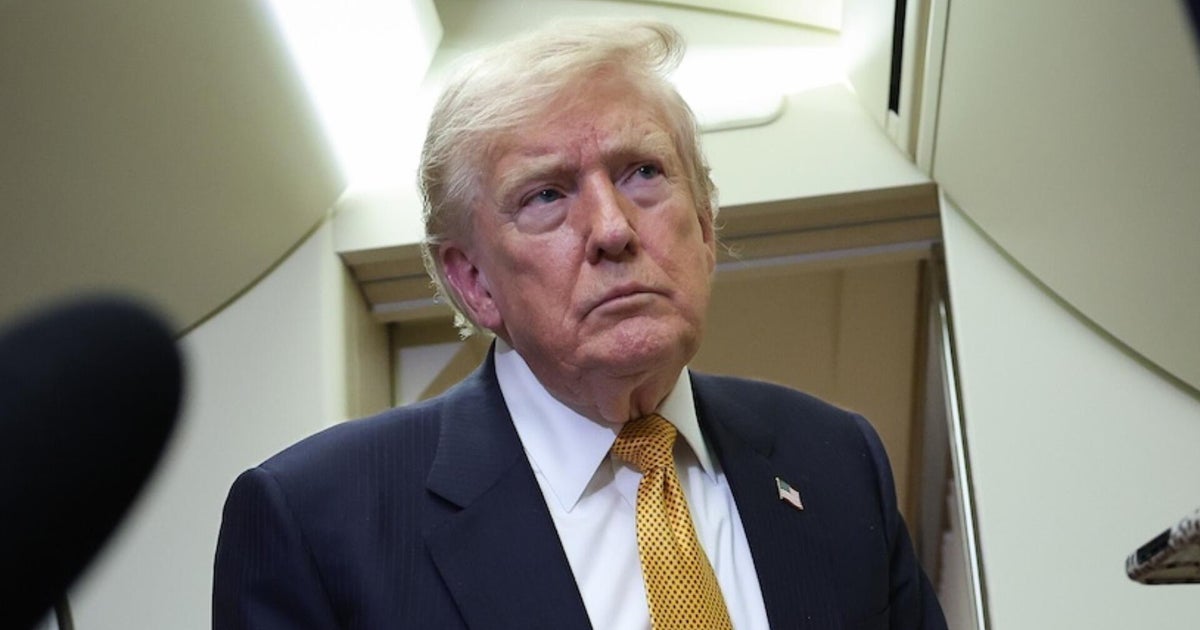
For his part, the president has said the strait is in "great shape."
"We've knocked out all of their boats. They have some missiles, but not very many," Mr. Trump said March 11 at Joint Base Andrews.
Despite Mr. Trump's assurances, most ships remain too wary to cross. In recent days, U.S. Central Command took out 16 so-called "mine layers," boats believed to be used by Iran to deploy mines in the shipping lanes of the strait.
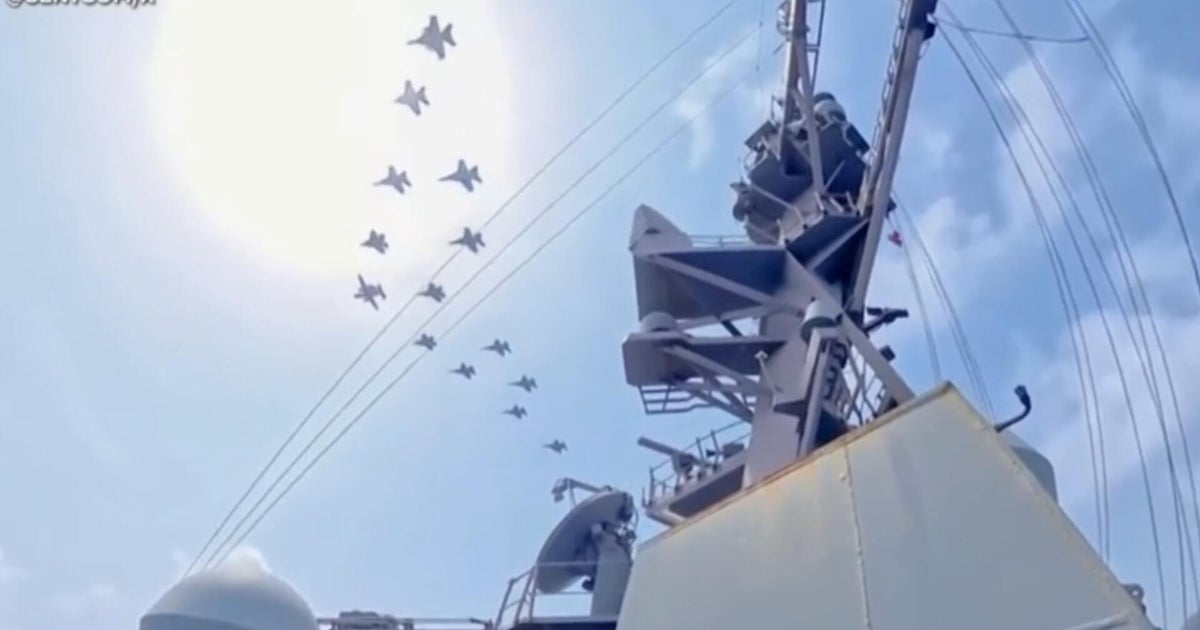
The president has said the U.S. would help cover the cost of risk insurance as a way to reassure nervous ship owners. He's suggested the U.S. Navy could offer escorts for protection, though that's not expected to happen any time soon as the U.S. Navy is busy fighting the war.
For her part, Lehmköster said insurance wouldn't help; she'd rather have the escorts. She said a U.S. Navy escort has not been offered for her stranded ships.
To move more oil onto the global market, the Trump administration this past week announced it would temporarily lift sanctions on Russian oil that had been meant to punish Moscow after its invasion of Ukraine. The International Energy Agency, a coalition made up of 32 countries that includes the U.S., announced plans to release 400 million barrels of oil from its strategic reserves. It's a process expected to take months.
There's not much the White House can do to stop the problem, McNally said, and called U.S. Navy escorts, strategic oil reserve releases and gas tax holidays "a side show."
"I've worked in the White House during an energy crisis," McNally said. "There are no policy solutions to a prolonged closure of the Strait of Hormuz."
In:
Ships stranded by Strait of Hormuz closure
Cargo and tanker ship crews trapped, stranded by Strait of Hormuz closure | 60 Minutes
(13:15)