3 months ago
6
3 months ago
6
Opinion
November 28, 2025 — 10.36am
November 28, 2025 — 10.36am
Fine just fine you never treated me well any way f--- you and your f---ing dumbass cat hope it dies c---
This is a copy of a real-life text message received by my daughter earlier this year in the wake of breaking up with her first boyfriend. She was 12 years old.
This week, I’m thinking about what that message represents, not just for my daughter but for every girl growing
up in a world where digital spaces allow men – and boys – to enact new forms of harm.
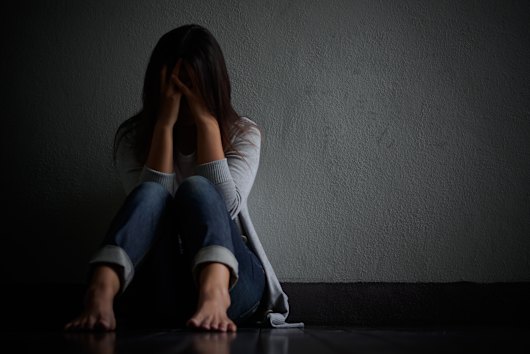
How to address an increase in digital violence against women and girls?Credit: iStock
We are four days into a United Nations global campaign, 16 Days of Activism to End Gender-Based Violence, which runs until Human Rights Day on December 10. The campaign’s theme this year: “End digital violence against all women and girls”.
November 25, the first day of this campaign, marked the 1960 assassination of the three Mirabal sisters, who were political activists from the Dominican Republic. The Mirabal sisters are remembered for their courageous activism. They resisted the cruel and systemic violence of dictator Rafael Trujillo’s reign, leading an underground movement to challenge his regime. They were imprisoned, tortured and relentlessly targeted. Still, they fought on for justice, fuelled by feminist resistance.
Loading
Now, the 16 Days of Activism must be about more than a single public walk with politicians (as has happened across the country in past week), more than a white ribbon, more than a morning tea. Activism demands action. Action that challenges entrenched attitudes, shifts power and drives meaningful reform.
I recently began working as CEO of Kara Family Violence Service. Our mission is to support women and children escaping violence. My team practises feminist resistance and activism every single day. They fight for victim-survivors’ legal rights, housing rights and fundamental human rights.
The personal is political. We are part of a collective movement working towards women’s liberation.
Progress never comes without backlash. And right now, that backlash is everywhere. In spite of efforts to build safer, fairer societies, we are witnessing the dialling back of equality and safety worldwide. Technology that was promised to advance connections is continuously utilised to harass, monitor and intimidate women. Pornography, built on the degradation and violation of women, isn’t hidden; it is mainstream and consumed online on a massive scale.
Loading
Three years ago, my own name was tagged onto pornographic and hookup websites, likely by men’s rights activists. It happened shortly after I participated in a political announcement about Victoria’s affirmative consent laws – a reform widely celebrated within the women’s safety movement. This kind of online retaliation is familiar to many women in gender-based violence activism and leadership. Its purpose is clear: to silence us, to push us back out of public life ... But I refuse to be silenced.
Technology-facilitated abuse now affects one in two Australians, with women disproportionately targeted in the context of intimate relationships. At Kara, we supported 627 people in the past financial year, many of whom experienced digital violence. Technology intensified the abuse they were already navigating.
Digital abuse is real violence. And I have never been more afraid for the future of women and girls. They are facing forms of harm that did not exist a generation ago – tracking, abusive messaging, non-consensual sharing of intimate images, impersonation, account hacking, financial lockouts. These are not minor inconveniences; they are tools of control and terror.
After my daughter received that text message, I witnessed something extraordinary. The message made clear the type of deeply entitled attitudes that exist in some young boys today – attitudes that reject female autonomy
and treat a girl’s romantic rejection as punishable. The message she received was digital violence, and I was furious at the fear he caused her.
Loading
But in the midst of that fear, her girlfriends rallied. Despite the lack of meaningful institutional accountability for young men who engage in this kind of abuse, these young girls organised immediately and refused to accept his behaviour. Like the generations of women before them, her friends resolved to protect her safety, to build up her confidence and to hold him accountable.
History shows us not only the ongoing violation of women and our right to live free from violence, but also our capacity to organise, and resist.
I no longer place my hope in the promise that things are steadily improving for women and girls. That illusion faded long ago. Instead, my hope comes from something more reliable: our refusal to be silenced. Every time women speak out, organise, protect one another, and continue resisting – even where progress feels absent – we create the real conditions for change.
Feminist resistance and activism are the foundations where gender justice is built. And as long as women and girls keep resisting, I will not lose hope.
Geraldine Bilston is CEO of Kara Family Violence Service, a crisis response organisation.
Most Viewed in Politics
Loading