3 months ago
11
3 months ago
11
The peak body for Imams in Australia has criticised the Minns government’s proposed ban on hate slogans, saying they are “unnecessary”, “legally problematic” and risk “disproportionate impact on particular communities”.
The Australian National Imams Council (ANIC), the peak body for Muslim religious leaders headed by Shadi Alsuleiman, argued in their submission to the parliamentary inquiry examining how to ban hateful slogans, that existing criminal and public order laws were sufficiently strong enough to deal with any slogans that incite violence.
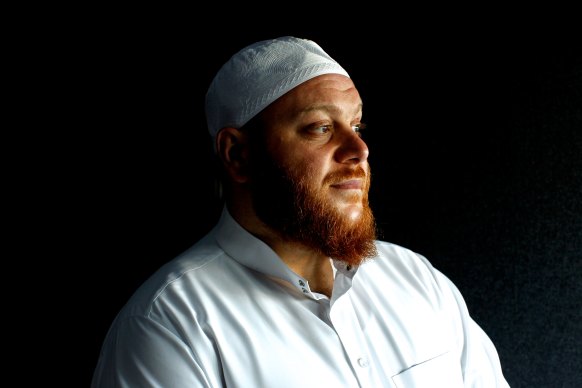
The Australian National Imams Council president Shadi Alsuleiman.Credit: Steven Siewert
The inquiry was established following the Bondi terror attack on December 14, where Islamic State-affiliated gunmen killed 15 innocent people.
The law and safety committee was asked to consider how the state government could ban phrases such as “globalise the intifada”, and had a short window in which it accepted public submissions.
Only submissions made by experts or community organisations will be made public, and the inquiry will not be holding any public hearings.
Loading
The chair of the committee, Labor MP Edmond Atalla, said that it was working to deliver a report by the end of the month, “ensuring Parliament can act quickly when it returns in early February”.
“Given that timeframe, the inquiry will not hold public hearings. However, engagement remains broad and substantive,” he said.
“Submissions have now closed, but we’ve received a substantial amount which we will work through. We’re not commenting on individual submissions.”
The inquiry comprises four Labor MPs, independent Philip Donato, Greens MP Tamara Smith and Nationals MP Paul Toole.
The imams’ submission argued that the government risks inconsistent or disproportionate enforcement of any future laws focused on slogans, without a complete list of the slogans being targeted.
“Laws that depend on the interpretation of isolated words place frontline police officers in the position of determining political meaning, intent, and legality in fast-moving protest environments,” they said in their submission.
“This creates a real risk of inconsistent application, over-policing, and discretionary enforcement based on subjective interpretation rather than clear conduct.”
They also said there was “no evidence” slogans such as “globalise the intifada” resulted in violence or threats to safety, and a move to ban the slogan by the government could “discourage civic engagement, deepen marginalisation, and weaken trust between communities and institutions”.
The Muslim Legal Network (MLN), the peak body for Muslim lawyers in Australia, also made a submission, arguing that the word “intifada” was not used exclusively regarding Israel, and that banning an Arabic word risks the “politicisation of the Arabic language”.
They said such a move could reinforce “racist tropes that suggest that Arabic and Arabs are inherently violent”.
“These tropes are repeated ad nauseam in mainstream media and on social media, and cause an increase in Islamophobia and anti-Muslim hatred in the community,” they wrote. “The MLN NSW cautions the NSW Government against implementing laws that misattribute blame to Arabs, criminalise the Arabic language, and reinforce well-worn racist stereotypes.”
They also argued there was “no inherent or proven link” between the Bondi attack and the pro-Palestine movement. They said there was “no evidence that the individuals even took part in any pro-Palestine protests held across Australia over the last two years. There is simply no causal nexus between the two.”
They said the government’s move to restrict protest in light of the attack “effectively designated Palestinian solidarity organising… a potential security threat”.
“To now further restrict chants and slogans of solidarity would be another draconian measure which will fuel more negative community sentiment and distrust from the broader community towards the government.”
The organisers of the pro-Palestine protests in Sydney, Palestine Action Group, said in their submission that the move to ban the slogan was “authoritarian overreach” and would “chill dissent”.
They denied that the slogan “globalise the intifada” was a chant used at their rallies, and that it was a historical phrase that is a call for “global civil, non-violent resistance”.
They also questioned why the government was focused on that slogan, and not on far-right chants such as “F--- off, we’re full” and “Send them home”, which they say have been overtly used to “incite hatred against minority groups and threaten community safety”.
“Such an obvious oversight shows that these proposed laws would not genuinely prevent inherently hateful speech,” they said.
All three submissions were critical of the vague nature of the approach and questioned the constitutional validity of any potential ban on slogans.
Loading
The terms of reference for the inquiry ask the committee to specifically consider the threat posed by the phrase “globalise the intifada”, and others like it, to community cohesion. They are also to consider how to prevent the use of phrases that lead to incitement of hatred and the constitutionality of any bans.
The government is also sitting on a report into existing NSW hate speech laws that was handed to the attorney-general in November last year.
The Herald revealed in December that just two charges had come from a controversial new law against the public incitement of racial hatred, with at least one of those charges dropped by prosecutors.
Most Viewed in National
Loading