3 months ago
19
3 months ago
19
It sounds improbable, and perhaps it is. “They wanted to create Korea’s answer to Machu Picchu,” says our guide, Jun.
We’re heading into the hills on the outskirts of the South Korean city of Busan, bound for the colourful village of Gamcheon.
Originally a place that became a home to refugees fleeing the war further north in the 1950s, Gamcheon transformed, through a government initiative, from what was effectively a slum into a tourist attraction. With its spectacular location clinging to the hillsides surrounding Korea’s second-largest city, development made sense. So, in 2009, the ramshackle buildings were repainted in a striking array of bright colours. It quickly became a must-see site for the Instagram generation.
And a tourist industry sprung up to cater for them – the main street through the village is filled with souvenir shops, snack-food vendors and restaurants. But people still live here, and you only need to step down into one of the narrow passages between the buildings to find parts of the village that exist as they always have. You’ll also, however, find plenty of signs saying “no entry”. Some of the villagers clearly prefer not to have their homes and lives plastered all over social media.
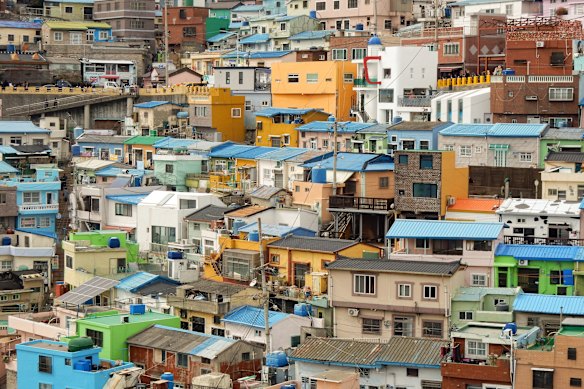
Is it “Korea’s Machu Picchu”? Probably not. Gamcheon is not the type of place tourists will flock from all over the world to see. In fact, in the whole of the country there aren’t really any “bucket list”-style sights to attract visitors.
Sign up for the Traveller Deals newsletter
Get exclusive travel deals delivered straight to your inbox. Sign up now.
Yes, South Korea does have some UNESCO World Heritage sites, but does anyone really care about those? (Australia has 21 – I challenge you to name more than a couple). In that context, Gamcheon has, at least, become one of the few globally recognised images of the country.
Despite this lack of iconic attractions, South Korean tourism is booming. Visitor numbers surged after the pandemic by more than 50 per cent, and they have continued to grow every year since, to a record 18 million in 2025.
We’re doing our part too, with the number of Australians visiting the country skyrocketing. In 2019, according to the Korea Tourism Organisation, there were about 170,000 Australian tourists. Last year the number had climbed to more than 265,000 – an increase of more than 55 per cent.
So what is the attraction that is bringing so many Australians here, if not the sights? What South Korea does offer is a unique culture, terrific food and a youthful energy. Dare I say: it’s the vibe.

Overtourism issues in South Korea’s close neighbour Japan may also be a factor, as Australians seek new horizons (particularly if they’ve already visited Japan – more than 1 million of us headed there last year).
Of course, it’s not just the halo effect of Japanese tourism that has put South Korea on Australians’ radars: Korean culture, particularly pop culture, has become a major export, with music (K-pop), TV shows (Squid Game, All Of Us Are Dead), movies (including best picture Oscar winner Parasite), or a combination (international phenomenon K-Pop Demon Hunters) attracting fans across the Western world. But there’s more: fashion, cosmetics, beauty routines, technology, social media trends – everything seems to be cutting-edge in South Korea.
At the same time, visiting the nation feels like visiting a place where tourism is still in its infancy, at least when it comes to catering for Westerners, as I discover on a small group tour through the country with Inside Asia. We’ll stay in stylish, mid-range hotels, along with one gorgeous traditional hanok, as we take in several of the cities, starting with the giant capital – Seoul.
The heart and Seoul
On our first day we meet our aforementioned Inside Asia guide, Jun. South Korea-born but New York-raised, he returned to his birth country as a student and decided to stay.
I’ve visited Seoul once before, when Jetstar launched its ill-fated Gold Coast-Seoul route (launched just a couple of months before COVID-19 ground international travel to a halt), but I don’t feel as if I know the city yet.
This is hardly surprising. Seoul is a vast metropolis of close to 10 million people and, like Tokyo or Berlin, it has no real centre. Instead it is spread out over a multitude of districts, each with its own distinct character. Gangnam is the best known, thanks to Psy’s 2012 global hit, Gangnam Style, which took aim at that affluent neighbourhood’s obsession with showy wealth.
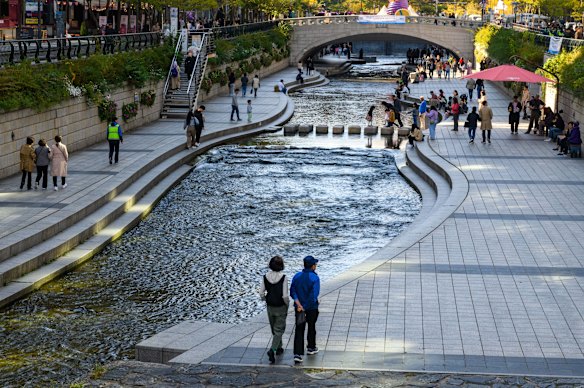
The closest thing to a heart of the city is the stream Cheonggyecheon, which flows from the nearby mountains through central Seoul and has a fascinating, occasionally bizarre, history of its own. We learn about this on our first day, taking a guided walk along the paths that flank it.
The stream was buried for about 30 years, hidden by a freeway that was built over it in the mid-20th century. In the early 2000s, the mayor of Seoul initiated a project to restore the stream to the surface and create a public space around it. It’s now a popular place for walkers, joggers or people looking to relax (I’m told the area around the water is typically about 5 degrees cooler than in the surrounding city). It has also attracted native birds and fish back to the centre of the city.
The stream’s modern history is one thing, but its ancient history is even more fascinating, as we discover on our stroll. We stop at the Tomb Bridge, so named for Queen Sindeok, one of two wives of the founder of the Joseon dynasty in the 1300s, whose tomb stones were used to build it. It’s a tale of intrigue and betrayal worthy of Game of Thrones, but suffice to say a son of the other queen was no fan of Sindeok, and had her tomb dismantled and used for the bridge as an insult.
That evening we visit a local restaurant, Insadong Chon, and enjoy a wide range of local dishes, ordered by Jun. It’s an introduction to two great aspects of the trip. First, every meal is a veritable feast and second, Jun provides us with a detailed list via Whatsapp, every day, of what dishes we tried the day before. Our first dinner is bulgogi (soy sauce-marinated pork), jap chae (glass noodles with vegetables), gajami gu yi (grilled flatfish), doenjang jjigae (soybean paste stew), sora mu chim (spicy marinated conch) and saewoo jeot (fermented and salted shrimp). That’s without mentioning the kimchi, which accompanies every meal and comes in a wide variety of types.
Fast train to Busan
Korea has had bullet trains for decades, and we take one on the comfortable two-hour journey to our next destination – the country’s second-largest city, Busan.
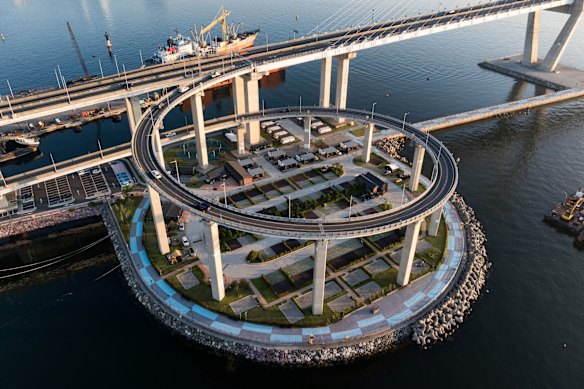
Once a simple fishing village, Busan grew rapidly as people fled south during civil war. Now with more than 3.4 million residents, it stretches across the southeastern coast of the country, a series of skyscrapers, towering apartment buildings and dizzying bridges.
Despite its glitzy coastal hotels and tourist attractions, Busan feels grittier and grungier than Seoul. We pay a visit to the Jagalchi fish market, where elderly women run small outdoor stalls featuring a wide variety of seafood. There are fish, squid, octopus and shellfish, and other creatures I don’t recognise. Inside there’s a vast, open food court, with a seemingly endless series of seafood restaurants all offering (usually) cooked versions of what we’ve seen outside. It’s all fresh and in tanks surrounding the small kitchens. As tempted as I am to eat something, despite the fact that the meal’s cousins might be staring me in the face while I do so, we move on to a more upmarket restaurant on a cliff overlooking the Korea Strait that separates the country from Japan.
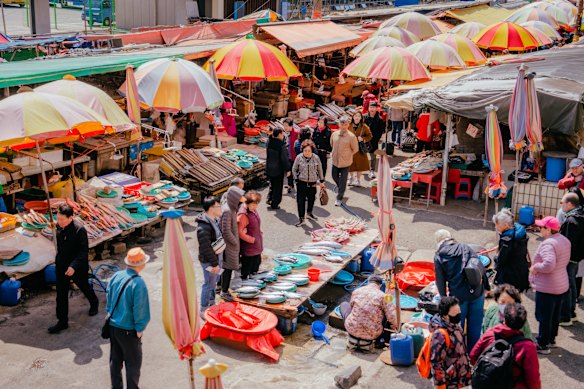
Here too, the seafood is extremely fresh. Too fresh for some of my companions, who baulk at the abalone, which – as is common in many Korean restaurants – is cooked at the table. Not normally a problem, except the shellfish is still moving when it’s popped on the grill in front of us.
Squeamishness aside, it’s delicious, and we eat our fill of clams, abalone, pen shells and enormous prawns (the latter, of course, are not still alive – or they’d be jumping out the door before they could be put on the grill).
It’s during our time in Busan that we visit the aforementioned Gamcheon, along with taking the Haeundae Sky Capsule – a cute, two-kilometre coastal rail ride travelled in miniature tram cars. In the evening it’s more food, as local guide Chris (an American who has lived in the city for more than 20 years) takes us to multiple local eateries culminating with a visit to a pojangmacha market – a series of tents set up along a dock at night, where elderly women run their makeshift restaurants solo and we crouch on tiny stools under the canopy, staying out of the cold, as we’re served up more fish and shellfish (our neighbours try the octopus, served chopped up – but still wriggling. We give it a miss).
A dying living museum
From Busan we head to Gyeongju, a former capital and home to a multitude of ancient tombs. These grass mounds are dotted all over the landscape and very few have been excavated. In most cases it’s not known exactly who, or what, is buried within.
We spend a morning at nearby Yangdong, a folk village where the traditional homes are still occupied.
The old buildings are low and simple, small with thatched roofs, but in the driveways there are shiny, modern cars. In contrast to the other tourist sites we’ve been to, there are few other visitors here. It’s extremely quiet. The main noise is water flowing down a stream on the side of the main road, and birds twittering overhead.
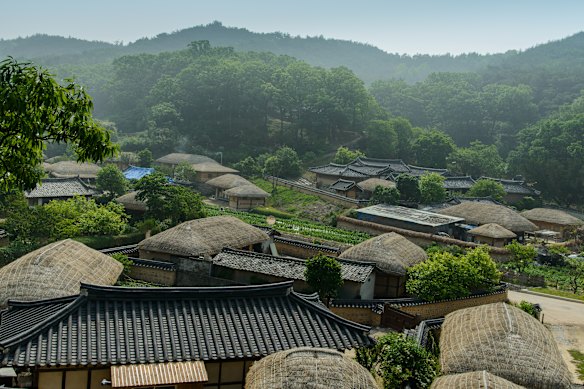
I walk up the hill and over to the other side of the village with views over the valley out to Gyeongju and its high-rise apartments. Over 30 minutes or so following the trail, I don’t see another person, bar one or two locals working their gardens. I wonder how long this quietude can last and am glad I’ve experienced it before tourists arrive in droves. It may soon cease to be a living museum and merely become a museum, as the older generation passes on and the younger people seek the opportunities and lifestyle of the big cities.
From the top of the hill there’s a clear view of a nearby rail bridge, where every so often a bullet train whizzes past. The contrast between old and new South Korea couldn’t be more stark.
The past versus the future
Back in Seoul after another bullet train ride, I reflect on the trip. It reminds me of my first visit to Japan, almost 20 years ago, before it became the tourist mecca it is today. Back then it was rare to find anyone who spoke English. Outside central Tokyo, it was also rare to see any signs in English, even on the train system.
South Korea feels similar – a place on the precipice of an explosion in Western tourists and one that feels ill prepared, or perhaps indifferent to it. Even in touristy areas, such as the main street of Gyeongju, it still feels like a cultural experience. The stores there are aimed purely at domestic tourists — filled with local delicacies, fashion, art and the occasionally tiny shopfront hosting a clairvoyant.
More than anything, South Korea feels unique. While Japan’s influence is apparent, due to its long occupation of the country, South Korea is keen to reclaim its own history – even as it becomes an international behemoth of modern global culture.
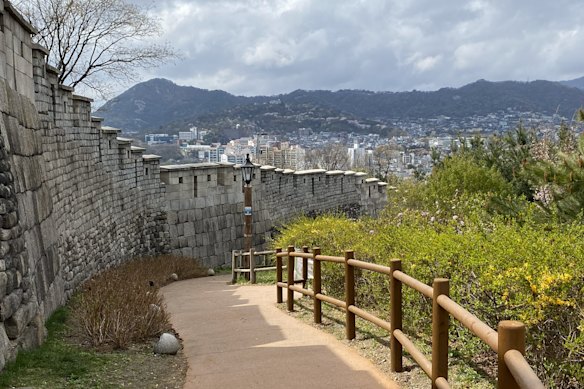
On my last day I explore Seoul’s old city walls, still intact in parts and now forming a series of pleasant, and quiet, walking trails. At the end of the walk I visit a vast shopping centre named Times Square, only 15 years old and covering 300,000 square metres over 25 floors.
Leaving the mall to head to a train station, I take a detour down a side road. Along the way are what appear to be scrap metal shops, one after the other. Some contain girders, others pipes, others the remains of construction vehicles. Each shop is tiny. I wonder what sort of businesses these are and who their customers could be. I suspect, 100 years ago, they were blacksmiths.
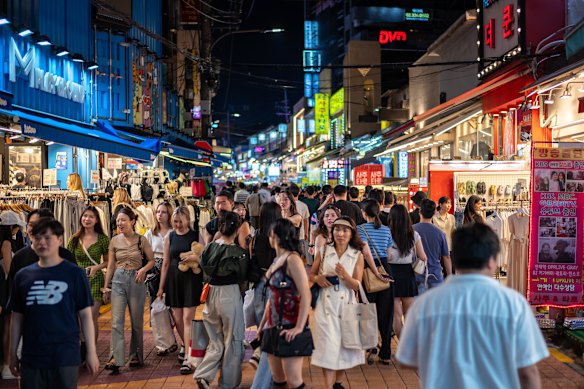
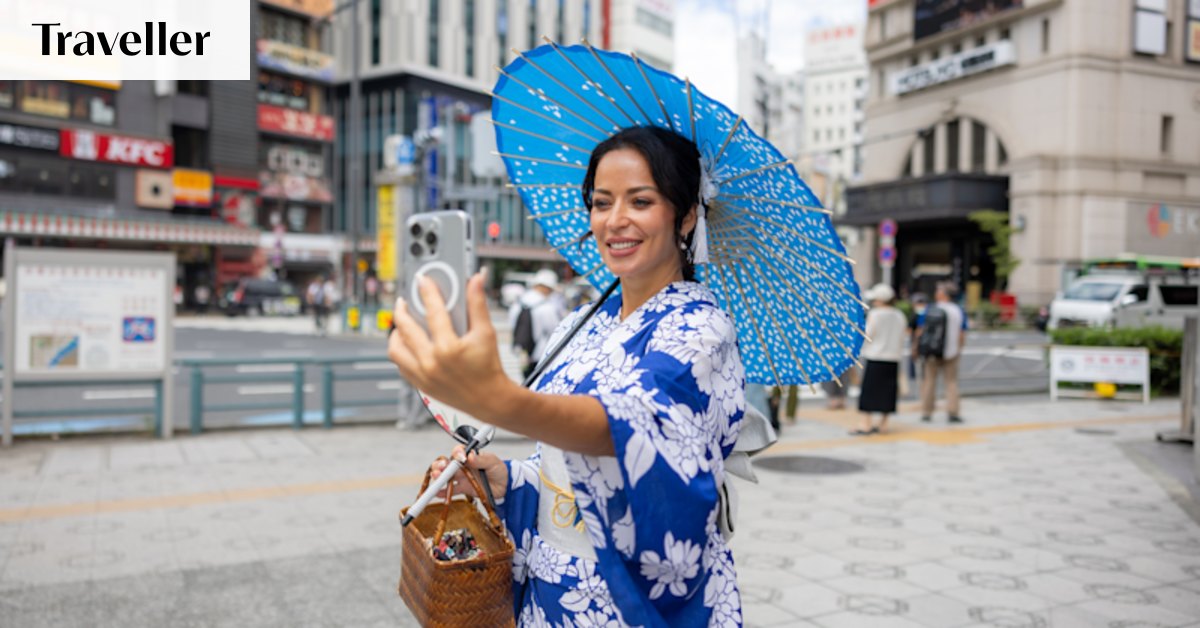
Back in the modern world, the younger generation is obsessed with trends. Social media is ubiquitous, as are K-pop and beauty products. But everything is in flux. Even something as simple as taking a selfie keeps changing – Jun tells us the previous trend was to take your selfie without looking at the camera. This has been replaced by the latest style, under which the image should be, strangely enough, blurry. I’d seen photos like this in advertisements on the outside of takeaway food stores, where blurry images showed customers enjoying their products. I assumed they’d just been taken by bad photographers. Apparently not. By the time you read this, that trend will probably already be over and South Korea’s youth will have moved on to something else.
In Seoul in particular, South Korea seems like a place where the past is in constant battle with the future. For the moment, it feels like the future is winning.
Five things that will surprise visitors to South Korea
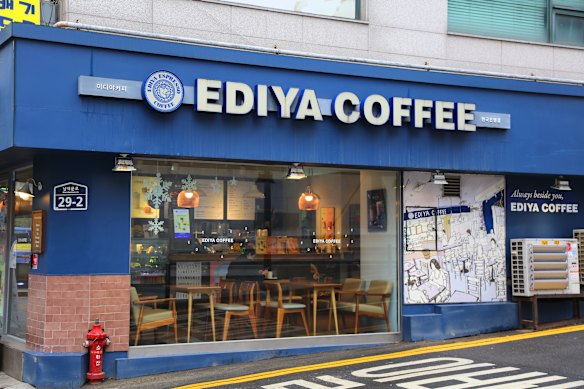
Coffee more than tea
Unusually for an Asian country, when it comes to coffee versus tea, coffee wins hands down in South Korea. Unlike in Chinese cuisine, tea is rarely served with meals (we receive local barley tea with just one meal during the trip, at a very traditional restaurant) and you won’t even find tea on the McDonald’s menu. Coffee is everywhere and, while Starbucks is here, there are dozens of other local chains. In Seoul you can’t walk a block without passing at least one coffee shop.
Wi-Fi is everywhere and it’s incredibly fast
I pay $80 a month for my NBN connection in Australia that, if everything’s going smoothly, gets me 50 megabits a second. In Korea, the average speed is well over 200mbps. At the hotels, it’s typically 280 megabits per second or higher (downloading a podcast for the flight home takes about 10 seconds). If you don’t have roaming or a local SIM, you’ll find Wi-Fi freely available all over the place. Even while walking the heights of Yangdong, I came across a small sign on a post with the details of the village’s free Wi-Fi network.
They don’t drink the tap water
”It’s supposed to be safe to drink … but we don’t,” says Jun of the local tap water. Hotels provide bottled water in the rooms free of charge, and they are replaced as they are used. More sustainably minded properties will provide large glass bottles of filtered water or a filtered water tap in the hotel to fill your own bottles from.
Google Maps won’t give you directions
How many hours of time has Google Maps saved you overseas by ensuring you didn’t get lost? In South Korea, you might find yourself getting lost again. Although Google Maps is no longer entirely useless as it was a few years ago (due to security concerns with North Korea), it’s not as useful as it is in other countries – it will only offer directions for public transport stops (train and bus). For driving or walking, you’re on your own. Not a huge problem provided you can actually read a map and work out where you’re going without a voice telling you where and when to turn.
Beauty is big business
Cosmetic surgery is huge, while Korean beauty routines are going viral around the world. Korean beauty products, meanwhile are much sought after (Australians are the world’s second-largest consumer of Korean cosmetics, behind only the Koreans themselves). The biggest chain, Olive Young, has stores everywhere, featuring a mind-boggling range of products, many of which are not available outside the country. Don’t be surprised if you’re asked to bring something back to Australia once your friends find out you’re going.
THE DETAILS
Fly
Jestar flies to Seoul from Sydney daily and Brisbane three times a week (Melbourne passengers can connect via Sydney). See jetstar.com.au
Tour
Inside Asia offers several tour options for South Korea. The 10-day Soul of Korea trip starts from $7329 and visits Seoul, Chuncheon, Busan, Gyeongju and Yangdong. See insideasiatours.com
The writer travelled as a guest of Inside Asia and Jetstar.