
 5 months ago
79
5 months ago
79
26 minutes ago
Terel Edmundsand Gwenllian Glyn,News Impact

 BBC
BBC
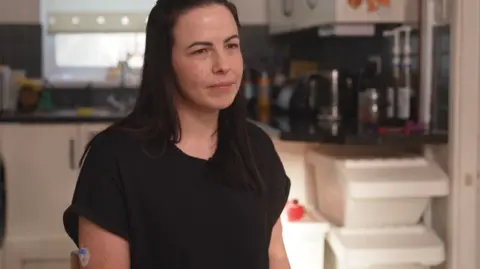
Mother-of-two Naomi Durham says she reached a point where she didn't care about living
Warning: This story contains discussion of mental health struggles including self harm and suicidal thoughts
A woman with type 1 diabetes says she was left feeling as though her two young daughters "would be fine if they didn't have me" during her struggle with depression.
Naomi Durnham, from Cardiff, experienced severe post-natal depression after the birth of her second daughter during the Covid pandemic.
Diabetes UK says people with the condition are twice as likely to have depression, with shared symptoms between the two conditions making seeking support more difficult, and Naomi is among those calling for more help.
A leading expert in diabetes psychology is heading up a new UK-first care pathway, offering diabetes patients bespoke mental health support.
Cardiff and Vale health board said it had a perinatal mental health service offering "specialist, safe, effective and compassionate care".
It added it was "sorry to hear" about Naomi's experiences and said, while it was unable to comment on individual cases, it encouraged her to contact its concerns team.
 Naomi Durnham
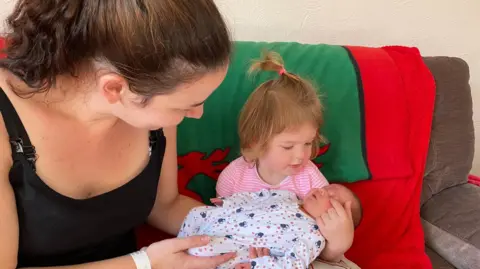
Naomi first noticed a deterioration in her mental health following the birth of her second daughter in 2020
Naomi, 34, said she spent much of lockdown feeling "completely numb".
"My health visitor was amazing, she could see I wasn't myself and she thought I needed some more support so she contacted my GP on my behalf," she said.
But she said the GP prescribed her increasingly higher doses of anti-depressant medication over the phone, until she was on the maximum amount.
She never saw them, and there was "never any suggestion of perinatal mental health support".
"I wasn't really feeling any benefit from it at all," she said.
At its worst, Naomi's mental state led to her not taking the insulin needed to manage her type 1 diabetes.
"I just didn't care about myself... I had complete lack of self worth, I didn't feel like I needed to be here anymore," she said.
After developing diabetic ketoacidosis (DKA), a life-threatening condition that turned her blood acidic due to the lack of insulin, she went through "countless" hospital admissions.
She said she did not feel there was enough support when it came to managing her mental health.
"The diabetes team would say it was mental health, and the mental health team would say it was a diabetes problem," she recalled.
"Those two worlds collide because there's no services set up for that."
Naomi spent two years in and out of hospital, which led to her having to stop her nursing course and, at one stage, there were concerns about whether she could look after her children.
She said it was seeking out peer support networks including online communities and single parent groups - as well as charity services - which helped her recover and be able to resume her studies. But she still worries about the long-term impact that period had on her and her children.
"It took a long time to admit that I needed help," she said.
"I felt guilty that I wasn't there for the girls... I am so conscious of damaging them."
She added she understood GPs did not have a lot of time, but "having to advocate for myself again and again" added to her struggle, and she felt more "holistic assessments" were needed, alongside "appropriate signposting" to help available.
Spoken word poet Duke Al says his diabetes diagnosis "collided" with his OCD
Spoken word poet Duke Al was diagnosed with type 1 diabetes aged 23 in 2018.
The 32-year-old from Sully, Vale of Glamorgan, said the diabetes nurses who showed him how to inject his insulin were "fantastic... really gentle and caring" and, to begin with, he took the diagnosis "on the chin".
But, after a while, he noticed "frustrations start to creep in" and he struggled to shake off the feeling he was "a weaker version of myself".
"That very quickly turned into self-destruct mode, where I would neglect insulin, I deliberately wouldn't inject, which can be very dangerous."
He had already been diagnosed with obsessive compulsive disorder (OCD) and said the diabetes diagnosis "collided with it dramatically", causing him further mental health issues.
 Naomi Durnham
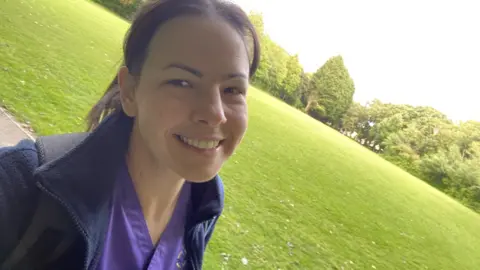
Naomi had to give up training to be a nurse because her mental health became so poor
For Duke, his OCD takes the form of intrusive thoughts related to numbers and the amount of times he does a particular thing. He feels "responsibility to prevent" these thoughts by "performing compulsions", and uncertainty plays a "viscious role".
"It's like this super-glued grip on your brain is like, if you don't do that compulsion, what if this thing does happen and it's your fault?
"Even though I know it's irrational, that's the nature of the condition."
At its worst, this could lead to him injecting the wrong amount of insulin to avoid dealing with a "bad number".
Duke said he struggled massively for about a year, and "on the odd occasion since".
He explained that diabetes burnout could occur when having to manage his blood glucose levels, insulin injections, diet and exercise became overwhelming.
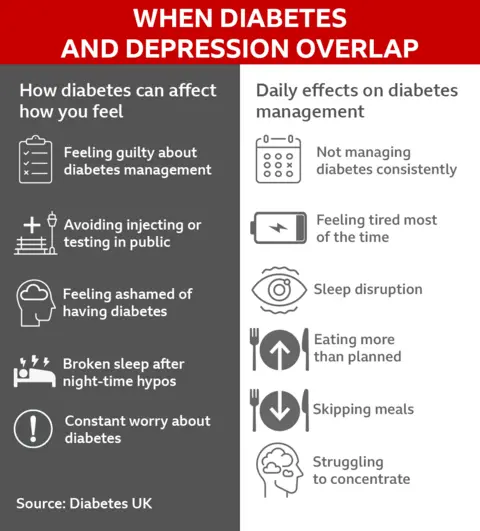
Duke says he's now "in a good place" – but added there "wasn't a huge amount of support" available for his mental health.
"First and foremost, my coping mechanism is poetry. I use poetry as a self-therapy to express how I feel," he said.
"I didn't want to tell anybody about how I was feeling in fear of stigmatisation and fear of not being understood. My brain told my hand, my hand told the pen, the pen told the page and I was able to figure out what was going on and articulate myself really well.
"It's a way of reaching other people, hopefully raising awareness, and connecting through creativity."
He added he was working "to advocate for more psychological support with people living with type 1 diabetes".
"Even though your numbers or your HbA1c might read fantastic and your blood glucose are in range, that doesn't mean you're always feeling well mentally.
"I think the person needs to be treated as the whole."
'Like having to beat your own heart'
Dr Rose Stewart, the diabetes psychology lead for Wales, said the "relentless condition" had a huge impact on people's mental health.
"A lot of people compare it to having to beat your own heart. It's something that you never get to switch off from," she said.
She referenced research published earlier this month, which highlighted a "bi-directional relationship" in which mental health problems that "impair self-care behaviours" could cause diabetes complications, and in turn "further impair mental health".
The experience of people being passed between diabetes and mental health services, with neither knowing how to address concerns raised, was something she said she saw often.
"It's something that we're working really hard in Wales to rectify," she said.
In her role within the NHS Wales performance and improvement unit, she is developing a national pathway for diabetes psychology, which aims to offer people in Wales quick access to specialist support in various formats to suit their needs, including online programmes, individual therapy, and crisis care.
"This is the first to exist in the UK, and possibly in the world, looking at developing an entire model of care for people living with diabetes," she said.
"This won't just be about people having access to psychology and therapy rooms, this will be about upskilling our diabetes staff.
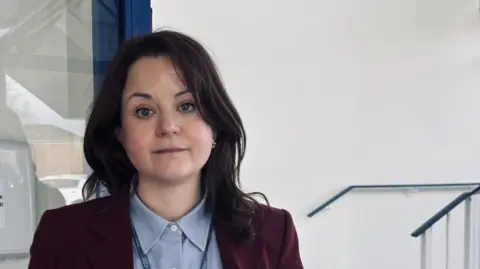
Dr Rose Stewart says she and her team are working hard to address the lack of service which combines diabetes care with mental health support
Reform UK said it was "vital" mental health services were "able to cater to the specific challenges raised by diabetes", while the Green Party said it supported "more joined‑up, accessible mental health provision for people living with long term conditions such as diabetes".
The Conservatives and Liberal Democrats both said they recognised the challenges faced by people living with diabetes and supported "better integration" of physical and mental health services.
Plaid Cymru said it would address "the social determinants of mental health.. by ensuring that the public and third sectors work effectively together" if elected to government, and Labour has been asked for comment.
If you've been affected by the issues in this story, help and support is available via BBC Action Line.

















































