3 months ago
7
3 months ago
7
Man who beat his partner and left her to die storms out after learning he will stand trial
A man accused of assaulting a woman and then failing to seek medical help while she lay dying has stormed out of a virtual court hearing after being ordered by a Melbourne magistrate to stand trial for his role in her death.
John Torney, 40, has been charged with negligent manslaughter over the death of 49-year-old Emma Bates, with whom he was living.
On Wednesday, Magistrate Stephen Ballek said Torney had left Bates alone in an obviously “debilitated and highly vulnerable state” after violently assaulting her the previous night and with the knowledge she was also frail and chronically ill with diabetes.
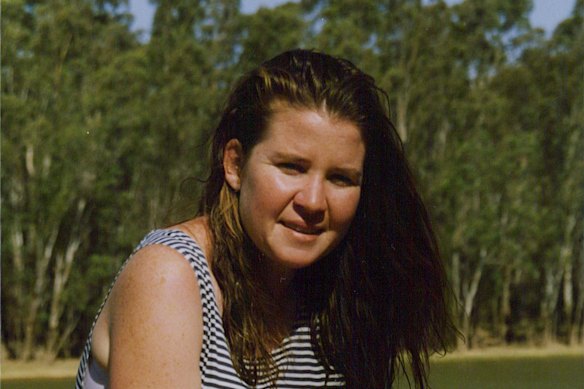
Emma Bates was found dead in her home in Cobram, in Victoria’s north, in April last year.
Torney, who appeared via video link from prison, put his head in his hands as the magistrate made his ruling, before storming out of the room at Western Plains Correctional Centre and refusing to come back into the hearing.
This means the official court committal process has not happened yet and Torney was ordered to return to court next week, where he will be asked to enter a formal plea.
Bates was found dead inside her home in Cobram near the NSW-Victoria border on April 23 last year.
Torney’s lawyers unsuccessfully pushed to have the negligent manslaughter charge dropped.
He is also charged with a spate of other assault offences related to Bates, which he denies.
Ballek said that instead of helping Bates, who could not be roused, Torney left her alone in her bed, went to the pokies, visited a bank and fixed his bike.
“The accused chose to simply desert her,” Ballek said. “He left her alone with no intention of returning or arranging for somebody else to call an ambulance.”
Ballek said there was evidence of sufficient weight to support a conviction for negligent manslaughter and the other charges Torney faces.
He said Torney’s conduct was conscious and voluntary.
He said a jury could find Torney breached a duty of care and failed to take reasonable steps to care of Bates in circumstances where she was “helpless to take care of herself”.
Pathologist Michael Burke provided evidence to the court last month that Bates died not from head injuries but from diabetic ketoacidosis, where the blood becomes acidic due to a lack of insulin.
Bates, who had type 1 diabetes, had injuries consistent with being violently assaulted, including bruising and a lump under her left eye, a large gash on the top of her head and cuts on her nose, according to documents previously submitted to the court.

John Torney has been charged with negligent manslaughter in relation to Emma Bates’ death.Credit: Sunraysia Daily
Her death certificate states: “Diabetic ketoacidosis in a diabetic woman with a head injury”.
Prosecutor Matthew Cookson said earlier this month that Bates had been incapable of seeking medical assistance for herself, adding that Torney had failed to seek medical help for Bates after assaulting her, which was “grossly negligent” and contributed to her death.
He said Torney had assumed duty of care for Bates because the pair were in a de facto relationship, were living together before she died, and he knew she had chronic diabetes.
Loading
Cookson told the court Torney had violently assaulted Bates the night before she died and left her with a large, bleeding cut on her forehead, prompting her to say to him: “John, look at what you’ve done.”
He said the accused later told police Bates’ forehead had been “pissing out blood”.
“That was the condition of her head as she lay moaning and groaning and unable to be woken up the next morning,” Cookson said.
He said Torney had failed to call an ambulance following the assault because he was concerned about the criminal consequences.
Cookson said Torney had acted negligently to a “criminal standard” because if Bates had received timely medical care, the ketoacidosis could have been treated and she might still be alive.
However, defence barrister Hayden Rattray rejected the notion the two were in de facto partnership and said their relationship was “extraordinarily short-lived”, beginning between two and four weeks before Bates’ death.
Rattray told the court that the charge of negligent manslaughter should be dropped because while Torney had exhibited a “moral failing of quite significant character”, a jury could not find beyond reasonable doubt he had caused Bates’ death by failing to seek medical assistance.
Bates’ family, who attended court in person, said they were relieved by the decision and that they loved Emma deeply.
National Sexual Assault, Domestic and Family Violence Counselling Service 1800RESPECT (1800 737 732); Lifeline 131 114; Beyond Blue 1300 224 636.
Most Viewed in National
Loading