3 months ago
24
3 months ago
24
A CFMEU representative who was subsequently charged with murder drove union officials to interviews during an independent probe investigating allegations of violence and intimidation, a commission of inquiry has heard.
Geoffrey Watson, who published a 45-page report alleging a culture of violence in the Queensland branch of the union that included threats and intimidation of women and children, suggested the inquiry investigate claims those who took part in his investigation were transported by ousted union boss Jade Ingham or his “stepbrother or a half-brother”, Anthony Perrett.
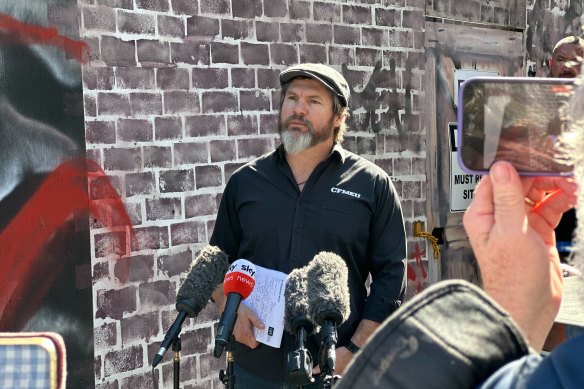
Former CFMEU leader Jade Ingham.Credit: Cameron Atfield
Watson’s report into the CFMEU was handed down in July, three months before Perrett was charged with the torture and murder of Brisbane man Andrew Burow.
On the opening day of the highly anticipated inquiry, Watson revealed he had been told officials were driven to meetings with him by either Ingham or Perrett – a detail he suggested the inquiry ought to “look for”.
“They were driven there by that man [Perrett] and given a tape recorder by either Ingham or that man,” Watson said – noting he had invited all people he spoke with to record interviews themselves if they wished.
“Now is it true? I didn’t go in to look at it.”
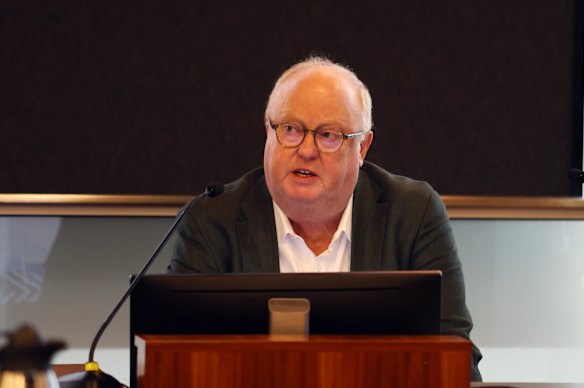
Union buster Geoffrey Watson speaking at the Commission of Inquiry.Credit: News Corp Australia
The powerful inquiry to investigate the scandal-plagued union was launched by the Queensland government following reporting by this masthead and 60 Minutes into criminality, corruption and misconduct in the CFMEU and construction industry nationwide.
Under questioning from counsel assisting the inquiry Mark Costello, Watson also said interviews with CFMEU figures were “hopeless without exception”, given their stated lack of memory of events or answers undermined by video footage he himself had seen of “instances of violence”.
Watson told the inquiry he suspected the Queensland branch of the CFMEU aimed to emulate notorious former Victorian union boss John Setka, who seized power and froze out rival construction union, the Australian Workers’ Union, on big tunnel, rail and bridge infrastructure projects.
Loading
This turf war mentality was clearly adopted by former Queensland-based CFMEU leaders Ingham and Michael Ravbar, according to Watson.
“I really do look at what had happened here in Queensland is that people in leadership positions had seen what had happened in Victoria,” he told the inquiry.
“What had happened was Setka had pushed the AWU off all of the civil work … now how did they do that? They terrified the contractors.
“Now I am 100 per cent confident that the people in Queensland, Mr Ravbar, Mr Ingham, they’ve seen that success and said, ‘We can do the same thing.’
“And if you remember, a lot of the troubles really ramped up in Queensland around the time that you had massive infrastructure projects, which is tunnels, railways, things which normally fall within the jurisdiction of the AWU.”
Watson said the CFMEU’s reputation as a feared organisation that disregarded the law was a deliberate strategy it “revelled” in.
“They wanted the reputation of being outlaws and taking themselves outside the law and willing to do what was necessary to acquire more power,” he told the inquiry.
“This actually was their business model, their business model was to be feared by everybody – ‘if you negotiate with us, do not think for a second we’re going to obey the law. We will act outside the law.’
“Everybody knew, and by this I do mean people like for example the AWU or the contractors, that if they were stopping a concrete pour today, they’ll do it again tomorrow.”
Start the day with a summary of the day’s most important and interesting stories, analysis and insights. Sign up for our Morning Edition newsletter.
Most Viewed in National
Loading