3 months ago
26
3 months ago
26
The list of lawyers-cum-novelists runs the gamut from Franz Kafka to John Grisham and Elizabeth Strout, but the pipeline of lawyer-to-playwright is much narrower. Melbourne’s own Suzie Miller has made her mark on the international stage with heavy-hitting plays such as Prima Facie, but another globetrotting playwright with a deep focus on the legal system has put down local roots as well.
Danish Sheikh had already entered public life before trying his hand at theatre. How many other playwrights can boast a New York Times profile for their contributions to remaking the Indian legal system? While still a law student, Sheikh joined forces with a team who were attempting to challenge the criminalisation of homosexuality that remained one of the many ugly hangovers of British colonialism. That experience drives the compelling solo work Sheikh will perform at this year’s Midsumma Festival, Much to Do with Law, But More to Do with Love.
Now 36, Sheikh describes himself as “one of those Gulf children” who grew up bouncing around the Middle East. His early years were spent in Muscat, Oman, before he moved with his family to Delhi as a teen. After a stint at a boarding school in the Himalayas, he enrolled at the National Law School in Hyderabad.
That was when he started practising with a group of human rights lawyers in Bangalore. It was also where he encountered people with more progressive attitudes towards sexuality than those decreed by Indian legislation.
“Coming of age in India, I only found a word to describe my sexuality at the same time I discovered that my sexuality was criminalised. That came through the register of the law, which is also kind of why I’m so attached to law as an idea. It did this dual thing where it gave me an identity, another name for myself, but then immediately told me: ‘Hold on, don’t get too excited about it’.”
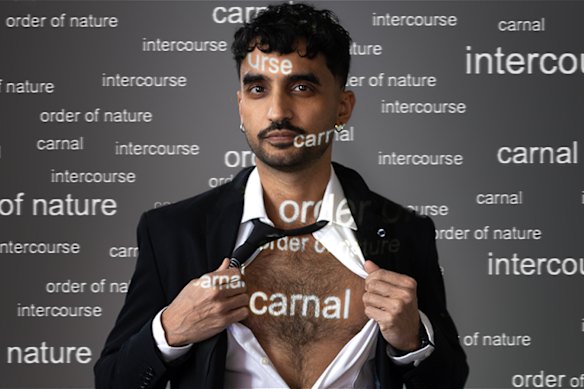
Lawyer and playwright Danish Sheikh explores India’s attitudes to homosexuality in Much to Do with Law, But More to Do with Love.
In some cultures, there is a silence surrounding sexuality, but for the young Sheikh there was plenty of discourse flying around. “But it was the discourse around what it means to be an unapprehended criminal under the law. I remember growing up with all these stories about cops busting in on queer lovers, parties being raided, this big correlation between HIV/AIDS and being gay. Once I did get into law school, I was also immediately privy to the incredible queer activism that was happening all around India.”
Someone who grew up criminalised for their sexuality might be forgiven for developing an antagonistic relationship with the law, but Sheikh took the opposite route. Now a senior lecturer at Monash Law School, he has a clear passion for the intricacies of legal systems in all their forms.
He says that one of the questions Much to Do ... asks is: “What does it mean to love and believe in something that hasn’t always made space for you, that doesn’t necessarily love you back? We do that with institutions all the time, right? For me, the institution just happens to be law.”
The work is in part a gripping legal drama, drawing on real transcripts and delivering all the highs and lows we love from a knotty courtroom drama. At the same time, it’s a provocative meditation on the way laws spill out from those rarefied realms into every corner of our lives.
‘I remember growing up with all these stories about cops busting in on queer lovers.’
Danish SheikhSheikh says that the best plays tackling the legal system move beyond the courts. “The obvious example here is Suzie Miller’s Prima Facie. It tells us that the law isn’t just a thing that lives in the courtroom. It tells you that it’s this living thing that you generate constantly in your interactions with each other.”
For all the theatrics some lawyers like to produce, there’s a fascinating frisson between the mindset required to practise law and that which produces an arresting stage performance.
“To be a good lawyer, you want to think in a very particular way. You want to draw bright lines, you want to privilege clarity and rigour, separate the rational from the emotional and then discard the latter. That training is really powerful. It gives us a certain kind of balance in the world but it obviously has its limits.”
Art flourishes under different conditions. “Theatre’s training is to step outside the boundedness of argument. Linger with things that are unresolved, don’t rush to resolve them. Imagine what could be, what might be, and then that becomes a good story.”
In developing Much to Do ... over years of iterations, Sheikh ultimately found that the tension between law and art came down to two opposing drives: being a good storyteller, or being an ethical storyteller.

Lawyer and playwright Danish Sheikh explores India’s attitudes to homosexuality in Much to Do with Law, But More to Do with Love.
Let’s face it: the truest account of the facts isn’t always the most interesting. A playwright faces demands that a courtroom stenographer never has to shoulder. “If you go back to legal terms, there’s a contract that performers have with their audiences. Part of my contract is that I will give you a story that has a beginning, a middle and an end. I have to give you some kind of a resolution,” Sheikh says.
Loading
The ethical dilemma arises from the reality that life doesn’t follow that neat template. And while much of the play draws on Sheikh’s own experiences within the legal system, his isn’t the whole story. Just as lawyers translate the everyday lives of people into a highly specific, technical language, so too does art translate those lives into something that’s far from a direct facsimile. There can be a danger in rendering a real stranger’s trauma as drama, but Sheikh’s play is also a call to apply that lesson to our lives.
“I really want people to walk away thinking, ‘OK, we’re all main characters in our own stories, and to be the main character is to be a deeply unreliable narrator.’ That’s not because we’re trying to deceive. It’s because we can only ever speak from where we stand. The trouble begins when we forget that our perspective is partial and when we mistake our vantage point for the whole truth.”
Sheikh also hopes that the work kindles the same kind of attraction towards the law that he feels, something he describes as “enchantment”.
“I think about enchantment a lot because it’s something that the conservative right has been really good at doing. People are very effective at capturing the imagination and telling these really seductive stories about belonging. As a progressive, I don’t want to cede that terrain. I want to suggest that progressive politics and progressive law can enchant, can tell stories that move people towards care rather than fear.”
Much to Do with Law, But More to Do With Love is at Gasworks Arts Park from February 4.
Midsumma hot list
Over almost 40 years, Melbourne’s Midsumma Festival has grown to encompass a vast range of artforms, communities and identities to match the diversity of the queer community it reflects. This year’s program features more than 200 events, but just a small sample is enough to get a sense of how broad its reach is today.
Finding Glitter in the Storm
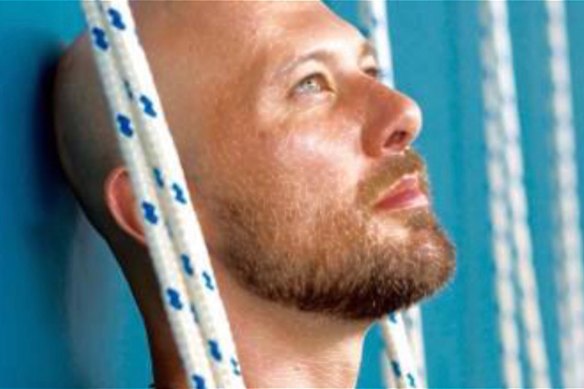
Josh Moyes was a kid when his family bought a pirate ship and moved to Byron Bay, kicking off a voyage of self-discovery spanning more than 20 years. His story of queer coming-of-age and neurodivergent pride is at Club Voltaire from January 22.
The Placeholder
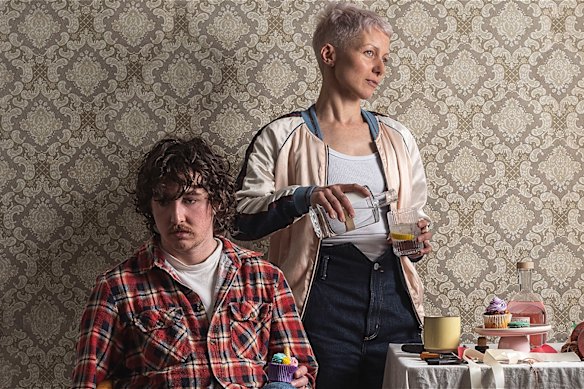
Trans playwright and actor Ben MacEllan’s The Placeholder is a sensitive exploration of a close-knit circle of women in a small Australian town whose relationships shift after one begins their transition. It’s directed by the highly accomplished Kitan Petkovski (The Inheritance) and stars Maude Davey and Oliver Ayres. At fortyfivedownstairs from January 27.
Tom Ballard

The comedian and broadcaster has a new work at this year’s festival titled (deep breath) A Comprehensive & Profoundly Queer Accounting of the Brief (Yet GLORIOUS!) History of the Gay & Lesbian Kingdom of the Coral Sea Islands by Tom Ballard. All there in the name, really. Gasworks Arts Park from January 28.
Transcendent
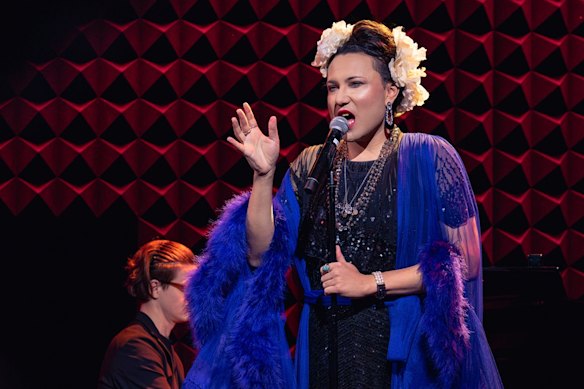
Mama Alto is one of the leading lights in Australia’s cabaret scene and has made waves around the globe. Transcendent, created for New York’s legendary Joe’s Pub, will see her take full flight at the Melbourne Recital Centre from January 29.
PiaNu-Metal

A classically trained musician takes on one of music’s most reviled genres. For those who’ve repressed all memories of the nu-metal craze of the late 1990s and early 2000s, keyboard prodigy Piano Punk will lead us back through the era of Korn and Limp Bizkit to reveal some of the musical artistry that lay under all of that toxic masculinity. Meat Market from January 29.
From Grindr to Blindr

After a rare degenerative condition left Karan Nagrani with less than 3 per cent vision, he quit his marketing job and began creating work that translates his experiences into warm, comic performances. A proud gay man of colour, Nagrani is also a Midsumma community ambassador. Victorian Pride Centre from February 7.
MQFF

MQFF is Midsumma’s collaboration with Melbourne Queer Film Festival showcasing both queer classics such as Bride of Frankenstein (above) and Hairspray to up-and-coming directors such as Annapurna Sriram (F---toys) and Avalon Fast (Camp). The mini-fest runs from January 31 to February 6 at Cinema Nova and the Fed Square big screen.
The Midsumma Festival, various venues, from January 18 to February 8; midsumma.org.au