3 months ago
9
3 months ago
9
After fighting Sydney’s lockout laws for years, including marching several thousand demonstrators down Elizabeth Street, Tyson Koh, the founder of Keep Sydney Open and managing director of FBi Radio, laments a single thing.
It’s not the end of a beloved music venue, nor the lost years of being unable to drink in a club until the sun rises. It’s the narrative that Sydney’s nightlife is dead, killed by lockouts, then lockdown.
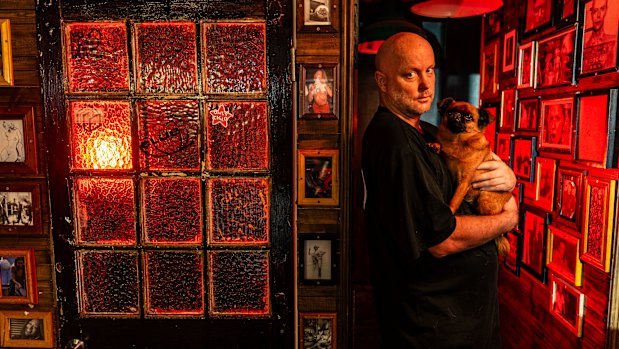
Club 77 owner Dane Gorrel says the lockout laws “decimated” an entire generation’s relationship with Sydney’s clubbing scene. Credit: Sam Mooy
“How do you change a perception of an entire city?” Koh asks.
Twelve years after then-Liberal premier Barry O’Farrell cracked down on Sydney’s venues following drunken violence that led to the deaths of two young men, owners, policymakers and academics say there has been a citywide resurgence. Yet the scars of the six-year policy, coupled with the pandemic, are still evident.
On Wednesday, NSW Arts Minister John Graham will rescind the last of the lockout laws. Last drinks will no longer be called at 3.30am, and per-person drink limits will be repealed, along with requirements for plastic cups and RSA marshals at designated venues.
Violence
The lockout laws came in to effect in 2014 in response to the one-punch deaths of Thomas Kelly and Daniel Christie. Shots, doubles and glass cups were all barred after midnight; patrons were no longer able to enter venues after 1.30am; last drinks were called at 3am.
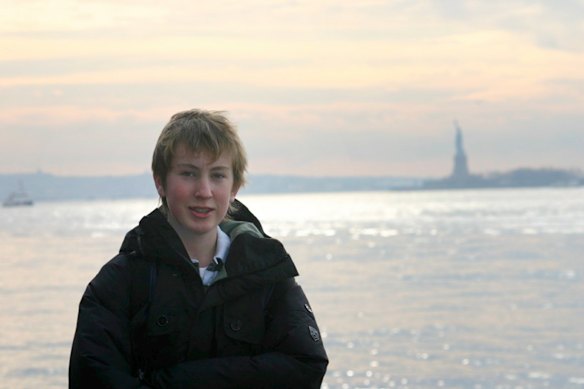
Thomas Kelly was killed in a drunken attack in the city.
Analysis by the Bureau of Crime Statistics and Research (BOCSAR) found various licensing reforms introduced since 2008 had reduced alcohol-related assaults. The lockout laws lowered assaults by 26 per cent in the CBD and 62 per cent in Kings Cross, becoming the most “effective reforms” in reducing violence, the bureau said in 2024.
While the laws were successful in curtailing drunken assaults, City of Sydney Lord Mayor Clover Moore said they were also the “policy equivalent of using a sledgehammer to crack a walnut”.
“They devastated Sydney’s nightlife,” she said.
Kings Cross, once the epicentre of Sydney’s nightlife, is geared towards cafes after being devastated by the restrictions.
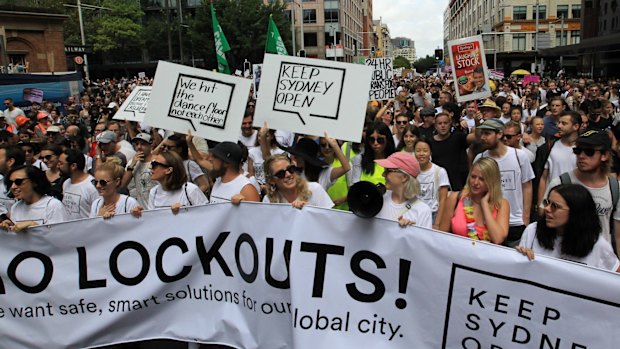
A protest rally against Sydney's lockout laws.Credit: Peter Rae
Moore argues evidence-based policy relying on transport, planning, licensing and police would have been more effective. University of Sydney criminology professor Murray Lee agrees, but acknowledges the pressure on the O’Farrell government to undertake radical reform.
Loading
Scars
Night Time Industries Association chief executive Michael Gibb agrees with Koh about the damage to the city’s brand. The lockout and lockdown period severed the nexus between young people and the night-time economy, altering consumer behaviours.
“It decimated an entire generation of people going out and learning about club culture,” says Dane Gorrel, the music director of Club 77, one of Sydney’s last remaining dedicated club spaces.
Gibb adds: “Those that went through lockout laws, the offering just wasn’t there for them. They couldn’t go clubbing, so they inevitably turned to warehouse parties, or they turn to going to a mate’s place and hogging an auxiliary cord.”
That cultural disconnect deepened during the pandemic and a cost-of-living crisis, which happened alongside the emergence of technologies such as Netflix, says Matt Levinson, who leads culture policy at Committee of Sydney, a think tank.
Hip-pocket pressures combined with the impacts of multinational streaming services meant young people are now saving for a couple of music events a year rather than regularly seeing bands play live, says Joe Muller, chief executive of Music NSW, a peak body.
There are nearly a thousand fewer licensed venues across Greater Sydney today than there were in June 2014, although suburbs such as Burwood and Bankstown have enjoyed a bounce since the end of the pandemic.
Graham, who opposed lockout laws in his inaugural speech in 2015, has attempted to resuscitate Sydney’s ailing night-time economy through a series of vibrancy reforms. Thriving venues can no longer be kneecapped by disgruntled neighbours, license fees have been reduced and trading hours extended for live music venues, while al fresco dining has been made easier.
“I would love to stand in the city and hear music coming from different directions,” Graham says of what he hopes Sydney’s nightlife will be like in a decade.
The upshot
Levinson has a positive spin on the lockout laws. He does not believe the suite of policies introduced by the Labor government after being elected in 2023 would have been possible if those policies hadn’t “wiped the slate clean”.
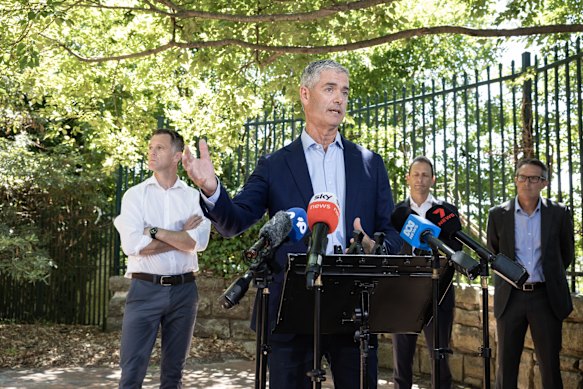
Arts Minister John Graham has successfully pushed through successive reforms to revive Sydney’s nightlife.Credit: Louie Douvis
“You would never ask for a crisis like the lockout laws,” Levinson says. “But the fact that they were brought in created the space where the kind of policy reform we’ve seen over the past decade was actually possible, with Sydney’s nightlife bubbling up well beyond the inner city.”
Today’s after-dark options are considerably more diverse than the homogenous offering of “beer barns or nightclubs” in the CBD and Kings Cross in the early 2010s, Gibb says.
Loading
Club 77 has experienced the shifting geography and demographics of the city’s night-time economy.
Once the club thrived on foot traffic between the CBD and Kings Cross. Now it has become a destination venue, says Gorrel.
“We are still trying to get the younger generation in. There is a significant decrease in the amount of people around on any given night,” he says.
Sydney was becoming more like Tokyo, with several hives of nightlife activity, Levinson believes, highlighting small bars and restaurants along Enmore Road and diverse food options across Harris Park and Parramatta.
Market research commissioned by the NTIA found there was “remarkable” participation across every demographic in the 13 nightlife precincts surveyed in the City of Sydney and Inner West LGAs, with 35- to 65-years-olds representing more than half of all visitation.
Graham rattles off the thriving food scenes in Eastwood, Canley Vale and Burwood, along with breweries celebrating surf culture in Brookvale’s arts district, as examples of Sydney’s diverse nightlife offering.
“Sydney is on its way to reaching its potential,” he says.
Most Viewed in Politics
Loading