3 months ago
34
3 months ago
34
Bundeena in Sydney’s south is not exactly a secret. Positioned on the fringe of the Royal National Park, it has barely 1200 homes, all within easy walking distance of four beaches. Access is via the road through the national park, although day-trippers can also enjoy the more romantic option of taking the ferry over from Cronulla.
But once people move there, they don’t want to leave.
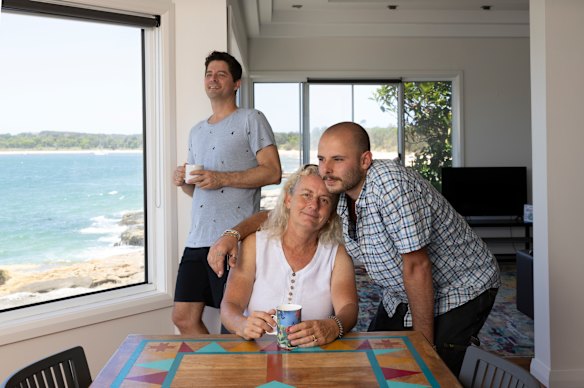
Their waterfront home in Bundeena has been a holiday destination for the Smith family for generations, including Cecily Smith’s son-in-law Brett Ryder, left, and nephew Josh Cross.Credit: Janie Barrett
Cecily Smith and her three sisters are selling their mother’s deceased estate through PPD Real Estate – 33 years after their parents bought it as a holiday home, and finally a permanent base for her mother. She says Bundeena is still much the same.
“There hasn’t been a real lot of change, although the sewerage was put in,” she says. “A few of the shops have changed but being national park, they can’t extend far.”
That lack of change in part explains why homeowners in Bundeena top the list for Sydneysiders who retain ownership of their properties the longest, with an average of 26 years, according to new data.
Other suburbs in the top 10 of Cotality’s longest median hold period for house sales in 2025 include Marsfield, Arcadia, Kirribilli and Annangrove, with median hold periods of 20 years or more. The average hold period in Sydney is 10.2 years.
Demographer Mark McCrindle said suburbs where owners keep their properties for roughly 20 years tended to have adapted well.
“These are places where 10 to 15 years ago families were moving in and now they are empty-nesters,” he says. “They are great places to raise a family and the empty-nesters are still enjoying the location.
“They are areas that have a natural amenity and can support the different stages of householders.”
Loading
Cotality head of research Tim Lawless said while they were often not in the most prestigious parts of the city, these suburbs had shared attributes.
“There is a common theme,” he said. “They are all around the Sydney median [of $1.7 million], although some are more extreme like Kirribilli. Most are middle ring, well established and they skew towards owner-occupiers rather than investors.”
Typically, he said, “low hold” areas were at either end of the price range. Owners at the more affordable end of the market are often planning to upgrade while those at the upper end are more likely to be on the move, enticed by capital gains.
KPMG urban economist Terry Rawnsley agrees that residents of more affluent neighbourhoods, such as the Lower North Shore, come to Sydney for a while and then move interstate or back to family overseas. Migration data shows they have a static population but a lot of international migration.
“In some of those prestige suburbs, there’s a sense of the conveyor belt.”
The style of housing in long-hold suburbs as well as community connection also played a role, he said.
“A lot of these areas are relatively small in terms of land area and population, which reinforces the tight-knit nature of the communities we’re talking about,” Rawnsley said.
He also noted many on the list, such as Bundeena, were less well known.
“That, along with local planning controls, means developers are less likely to come knocking and tempt residents [or their families] with high offers.”
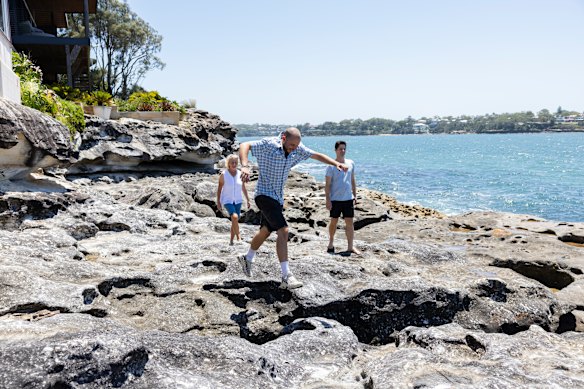
Bundeena has prime lookout points for dolphin and whale-watching. Credit: Janie Barrett
Partner at PPD Real Estate Debbie Donnelley, who is selling the Smith family property with a $5 million price guide, said Bundeena enjoyed much of the same amenity as the more glamorous Palm Beach, but without the hefty price tag.
“If it was in Palm Beach, [this property] would be $20 million,” she said. “It is an hour from Sydney and you don’t get the bottleneck you get at Palm Beach. It doesn’t have a pub but it has a RSL and cafes and limited shops.”
For Smith, selling the property, which includes three self-contained residences, is bittersweet, tied up in memories of her extended family. With their main home in Sans Souci, she said Bundeena was an easy drive growing up.
“That was the whole joy of it, you could be there within 45 minutes,” Smith said. “It was a nice drive through the park without any traffic, and once you get into the park, you feel like you’re on holiday.
“Weekends were [spent] with cousins and going to the beach or someone’s house, all that sort of thing.”
In her later years, her mother, Arabella, known as Ellie to locals, moved there permanently. Smith said her mother was an active member of the community, joining a swimming group known as the Harold Holters – even though she didn’t swim.
“She was in every group in Bundeena, including the Men’s Shed. I’d take her down to the post office or the cafe and everyone would say hello. They all look out for you.”
Most Viewed in Property
Loading