
 5 months ago
81
5 months ago
81
When Lisa Kudrow was in her 20s, she had a meeting with an agent who inexplicably declared, “It’s funny; I can remember my first car – everything about it – but I can’t remember the first girl I slept with.” Kudrow told him that this made sense: after all, he’d probably spent more time inside his first car. It wasn’t until the next day she realised she’d delivered a devastatingly witty rejoinder.
“I’m always speaking up and saying something when I should keep my mouth shut,” Kudrow, 62, says in an exclusive Australian print interview. “To me, there’s something very ‘Valerie Cherish’ about not getting [the meaning of something immediately].”
Speaking via Zoom from the Los Angeles home she shares with Michael Stern, her husband of more than 30 years, Kudrow, elegantly dressed in an olive shirt and gold pendant, is discussing the remarkable trajectory of HBO’s The Comeback, which she co-created and co-wrote.
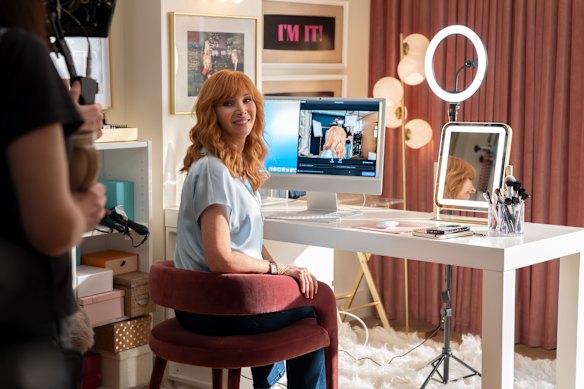
In the satirical comedy series, Kudrow plays Valerie Cherish, a sitcom star desperate to reclaim the fame she’d enjoyed in the late 1980s. It was Kudrow’s first major project after Friends, the series that propelled her to global stardom as the eccentric Phoebe Buffay, but The Comeback was cancelled after just one season. It then became a word-of-mouth phenomenon, prompting HBO to air a second season in 2014. Now, The Comeback’s third instalment – shot on the same sound stage as every season of Friends except the first – is streaming on HBO Max. (Despite being set in New York, Friends was filmed in LA.)
“That was emotional,” says Kudrow of the return. “I was touched that Warner Bros was having us shoot this there. The Comeback is important to me; it’s up there with Friends, even though less people are aware of it. It’s something I created and co-wrote, and I am proud of it.”
In contrast to Phoebe’s endearing kookiness and Valerie’s cringeworthy need for attention, Kudrow has the friendly, down-to-earth manner one hopes to find in a doctor. This is no coincidence: after completing a degree in psychobiology, she spent eight years working for her father, Dr Lee Kudrow, an eminent headache specialist. She even contributed to a scientific study, published in a medical journal seven months before Friends premiered, that disproved the theory that cluster headache sufferers are more likely to be left-handed.
In that study, she is credited as L.V. Kudrow – her middle name is Valerie. This is also the moniker she bestowed on a prototype of her Comeback character, one she created in 1989 as a member of an LA improvisational comedy troupe, The Groundlings.
Juggling live performances with a career in medical research wasn’t easy, but when she informed her parents she’d decided to devote herself to acting, their reaction surprised her. As she told The New Yorker, “They went, ‘Thank god! Maybe this’ll lighten you up, and then you can meet someone.’”
In 1993, Kudrow was cast as Roz Doyle on Frasier, which should have been her big break. But she felt something was off and director James Burrows agreed, replacing her with Peri Gilpin before the pilot was filmed. Not long after, Kudrow accepted an offer to play a nameless waitress on Mad About You, a part her agent urged her to decline, not least because she’d already appeared as a different minor character in an earlier episode.
“I thought, ‘I’m not in a position to say no,’” Kudrow says, adding that she hadn’t yet received her lines when she rushed to the taping. Instead, she told herself to “just listen, respond and make it funny”. Her instincts were correct, allowing Kudrow to parlay a tiny part into the recurring role of Ursula Buffay.
Simultaneously invited by Fox and NBC to audition for sitcom pilots, Kudrow chose the latter because Mad About You aired on the same network. Little did she know that the series she’d chosen, tentatively titled Friends Like Us, would become a worldwide smash. (To explain her presence on both shows, she was cast as Ursula’s twin sister Phoebe in Friends.)
Burrows, who directed some episodes of Friends (and who plays a fictionalised version of himself in The Comeback) was keen for the lead actors to bond in real life, so he encouraged them to play poker in his office. “Courteney [Cox] doesn’t even like poker!” Kudrow says. “But we all understood that we’re playing best friends who’ve known each other for a long time, so let’s make that happen. It turned out to be a really high-functioning relationship among six people.”
After the Friends finale was filmed in 2004, Matthew Perry, who played Chandler Bing, presented Kudrow with a gift: the “cookie time” jar with a static clock face from Monica and Rachel’s apartment. It stemmed from a scene in an earlier season in which Phoebe realises she’s about to miss an appointment. As the cameras rolled, Kudrow noticed there were no visible watches or clocks on set, and therefore no reason for Phoebe to register her own tardiness. So she pointed to the cookie jar and announced, “I’m going to be late; I’ve got to go!”
Perry, who died in 2023 from accidental overdose, was so impressed by her improvisation he obtained special permission from Warner Bros to give her the prop, which contained a handwritten note. (“It was really touching,” says Kudrow, tilting her head towards the room where the jar is displayed. The contents of Perry’s note, she explains, will remain “between me and him”.)
After Friends ended, Kudrow had lunch with producer Michael Patrick King, who had directed and written for Sex and the City. He loved her character from The Groundlings and together they created The Comeback.
The large gaps between each season proved to be a creative advantage. In 2005, the series involved Valerie filming a reality show, also called The Comeback, documenting her return to the spotlight in a cheesy sitcom, Room and Bored. In a clever twist, the 2014 season featured Valerie playing a thinly veiled version of herself in a brooding HBO dramedy, with her own camera crew still in tow. The latest incarnation sees Valerie being trailed by her social media producer while filming How’s That?! – the first sitcom written by artificial intelligence.
Kudrow, an accomplished screenwriter and producer, wanted to explore how AI might upend Hollywood. It also allowed her to examine the current state of social media, which enables fame-seekers to bypass established platforms such as reality television. Does she believe this technology, which encourages users to relinquish their privacy in return for validation from strangers, is making Valerie Cherish clones of us all?
“Yes,” Kudrow replies. “That was a quick answer!”
If you’re yet to see The Comeback – one of the great TV comedies of the past two decades – you’d be forgiven for thinking that Valerie is a narcissistic monster. But Kudrow always finds a sympathetic angle for her character. “You’re seeing the cracks behind the facade,” she says. “She’s not a bad person; there’s something nice about her.”
The more Valerie tries to control a tricky situation with self-reverential spin, the more likely she is to blurt out an impolite truth. Indeed, it’s Valerie’s unvarnished need for approval that many viewers find so disconcerting, perhaps because we share the same impulse but conceal it behind a veneer of indifference.
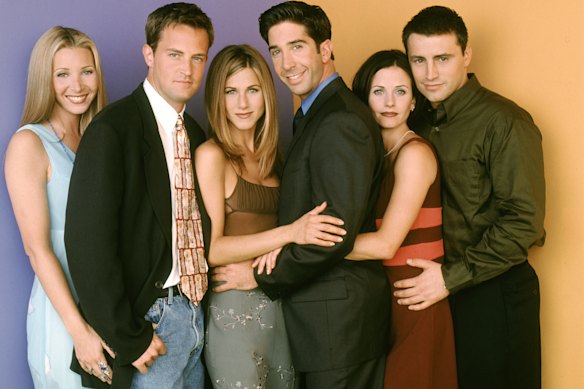
The success of Friends, which ran for 10 seasons and collected six Emmys, gave the principal cast considerable clout in Hollywood. Kudrow chose to use this to pursue her passions, including bringing the British genealogy program Who Do You Think You Are? to the US, where she served as the series’ executive producer. In her own episode, which aired in 2010, she learnt the harrowing details of her great-grandmother’s murder in Belarus during World War II. Her father’s grandmother was among 900 Jewish men, women and children rounded up and shot inside an ice storage shed before the building was set alight. Villagers reported hearing the screams of those who’d survived the Nazis’ bullets as they burnt to death.
“When you personalise these things, it’s not just a horrifyingly long list of names and numbers; they’re human beings,” Kudrow says. “[At first] I didn’t want to know the details. But I realised, walking down the path to where they were all killed, that this isn’t about me any more.”
When I enquire – perhaps a touch too pleadingly – about a possible fourth season of The Comeback, Kudrow gently dashes my hopes. “It’s a trilogy, which feels like a complete work,” she says. “This examination of Valerie Cherish in the television landscape that we’ve been chronicling for the past 20 years … it feels like a full circle moment.”
Season 3 of The Comeback is streaming now on HBO Max.
Get the best of Sunday Life magazine delivered to your inbox every Sunday morning. Sign up here for our free newsletter.

















































