3 months ago
19
3 months ago
19
Environment Minister Murray Watt is so worried that farmers will rush to rev up the bulldozers and fell swaths of trees on their land before the Albanese government’s landmark nature reforms that he is ordering laws into effect within days, demanding his department crack down on illegal activity.
“We don’t want to see a rush to destroying the kind of vegetation that will now be protected under the law, and people need to know that if they break the law, we will be cracking down on that,” Watt said on Friday.

Environment Minister Murray Watt, announcing his reforms had been enacted, said he had ordered a crackdown on illegal land clearing. Credit: Dominic Lorrimer
The Albanese government cut a deal with the Greens and passed their ambitious bill through parliament on the last sitting day of the year.
One of the most controversial changes, described by the National Farmers’ Federation as “bitterly disappointing”, is the removal of the “continued use” provision from the act, meaning that the clearing of native vegetation regrowth, including trees, that is more than 15 years old will no longer be exempt from scrutiny under law.
Loading
Watt said he would not risk a transition period for farmers before the new protection is enforced, in case farmers rushed to knock down trees before the Governor General gives Royal assent and signs the legislation into law.
“I’ve spoken this morning with the secretary of my department about the need to make sure that our compliance and enforcement teams are ready to enforce these new laws,” Watt said.
“We can’t allow too much of a gap between us having announced that there will be these changes to land clearing and implementing them, and that’s why we are commencing those provisions about land clearing on the date of royal assent to this bill in the next few days.”
Land clearing is listed as a top cause of species extinction by the federal government’s nature report card, the State of the Environment Report.
National environment laws operate alongside state regulations and are focused on so-called matters of national environmental significance, such as endangered animals.
The most widespread clearing of native vegetation under the continued use exemption has occurred in Queensland. According to the state government’s Statewide Landcover and Trees Study, more than 320,000 hectares of land were cleared in the 2022-23 financial year.
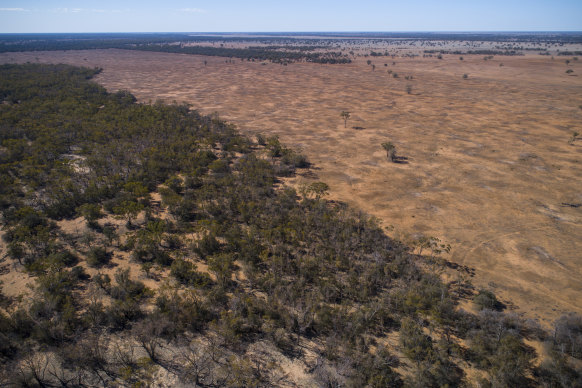
Ecologists list land clearing as a top cause of wildlife loss.Credit: Wolter Peeters
As much as 85 per cent of the cleared land had vegetation on it that was more than 15 years old and, according to studies by the Australian Conservation Foundation, more than 80 per cent of the land was likely to house matters of national environmental significance, which includes endangered species like greater gliders, northern quolls, and many birds such as the painted snipe.
Biodiversity councillor and conservation ecology professor Brendan Wintle said the reforms could deliver a significant boost for endangered animals if they are enforced, a major change from the status quo.
“Until now, the department has typically assumed that land clearing would fall under the ‘continued use’ exemption,” Wintle said.
“If the laws are properly enforced ... it could be a really important improvement for threatened species in this country.”
General president of Queensland farmer lobby AgForce, Shane McCarthy, said the reforms imposed unnecessary “green tape” for farmers and would prevent them from actively managing their grazing land and reduce productivity.
“For somebody living down in inner-city Hobart or inner-city Melbourne, or in the bubble of Canberra, to tell a producer that has lived on that piece of land for five generations how best to manage it is borderline ridiculous,” McCarthy.
“It’s unproductive, it’s unnecessary and these guys know their land intimately, they know every creature, every plant that is on that property – they know where the endangered animals and plants are.
Most Viewed in Politics
Loading