3 months ago
21
3 months ago
21
“The drawing shows it as one continuous piece, and that is what you are supposed to build – you follow the drawings.”
Builders of the $73 million public pool project also received laboratory test results, four months before the project’s roof buckled, showing their imported Chinese steel was of such low quality that some samples could not even be classified as steel.
Sources familiar with the recreation centre construction and ongoing investigations, who are not authorised to speak while legal actions continue, have detailed evidence of other glaring issues with the steel fabricated by Chinese mill ProFAB, as well as the oversight of Australian building giant ADCO.
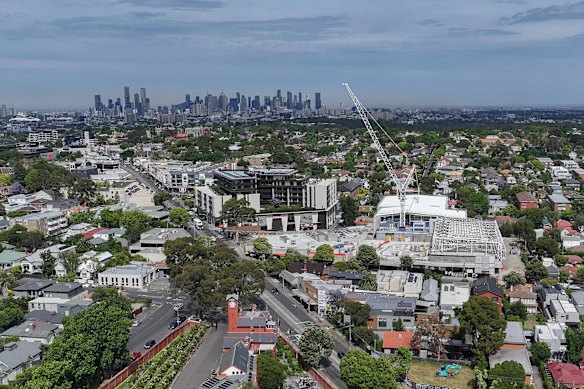
The Kew Recreation Centre development’s steel frame is rising again, but the legal fight over who is responsible for its October 2022 collapse continues.Credit: Picture by JOE ARMAO
Two sources have confirmed that ADCO sent eight steel samples to specialist metal testing company Ultratest to ensure they met Australian standards and would be safe for the project.
However, results of the lab testing returned to ADCO on June 20, 2022, revealed none of the eight samples met Australian building standards, and would also not have met Chinese standards.
Loading
The laboratory testing found two of the Chinese steel samples were so poor they did not contain carbon – meaning they could not even be classified as steel – and would be too brittle and weak to be used in a structural capacity.
The two sources said the testing process was further hampered by ADCO’s failure to provide Ultratest with a copy of the ProFab mill certificate, which stated what the steel was supposed to be. This meant the specialist testers had nothing to compare their results with.
When asked in Melbourne Magistrates’ Court in July about the steel test results, ADCO’s procurement manager Richard Zhang confirmed it had been analysed by Ultratest and that “inconsistencies” had been discovered.
“I have been copied into some emails, discussions about the testing ADCO had an independent lab did [sic], and the results showing some inconsistencies of the steel. That’s when we realised there could be some issues with the steel complying to the standards.
“I believe it was before the collapse. I couldn’t remember any detail of those documents. I’ve only probably seen it once, and that was a long time ago, but the message was quite clear.”
The Age has also seen details of a December 2, 2021, email sent by ProFab to ADCO after the steel structure had been fabricated, including the Inspection and Test Plan (ITP) report from Chinese officials.
As well as the official mill certificate stating that the materials met Australian building standards, the Chinese inspectors signed off on details for hundreds of welds used in the construction of the trusses, including dozens of line items classifying each individual weld as a general purpose “6mm fillet weld”.
While Australian standards require the ITP to include details of any structural welds, including documentation identifying the welder and their qualifications, the official paperwork does not include records of structural welding, nor the joins specified in approved plans.
ADCO did not respond to questions from The Age on Tuesday.
But in a new lawsuit filed on Christmas Eve, ADCO has claimed that it was fundamental defects in the design of the recreation centre provided by the council, rather than any failure in ADCO’s construction work, that led to the collapse.
The firm has accused the council of engaging in misleading and deceptive conduct and says the council supplied a “defective design” that led to an “inevitable” failure in the welds.
“Had council not engaged in the conduct … ADCO Group would not have entered into the construction contract with council and therefore would not have been involved in the project (including the collapse),” the company’s writ said.
ADCO is seeking both a court declaration that the contract is void and the payment of damages and compensation.
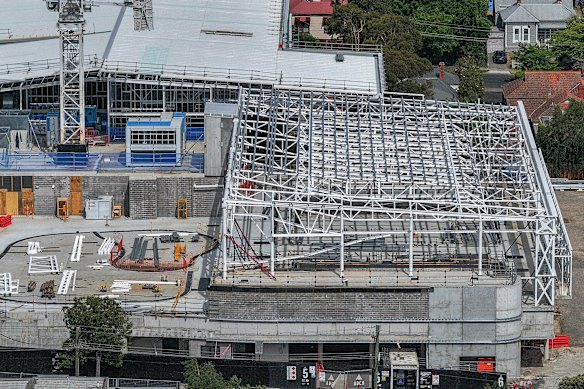
The new steel frame at the Kew Recreation Centre development this month. Credit: Picture by JOE ARMAO
After a two-year investigation, Worksafe charged ADCO and facade contractor Colab Building Tech for failing to check the quality-assurance documents provided for an imported steel truss to ensure that it had been welded in accordance with the design drawings and fabrication requirements.
The BPC has also hit ADCO and its nominee director John Conroy with 18 charges, claiming it knowingly erected a steel roof truss containing four spliced sections, instead of a single length of steel as required under its building permit.
The BPC also alleges that the welding of the structural steel framework was non-compliant and the steel used in the truss did not meet Australian standards.
Construction has resumed on the project, which is progressing.
The City of Boroondara has not been charged over the collapse, but a spokesperson said the council could not comment about the ADCO civil action because the matter was before the courts.
“We look forward to delivering a new Kew Recreation Centre for our residents and are working to ensure the facility is built to expected standards.”
Start the day with a summary of the day’s most important and interesting stories, analysis and insights. Sign up for our Morning Edition newsletter.