3 months ago
14
3 months ago
14
January 27, 2026 — 7:30pm
When are we going to understand that when a man hurts his partner, it’s not an accident. He means it. He really means it. Researchers tell us that there are eight steps on the way to murder. Eight signs. Eight opportunities to stop the violence.
We are spending January searching for reasons, searching for murderers, five women all killed this month. But are our bail laws really the problem? Sophie Quinn, Nerida Quinn, Velvet Pesu, and two poor bloody women, one in Victoria, one in Queensland, whose names we don’t even yet know. But this much we do know. Those women knew their accused murderers.
As Silke Meyer, Griffith University criminology professor observes, the case of Sophie Quinn ticked so many boxes which predicted harm, but nobody intervened. Stalking, longstanding history of domestic, family and sexual violence across multiple relationships, abuse during pregnancy. Tick. Tick. Tick.
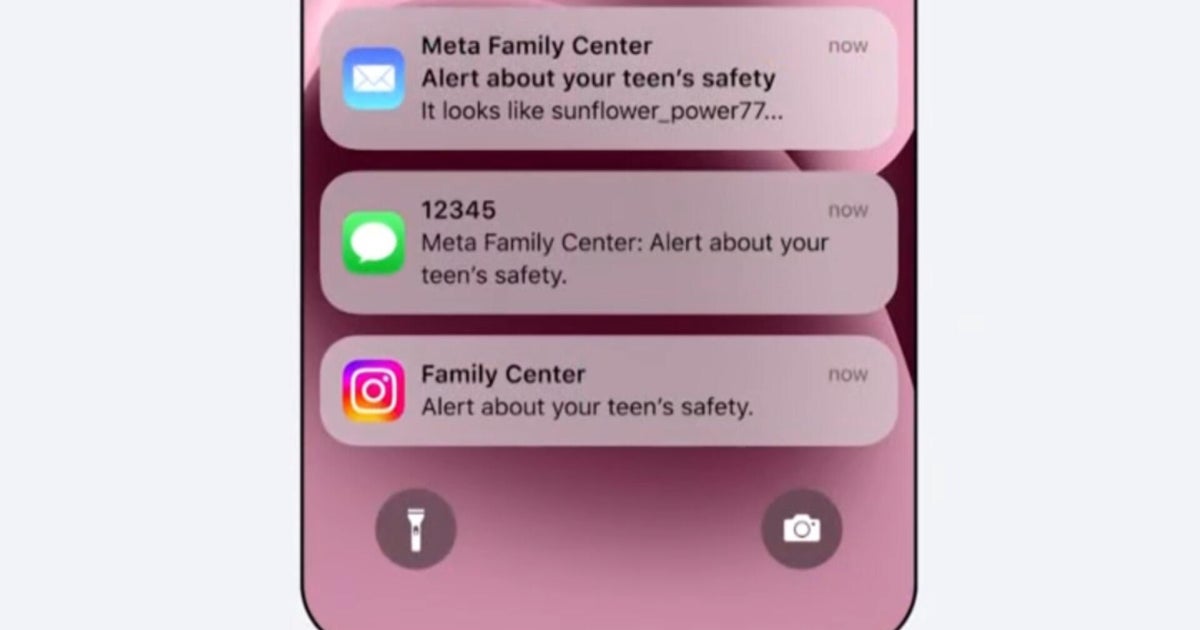
Where’s the system to assess, to monitor, to manage risk and, finally, crucially, to intervene? Why is there not a nationwide system which goes ping when these predictors occur? Ping. Ping. PING PING PING. Sirens sounding before a murder. My car does a better job of warning me there is about to be a problem than our domestic violence system does.
Instead, our institutions pretend to be neutral when they should be sharing information to prioritise safety at speed and across state borders. Friends and family often lack an understanding of how to support safety. And crisis responses are drastically underfunded – calls go unanswered. Sometimes we get told to mind our own business.
But dead women are our business. We must learn to intervene – not just as friends and family but with every single institutional interaction.
Says Meyer: “If we don’t have a co-ordinated community response that shares information and continues to monitor risk, victims will always have to rely on an individual response. Risk management and monitoring is a collective systems responsibility, not the responsibility of the last part of the system that had contact with the victim or perpetrator.”
We keep focusingon the incidents instead of the patterns of behaviour, says Meyer. And we could talk about electronic monitoring all we like (and believe me, I have) but that’s not going to put the pieces back together.
Speaking of pieces ... my first response to the murder of Sophie Quinn was to blame our bail laws. Kate Fitz-Gibbon’s research in 2024 on intimate partner homicides revealed that in 8 per cent of cases, the offender was on bail at the time of the murder. Yes, it’s a key risk point for the perpetration of fatal violence against women.
But when you look at what’s happening in our prisons, you can see there’s been a massive upswing of people incarcerated for domestic violence. Jackie Fitzgerald, executive director of the NSW Bureau of Crime Statistics and Research, spent the long weekend helping me navigate the numbers. The number of people in custody for a domestic violence offence has soared by 60 per cent over seven years, from 2114 in September 2018 to 3410 in September 2025. Those offenders now account for over 25 per cent of the prison population up from 16 per cent in 2018. That’s at the same time as the total adult prison population declined. In Victoria, the Crime Statistics Agency shows a 13 per cent increase from 2021 to 2025 in incidents which have a family incident flag on the offence.
And the number of Aboriginal people in custody for a domestic violence offence increased far more rapidly than for non‑Aboriginal people. Djirra, an Aboriginal Family Violence Prevention and Legal Service, has just expanded services into rural areas in Victoria and as Antoinette Braybrook, chief executive of Djirra puts it, we need many more Aboriginal-controlled specialist services in family violence, experts who can understand, develop and manage what needs to be done.
Braybrook also points out that many of the women who use Djirra are the partners of non-Indigenous men. Never mind who the perpetrator is, she says Indigenous women are always frightened, will always be frightened, of reporting because of the likelihood their kids will be taken.
I’ll tell you what else is taken – stolen – the lives of women, the lives of their children, when they exist with family violence. Sophie Quinn never got to meet her little baby – but there are thousands of families where lives, health, memories, were all destroyed because of family violence. In nearly one-third of cases in Fitz-Gibbon’s research into victims of femicide, judges said the perpetrator had experienced intergenerational violence. What goes around, comes around, and destroys a new generation.
Sometimes they escape, get to start a new life in a new home – but even our refuges are under huge pressure because the system isn’t working. No vast database of who needs a home, of who needs safety and security. Nicole Yade, the chief executive of the Women’s & Girls’ Emergency Centre in NSW, says that after these murders: “We are all upset for a few days and then something else happens, and we move on.”
Hell yes. Her organisation houses 200 women and children a night – and those are women who don’t have a sister, mother, grandma to help them out. Women whose friends can’t assist. Imagine all the women across the country hiding somewhere else.
“For every one person we house, one person gets turned away,” she says. And promised government money comes in dribs and drabs and is never enough. It’s never enough.
Annabelle Daniel, chief executive of Women’s Community Shelters, says for them, it’s 275 women a night. “And the further out from metro city we go, the higher the demand there is. Rural and regional areas are desperately underserviced.”
We need whole-of-system reform and the funding to go with it, everywhere and in every city and region. That’s the message from every serious family violence researcher in the country. That’s the message from every single frontline service.
I beg the Minister for Women Katy Gallagher to take charge today. Don’t take no for an answer from states which believe politicians and public servants know better. Insist all the systems work together to save the lives of women and children. You’ve had the rapid review into family violence prevention for nearly 18 months and still we are waiting for action. We need the sirens to start working today. You can fund them. Please.
Jenna Price is a regular columnist.