
 4 months ago
69
4 months ago
69
Like many residents of Bondi, Karl Urban’s daily ritual while living in the beachside suburb included mantras. But, unlike the phrases favoured by those who enjoy crowding the boulevard for group exercise, the actor’s were not self-assuring.
“What am I doing?” was a chart-topper. Followed by, “Actually, I’ll go back to university. I’ll study. Let’s get smart about this.”
With a handful of guest television roles under his belt, a 22-year-old Urban had moved from Auckland to a flat in Sydney’s east to further his acting career. He ended up spending 1995 largely unemployed, save for a stint at a Double Bay bottle shop.
“Nobody knows who you are, and your credits and your work experience in New Zealand didn’t really matter much,” says Urban, who is now 53. “You’re really a persona non grata.”
It was the toughest year of his life. But he says it was also one of the most “formative and amazing” – it made him resilient. By 1996, Urban was back home and cast in Xena: Warrior Princess, with The Lord of the Rings following shortly afterwards.
The lesson? “Don’t give up. If you stand at the roulette table long enough, your number will come up.”
Determination – or obstinacy – is a quality Urban says he shares with Billy Butcher, his dark character in Amazon Prime Video’s The Boys.
Now in its fifth and final season, fans are waiting to see if the vigilante can complete his quest for revenge. Butcher wants to destroy the sociopathic, all-powerful Homelander (Antony Starr), and while he’s at it, eliminate all superhumans in a genocide that would also include himself, and friends Starlight (Erin Moriarty) and Kimiko (Karen Fukuhara).
“To do what he needs to do, [Butcher] has had to remove elements of his humanity,” Urban says. “It’s not to say that he doesn’t care, because he does ... that fire, it’s running low, but it’s still there.”
Butcher is like a general who’s leading an army, Urban says. To send soldiers – his found family – on a mission that may cost them their lives, emotion has to be removed from the equation.
The stakes have never been higher, the violence never bloodier. That’s partly because Butcher took superpower-inducing Compound V, becoming what he swore to destroy.
Season five’s ultimate question, says Urban, is this: If you sink to the lows of your enemy, is there hope for you? Can you retain any degree of your humanity and your compassion?
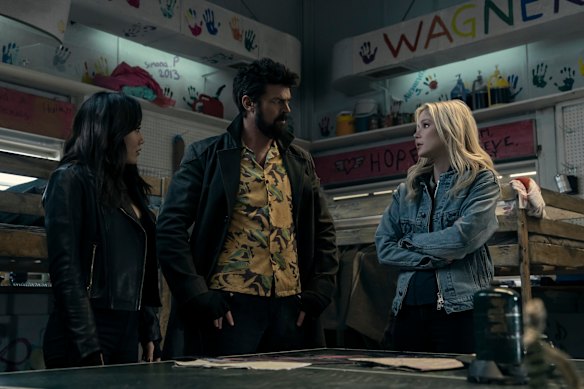
Although The Boys was green-lit to satirise and disrupt a genre flooded with Marvel and DC’s cartoonish take on superheroes – Soldier Boy (Jensen Ackles) is a twisted Captain America, Homelander a warped Superman – Marvel and DC are no longer the first things that come to mind when Homelander has a meltdown and turns his lethal laser gaze to crowds of civilians, or his lieutenants.
Urban agrees with the fans and critics who feel the show has gone from a “crazy fun house mirror” parody of superhero fiction to a scary reflection of political reality. Even with its special effects and signature outlandish stunts – a notorious accidental death in season three meant the art department had to erect a 3.4-metre high, 9.1-metre-long penis for an Ant-Man-esque hero to spelunk through – The Boys now feels like a documentary.
Series creator and showrunner Eric Kripke has been clear that season five was written before the 2024 US presidential election. It felt “far-fetched” in the writers’ room more than 18 months ago, he told TV Guide, meant to be a “1984 version of what creeping authoritarianism looks like in America”.
By the time the first two episodes aired earlier this month, some plot points had real-life parallels; Starlight’s supporters are being rounded up and imprisoned in internment camps (called “freedom camps”), with neighbourhoods and families fractured as they turn each other in to law enforcement.
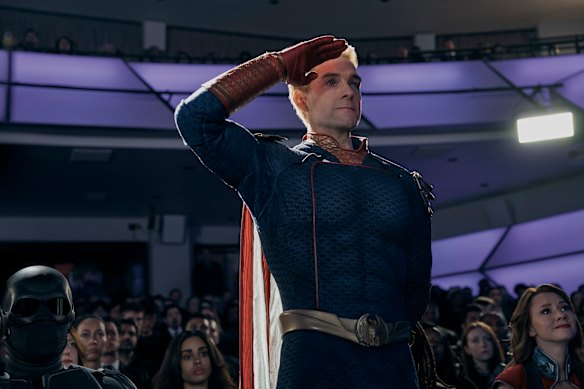
Perhaps Kripke’s knack for prediction is less about having the powers of a seer and more to do with the fact that he based his interpretation of the comic book series’ worst villain on Donald Trump.
A key storyline for Homelander this season is supplanting Christ to become saviour of the universe, and God himself. Within hours of this interview with Urban, Trump shared an AI-generated image of himself as a Christ-like figure to social media.
But if Homelander is an analogue of Trump, then who is Butcher?
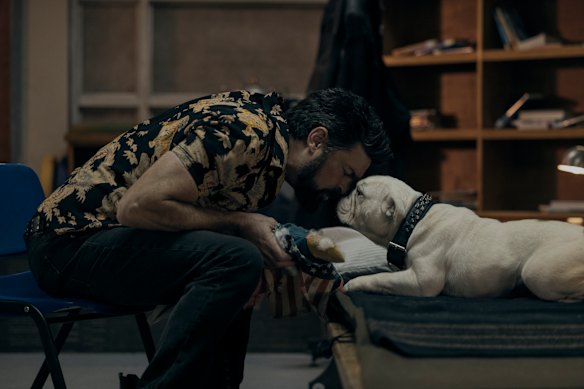
“I tend not to actually break down the characters as they potentially relate to any real-life individuals,” Urban says. “[Butcher’s] story is so multifaceted, and it’s taken so many twists and turns … Everything that he is doing is about him trying to work through the loss of the love of his life, and the life that was ripped away from him.”
Butcher’s vengeance may propel him, but other characters in The Boys – such as Hughie (Jack Quaid) – move forward by holding on to fundamentally human qualities: compassion, altruism.

















































