3 months ago
63
3 months ago
63

 Getty Images
The strike comes after 60% of ABC staff rejected management's offer of a 10% total pay rise over three years
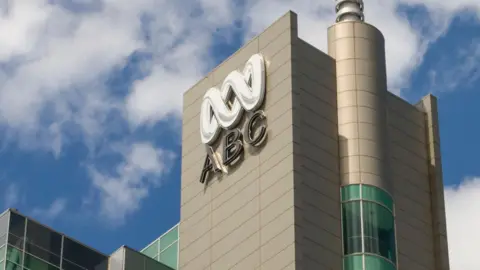
Hundreds of journalists have walked off the job at Australia's national broadcaster on Wednesday over pay, conditions and the possible use of AI to replace them.
It was the first time staff at the Australian Broadcasting Corporation (ABC) have gone on strike in 20 years after a majority of union members rejected a pay offer that was below inflation.
Flagship shows such as the 7.30 evening current affairs programme and its breakfast shows on Thursday will not go ahead, with reruns, pre-programmed shows and BBC content to plug the gap.
ABC management said the pay offer "reflects the maximum level" the government-funded outlet can "sustainably provide".
"Public broadcasting is the hope of the future of journalism," ABC veteran David Marr told the BBC as he walked out with his colleagues, "and it has to keep up with wages... and promise secure futures for those who invest their lives in it."
Staff began striking from 11:00 local time (00:00 GMT) on Wednesday and will not return to work for 24 hours.
Radio programmes such as Triple J and ABC Classic were expected to have limited live elements and play music only.
The ABC employs more than 4,400 people with about 2,000 staff in news, its largest division.
Staff were offered a staggered 10% pay rise over three years with a 3.5% bump in the first year, following by 3.25% in the two years after. Australia's annual inflation rate was 3.8% in January.
Staff were also offered a one-off $1,000 bonus but this would not be for casual staff - who make up a large part of the workforce.
ABC managing director Hugh Marks said the deal on the table was financially responsible and competitive for the industry.
"The pay offer reflects the maximum level the ABC can sustainably provide and is balanced when looking across all the factors that we need to consider," he said.
The offer was rejected by 60% of union members who voted, with a majority agreeing to take industrial action.
Staff also want higher rates for night work, better career progression and less reliance on short-term contracts. There is also anger at the broadcaster's refusal to rule out replacing some staff with AI.
The ABC will take the matter to Australia's workplace tribunal, the Fair Work Commission, in a bid to resolve the dispute.
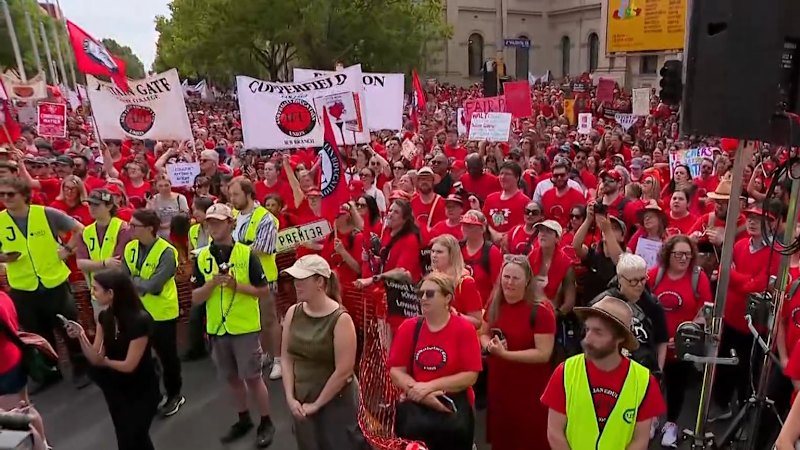
Shortly after the strike started, several hundred people - many clad in black - gathered outside the ABC's offices in Sydney and Melbourne.
Veteran broadcaster Fran Kelly, who helmed the ABC's flagship breakfast radio show for almost two decades, told the Sydney crowd she had been stuck on rolling contracts at the start of her career until union lobbying secured her a permanent role.
"I want you all to have the same choice," she said. "It's not acceptable that you get stuck at a pay level that is not enough to live on in Sydney or Melbourne or wherever you are."
Many journalists approached by the BBC would only speak anonymously as they were concerned their short-term or casual contracts might be at risk.
One young woman, who works in podcasting on a short-term contract, said working at the ABC is her "dream job" - but she had just hours earlier been offered a permanent role at a rival outlet.
"It's really stressful, I love my job and I want to stay but that's the decision I have to make," she said.
Michael Slezak, federal president of the Media, Entertainment & Arts Alliance - one of the two unions representing ABC staff - rallied the crowd, saying they were here because "we believe in what public broadcasting is supposed to be."
Earlier, Melissa Donnelly from the Community and Public Sector Union said ABC staff want salaries that reflected cost-of-living pressures and recognised the work of a public broadcaster.
"ABC plays such an important role in our society and in Australian storytelling and it's really important ABC management come to the table," she told Australian Associated Press.