3 months ago
17
3 months ago
17
NSW Police have rejected seven calls from the Coroners Court to curb the use of high-speed car chases, which have soared during a decade-long stand-off over safety fears.
Officers are launching nearly three times as many pursuits as they were in 2014, when one coroner compared the practice to “Russian roulette”. The number of crashes has more than doubled, new figures show.
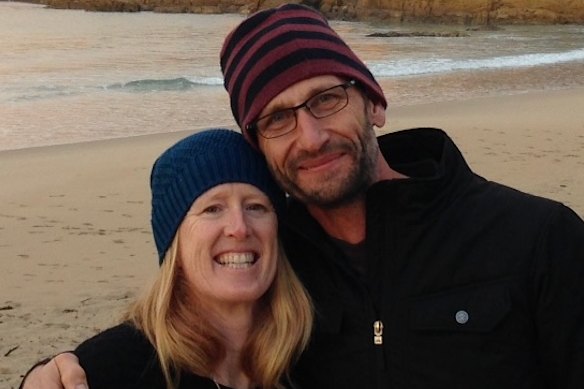
Elisabeth Adamson’s partner Harri Jokinen was killed in 2021 when his car was struck by another involved in a high-speed police pursuit.
Yearly totals for injuries and fatalities related to pursuits have fluctuated, but in the past 10 years NSW has recorded 568 injuries and 24 deaths.
Among those killed was father of two Harri Jokinen, who was driving on a stretch of NSW highway just outside the ACT in December 2021 when a speeding driver being pursued by police crashed into his van.
“The response from NSW police is so thoroughly inadequate,” Elisabeth Adamson, Jokinen’s widow, told the Herald. “It’s just crushing”.
Adamson had told the coroner’s court in a statement, “I am devastated we don’t get to grow old together”. Jokinen’s daughter Lisa testified that she wished she, too, had been killed that day.
Deputy State Coroner Rebecca Hosking found the police pursuit was excessively risky and should not have been authorised.
The coroner recommended that NSW Police should adopt a new standard: chasing only when satisfied that a “serious risk” to health and safety existed before an attempt to stop a vehicle.
But in a response released last week, NSW Police warned that threshold could lead to “unintended adverse consequences”.
Loading
“Several traffic offences may not meet this threshold for pursuits in every circumstance,” Commissioner Mal Lanyon wrote in a letter to Attorney-General Michael Daley. Lanyon said all traffic offences “pose significant risks to the community and efforts should be made by police to stop drivers contravening the law.”
Adamson, who is due to meet with the commissioner next week, said the pursuit rules were lax and contradicted the core mission of NSW Police, which is to protect public safety.
NSW Police says it does not keep count of how many police officers and innocent bystanders are hurt or killed as a result of pursuits.
Last financial year, NSW recorded 5029 chases, 468 collisions, 36 injuries and three deaths, according to the latest police annual report.
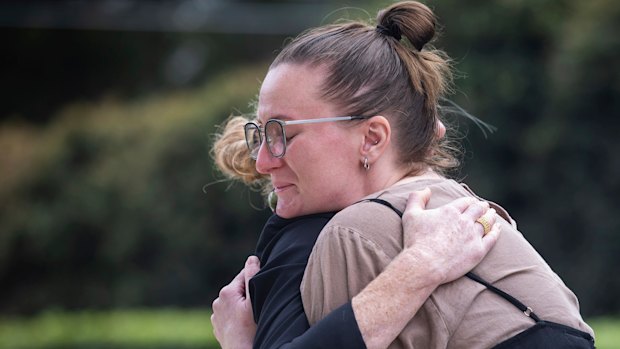
Outside the NSW Coroner’s Court at Lidcombe, Lisa Jokinen embraces her late father’s partner.Credit: Jessica Hromas
Media reports indicate at least seven people have been killed as a result of pursuits since January. They include a 19-year-old motorcyclist and a 20-year-old motorcyclist who crashed in separate incidents after allegedly failing to stop for police.
An officer involved in the pursuit of 16-year-old Aboriginal boy Jai Kalani Wright, who crashed and died in Alexandria in 2022, was found guilty of dangerous driving occasioning death last month.
NSW Police are allowed to chase even when the suspected offence would be punishable by a fine. Officers launch most pursuits in response to suspected traffic offences or failures to stop for random breath tests.
Father of three Andrew Stark, from Gunnedah in the state’s north, was killed in a crash in 2022 when he failed to stop for police, who had noticed his car was not registered.

Andrew Stark, 48, was killed in a crash during a police pursuit in Gunnedah in 2022.
In 2014, Deputy State Coroner Hugh Dillon called for major reforms to what he called a “Russian roulette” pursuit policy after an inquest into the death of Hamish Raj, 21, who crashed his motorbike during a chase.
Police took nine years to officially reject the key recommendations.
“Road safety and public confidence may be undermined if there was a public perception that the road rules are not being enforced,” former commissioner Karen Webb wrote in a 2023 response.
“It could encourage minor traffic offenders not to pull over for police if they think they will not be pursued.”
Loading
Webb added that it could lead to resentment from other motorists who might ask “why am I being fined just because I did the right thing and pulled over”.
Other states have significantly tightened their pursuit rules, including Queensland in 2011.
Australian Federal Police officers are allowed to pursue in cases of serious public health and safety risks or offending that has caused serious injury or death.
A spokeswoman for NSW Police declined to say why pursuit and collision numbers had risen sharply, referring only to unnamed “operational factors”.
The spokeswoman said all pursuits were subject to strict oversight and that the safety of the public, the offending driver, passengers, road users and officers was the primary focus of NSW Police.
“Ultimately, police assess and respond to the individual circumstances of the pursuit and offending driver,” she said.
Start the day with a summary of the day’s most important and interesting stories, analysis and insights. Sign up for our Morning Edition newsletter.
Most Viewed in National
Loading