3 months ago
10
3 months ago
10
Isabelle’s teacher warned her to skip the Netflix adaptation. It was the secret to HSC success
Isabelle Henderson’s year 12 English advanced teacher had a voracious appetite for books.
“She read six books a week. She was unreal,” said Isabelle.

Isabelle Henderson said her teacher pushed her classmates to read extensively, which paid off in the HSC.Credit: Dominic Lorrimer
Her teacher pushed Isabelle and her friends to read books too. When the class read Anthony Doerr’s All the Light We Cannot See, that same teacher warned students against watching the Netflix adaptation as a replacement for consuming the 540-page book.
“She was a phenomenal teacher … she was always pushing us out of our comfort zone.”
Now Isabelle can see why: like most students in her class, she graduated from north-west Sydney’s Northholm Grammar School last year with top marks in English advanced – an achievement she traces back to reading.
“It just makes such a big difference in the way you write,” she said.
Across the state last year, the proportion of students scoring over 90 per cent in English advanced fell to 13 per cent, the lowest in five years. Some English teachers believe the small drop may be linked to the reluctance of teenagers to read an entire book.
The decline in students reading to the end of a novel has been recorded in countries around the world.
Last year, Monash University’s Australia Reads project found 49.9 per cent of Australians read for enjoyment, noting the activity was declining in popularity. The country lags other nations when it comes to picking up a book.
A note from a staff member to parents at Winmalee High School last March summarised the issue more bluntly.
“Reading is a worry. Since I started teaching some time ago, I have seen a gradual decline in students’ interest in reading. I’m talking about substantive reading – novels and extended texts such as longer magazine articles,” the note in the Blue Mountains high school’s newsletter said.
“Anecdotal evidence from questioning random students this term indicates that only about 10 per cent of students read books or Kindles for pleasure.”
NSW English Teachers Association president Sarah Warby said that while there were always students who boasted about passing the HSC without reading a single text, teachers were seeing more students who did not read – which could be a factor in the modest dip in HSC top scorers.
“It can be a mix of things – the questions in the HSC could have been particularly difficult, it could be the cultural impact of everything being quite short form, it could be the impact of AI,” she said.
Loading
Warby explained artificial intelligence chatbots had meant students now expected instant answers to questions and were less prepared to read slabs of text to discover information for themselves.
“The ones who enjoy reading Nineteen Eighty-Four, who do have the long-form concentration, they remember the settings, the situations and the characters,” she said.
English teacher Alex Wharton, who is on the NSW English Teachers Association’s curriculum and assessment committee, said there was a wider challenge of teens not reading for pleasure.
“I do think teens are reading less and also reading less sustained pieces of literature,” he said.
He said social media use meant it was challenging for students to deeply engage because there were so many distractions, while artificial intelligence had made shorter summaries of large blocks of texts commonplace.
“I think Al has got a role to play. If students are using Al prompts, there’s less engagement with the text, which shows in their writing,” he said.
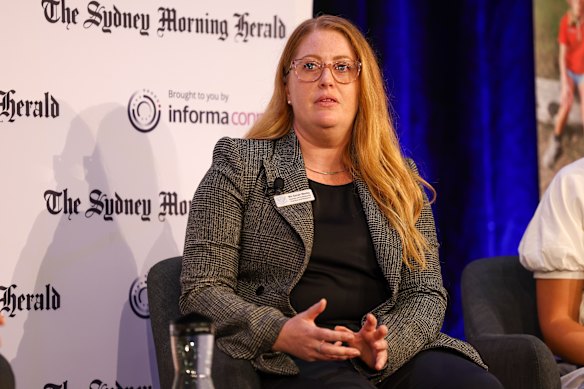
English Teachers Association NSW president Sarah Warby.Credit: Edwina Pickles
The decline in reading is being felt on university campuses too, says University of Newcastle English professor Jesper Gulddal, although many students he sees still enjoy reading novels.
“On the other hand, some students do struggle with longer novels,” he said.
“This is partly because they’re short on time with work and other commitments, but internet-driven distractions and short attention spans are also factors.
“It’s a mixed bag, I think. We’re still very much reading novels in our English courses, but I think many teachers avoid the longer ones, in the hope that more students will get to the end. Students sometime find older texts hard to read, but length is a bigger factor than age and difficulty.”
Rose Cunningham, who graduated year 12 last year, said she struggled to find time to read among study, homework and sport. Now the HSC is behind her, she’s trying to get back into reading instead of other habits.
“We spend an absurd amount of time on our phones,” she said.
Most Viewed in National
Loading