3 months ago
9
3 months ago
9
Coonabarabran’s Liam Morrissey witnessed the gap between regional and metropolitan access to healthcare up close. It made him want to be a doctor.
“I have a sister with a fairly significant disability, so I saw that sort of second-hand,” he said.
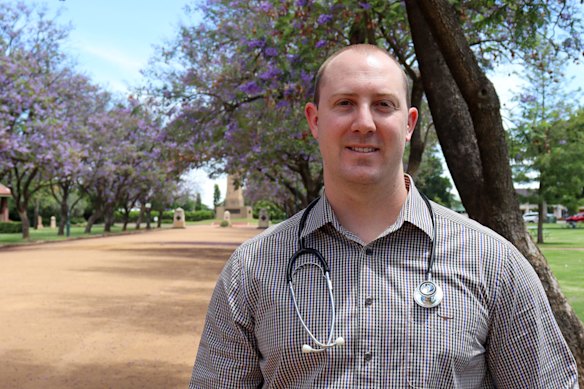
Medicine graduate Liam Morrissey was inspired to become a doctor after his family’s experience with rural health.
Watching family drive hours for necessary doctors’ appointments in Brisbane and Sydney pointed him towards his career in medicine. But when he sat the high-pressure Undergraduate Medical Admission Test in 2009, he had a long road ahead of him to becoming a doctor.
Missing out on that direct pathway into medicine, Morrissey instead studied exercise physiology and worked in occupational health.
Now 34, Morrissey is one of 24 newly minted doctors to have completed their medical training through the University of Sydney’s regional medical school in Dubbo.
Loading
The Dubbo school was established in 2001 for one-year rural and regional placements for the university’s postgraduate medicine students. In 2022, the institution started offering students the opportunity to complete the four-year doctorate of medicine completely in Dubbo.
The entire inaugural graduating class has come from a regional or rural background, said Associate Professor Paul Lunney, head of the university’s Clinical School for the School of Rural Health in Dubbo and Orange.
“I think certainly from this cohort of individuals who come from a rural background, there’s a strong desire to practise medicine in regional, rural and remote areas,” he said.
“So really returning service to their communities, you know, is something that is at the forefront of mind.”
There are 73 full-time equivalent GPs for every 100,000 people in very remote areas, versus 114.6 per 100,000 in metropolitan areas, according to federal government data.
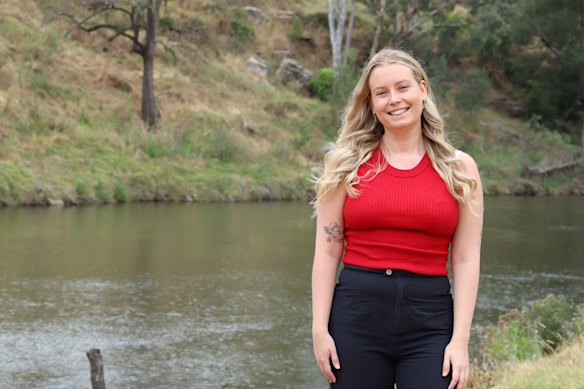
Josie Cross is a graduate of the University of Sydney’s Dubbo medicine stream.
The National Rural Health Alliance reports that the expenditure gap in 2025 between urban and rural and regional Australians was $1090.47 per person per year. That divide is widening annually.
“We’re part of the education pipeline to build the rural health workforce,” Lunney said. “The likelihood of them returning to work in rural health settings is much, much greater than students undertaking their degree in metropolitan settings.”
In 2026, Morrissey will embark on an internship at Dubbo Base Hospital, one of more than half of his cohort to continue working in regional health.
Loading
He will be joined by classmate Josie Cross, who hails from Grafton and is passionate about providing services to underresourced communities.
She encouraged prospective students to take the leap and apply for the Dubbo Stream.
“You build your own family while you’re there, and the community are very welcoming, and you get to experience so many different things. It is definitely worth it,” she said.
Applicants for the University of Sydney doctor of medicine can preference either the Camperdown or Dubbo Stream, and are accepted based on their GAMSAT result, undergraduate GPA, a personal statement and an interview.
Priority recruitment is given to Indigenous and regional applicants.
Start the day with a summary of the day’s most important and interesting stories, analysis and insights. Sign up for our Morning Edition newsletter.
Most Viewed in National
Loading