3 months ago
32
3 months ago
32
Advertorial for IAG Australia
January 19, 2026 — 9.25am
As lithium-ion devices including e-scooters, e-bikes and portable power banks become a staple in Australian homes, safety experts are warning of growing fire risks linked to untested products from online retailers that fail to meet Australian safety standards.
With forecasts showing that by the end of 2026, the average household will contain around 33 devices powered by lithium-ion batteries, Australians are urged to buy from trusted suppliers and follow safe charging practices.
IAG, Australia’s largest insurer whose brands include NRMA Insurance, CGU, WFI, ROLLiN’, RACQ Insurance and RACV is leading a research project with experts from QUT, EV FireSafe, Standards Australia and iMOVE. The goal is to understand and reduce battery-related risks, inform national standards, and develop practical safety guidelines for everyday use.
Early findings show fire risk rises significantly when batteries are damaged, exposed to saltwater flooding, charged incorrectly, or subjected to repeated impacts — a common issue with devices like e-bikes and e-scooters.
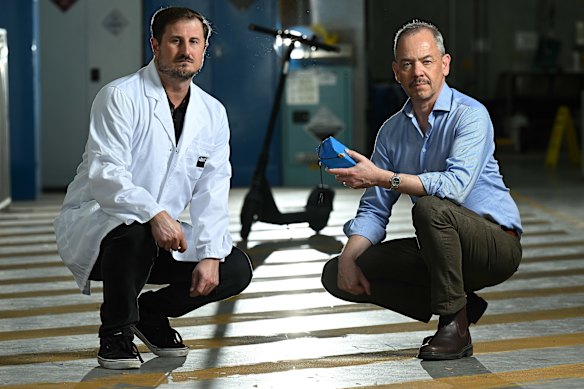
Shawn Ticehurst, head of the IAG Research Centre, and Professor Joshua Watts, from QUT’s energy storage research group, are leading a research project to inform national standards.
Shawn Ticehurst, head of the IAG Research Centre, says the rapid growth of Australia’s lithium-ion battery market is outpacing the development of safety standards. “Consumers can easily purchase low-quality, often untested products online, and they aren’t getting the information they need about safe charging practices.
“By better understanding how battery condition and charging habits contribute to fire risk, we can help establish the guidelines needed to keep people safe.”
Learnings from New York
Professor Joshua Watts, head of QUT’s Energy Storage Research Group (ESRG) and project partner with IAG, says Australia can learn from overseas examples of effective regulation.
“We recently met with the New York City Fire Department to understand their approach. Between 2021 and 2023, New York recorded nearly 30 fatalities and hundreds of injuries linked to lithium-ion battery fires,” says Watts.“To tackle the surge in fires, the city introduced strict safety measures and invested over $1 million in a public education campaign.
“Today in New York, retailers can no longer sell e-bikes or batteries unless they meet UL accreditation, a national safety standard. Refurbished batteries are banned, and retailers who repeatedly offend can be shut down. The measures have worked. By 2024, fatalities in New York had fallen to six.”
While small battery-powered devices are sparking concern, batteries in electric vehicles (EVs) are proving to be much safer. “There’s virtually zero fire risk if an undamaged EV is charged correctly,” says Ticehurst.
“EV battery fires are extremely rare. They have advanced Battery Management Systems that prevent overheating and overcharging, and the packs are built with strong, fire-resistant casings that stop heat from spreading.”

With the rise of fires caused by lithium-ion batteries, Australians are urged to buy from reputable suppliers and follow safe charging practices.
Safer use and disposal
Watts claims IAG’s research will not only inform safety standards but also address how to safely dispose of batteries reaching their end-of-life stage.
“We’re also investigating whether older batteries pose greater fire risk, and how everyday charging and storage habits affect long-term safety,” says Watts.
“The waste and recycling industry estimated there are 12,000 fires each year in Australia, mainly in trucks and at waste facilities caused by improper disposal. Batteries power our modern lives, and their role will grow as we cut carbon. But without care, they can cause serious harm.”
iMOVE, Australia’s national centre for transport and mobility R&D, is also a partner in the project. Managing director Ian Christensen says the research will help balance sustainability and safety.
“Electrification is critical to cutting transport emissions,” says Christensen. “This work helps us understand and manage the unintended risks that come with more electric devices.”
The full research findings are expected to be published in 2026.
Charging tips for e-bikes and e-scooters
According to Ticehurst, these are the recommended steps to reduce fire risk and extend battery life:
- Charge outdoors in a sheltered spot. This reduces fire risk and exposure to fumes.
- Use the charger supplied with your device. Avoid cheap or off-brand chargers.
- Let the battery cool before charging. The heat from riding can increase fire risk.
- Unplug when fully charged. Never charge overnight or unattended.
- Buy from reputable brands. Look for devices with Battery Management Systems (BMS).
- Check batteries regularly. Continue to watch for swelling or cracks, and avoid DIY repairs.
Read more practical tips on safe charging, storage, and handling of lithium-ion batteries here.
Most Viewed in Environment
Loading