3 months ago
8
3 months ago
8
This article is part of an opinion summer opinion series where writers share the story of a year that changed their lives.
See all 6 stories.In the summer of 2008, I was 22 years old, with unwise peroxide-dyed hair, working as an English teacher in Kolkata, when I first read the word “recession” in an email from back home in Ireland. Until then, my biggest concern was worrying that the children I was teaching would inherit my Northern Irish accent as they made their first tentative steps in a new language. I was unaware that soon I was going to meet a teacher of my own who would change how I looked at life.
While my pupils skilfully built confidence in English, I was fixated on that one word – recession. It hadn’t been used once in my four years studying at Trinity College in Dublin.
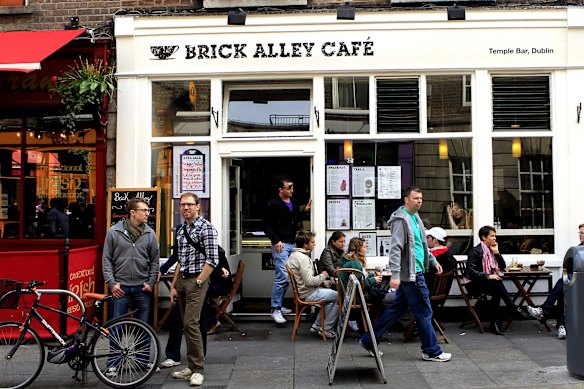
A Dublin cafe in 2011, not long after Ireland’s economy crashed.Credit: AP
In the 2000s, Ireland’s newfound wealth was hard to avoid. Some students regularly went Christmas shopping in New York, tank-like SUVs jostled for position on narrow streets and cranes dominated Dublin’s skyline. The economic boom had seen Ireland dubbed the Celtic Tiger and it snarled arrogantly. But now the recession had arrived, due to a chronic lack of financial regulation and a property bubble that had spectacularly burst. Delirious optimism displaced by an impenetrable crisis.
From the age of 11, I had been working towards my dream of being a journalist. Through hard work, I had overcome a relative lack of academic ability to get good grades in high school and at university. Everything had been mapped out: I would soon leave Kolkata and start a master’s degree in journalism in north Dublin.
From the grey September day that marked my return to studies I knew everything had changed. A veteran journalist from an Irish national newspaper addressed the class ahead of the new academic year. Inspiration was evidently not his brief.
Loading
“In this economic climate, with the state of journalism as it is in Ireland, you all remind me of the Marines going over the top in Iwo Jima, your fate of getting employment is almost impossible.”
I would wake up to breakfast radio and its depressing stories on forced emigration, job losses and mortgage defaults. Not unreasonably, my mental health suffered. I struggled to see the point in continuing training for a career where opportunities had combusted. As part of the degree, we were doing philosophy classes and I couldn’t see how Thomas Hobbes’ social contract theory was going to gain me employment.
The nights got darker and the pavements wetter that depressing year. As I contemplated the cost of my degree and its seeming futility, it became a struggle to get out of bed and I changed my clock radio wake-up from news radio to the calming tones of Lyric FM.
I realised I was poor company and decided to do something to break my grim routine. Tacked on the university noticeboard was a request for students to provide company for Dublin’s lonely elderly. As if they hadn’t suffered enough, I joined.
I was paired up with Michael, an 85-year-old Dubliner who lived in the beautiful seaside suburb of Clontarf. The weekly visits didn’t get off to a good start, with Michael informing me his children had signed him up and he had little interest. He told me he had once run a successful business, but that was decades ago and in the past year had lost his beloved wife. He was struggling to understand the point of everything, and if nothing else, we were bound by that.
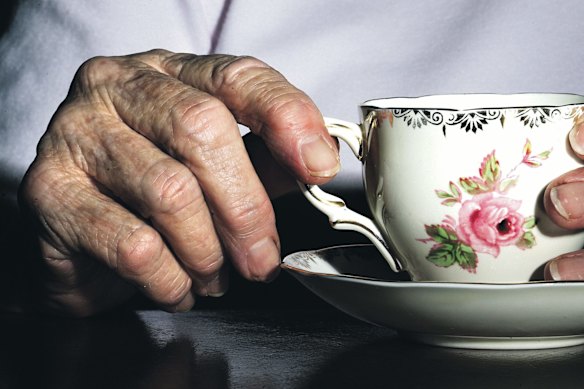
Life turned around, one cup of tea at a time. Credit: Rob Homer
A 22-year-old from Belfast and an 85-year-old from Dublin were an unlikely pair. I lived for sport; he hated it. He loved opera; I was ignorant of its charms. The breakthrough came over numerous cups of tea because I was lost in my life and needed someone with the gift of perspective. Michael provided that gruffly.
I had arrived naively expecting to help this man with company but the experiences of his life helped me far more. He gradually opened up about his life, including the personal and professional failures that had punctuated it. He had been born shortly after Ireland’s independence and witnessed the violence in Northern Ireland.
The routine became simple. I would make two cups of tea, always the red box of Barry’s from Cork, and sit for an hour in his living room while he told me another story from his life. Each one gave me a greater sense of perspective within my own narrow world that seemed to be imploding. I could see little future in my own country, but Michael taught me that the seeming failures of one year cannot define a lifetime.
Michael’s stories were of an everyman. Perhaps that’s why they helped me so much; he had endured and enjoyed his life. School exams had been failed, an early career in sales had been stunted, but he had met the love of his life, Valerie. She had changed his life and given him joys he could never have imagined as a younger man.
Loading
He warned to “never meet trouble halfway” and to stop worrying so much if it had arrived. Trying to control everything was futile. Lessons I am still trying to remember at 39. He told me that he was a testament that life was short, although he had lived 85 full years, they had gone increasingly quickly. Indeed, our time together came to an end.
Our last session was in June 2009, just before I left Dublin for good. Michael, like many Irish males, struggled to show emotion openly. We both knew this was the last time we would see each other. Michael made it clear that he wasn’t going to enjoy phone calls. Our time had been important, but it had reached its end. His final words to me were “mind yourself, and never ever give in”.
My well-planned track to journalism had been ripped up, but I eventually found myself back on it three years ago at this newspaper. Without Michael, this dream would never have been possible.
Jonathan Drennan is a staff sports reporter.
The Opinion newsletter is a weekly wrap of views that will challenge, champion and inform your own. Sign up here.
Most Viewed in Lifestyle
Loading