3 months ago
29
3 months ago
29
Opinion
January 21, 2026 — 5.01am
January 21, 2026 — 5.01am
I am a self-funded retiree and widowed. I am considering selling my home and downsizing. As part of this process I am thinking of using some of the proceeds to pay out my son’s mortgage. Are there any tax or other financial pitfalls I should be aware of in doing this, either for me or for my son?
When you describe yourself as self-funded, I assume there are no age pension or Centrelink issues to consider. If the property you are selling has been your principal place of residence, it should be exempt from capital gains tax. There are also no death duties or similar taxes payable on gifts made during your lifetime.
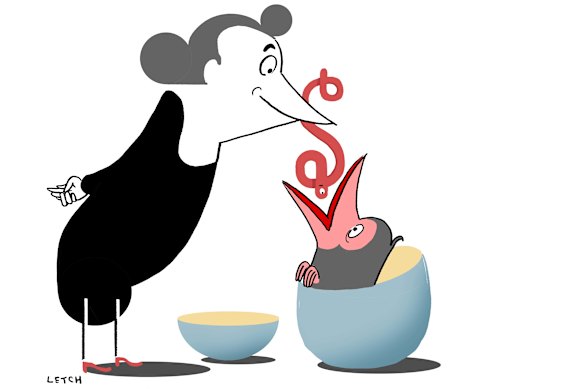
If you’re gifting money to your children, ensure you don’t have need of it first.Credit: Simon Letch
The more important issues are practical rather than tax-related. First, you need to be confident that giving away a substantial portion of your assets will not compromise your ability to support yourself for the rest of your life.
Second, careful thought should be given to whether the money provided to your son is intended to be a gift or a loan. That decision should consider his financial circumstances, whether he has a partner, and whether there are children involved. The right approach will depend on those factors and on how you wish to balance family support with protecting your own financial security.
Can you explain how a holiday house worth about $900,000 would be assessed for the age pension? We own our home, have shares worth about $30,000 and have $610,000 in super.
Loading
Centrelink will assess the holiday house at its market value, less any outstanding mortgage secured against it. That value is reviewed regularly and updated to reflect current market conditions. On these figures you are above the cut-off point for a couple, which means you would not be eligible for the age pension at this stage.
My advice is simply to live normally, and if your assets fall below the threshold in future you can then apply for the pension. Don’t forget that you’ll be eligible for the Commonwealth Seniors Health Card once you reach age 67.
An individual receives a $100,000 windfall and decides to contribute the full amount to superannuation. He is still working and, under the carry-forward rules, has sufficient unused concessional cap to treat the entire contribution as concessional and claim a deduction for the full $100,000. The super fund deducts 15 per cent contributions tax, or $15,000. However, a deduction of only $50,000 would have been enough to reduce his taxable income to nil. By choosing to treat the full $100,000 as concessional, has he unnecessarily paid contributions tax on amounts that delivered no additional tax benefit?
Would it have been better for part of the contribution to be treated as non-concessional and, if so, how is a taxpayer meant to determine this in advance? Is there any mechanism in the tax or super system that alerts a taxpayer when claiming that the maximum possible deduction is no longer optimal? Given the strong emphasis on tax-deductible super contributions, is there a risk people assume the largest possible deduction is always the best outcome, when in some cases it may not be?
Certain deductions that would normally be allowable cannot be claimed if they create a tax loss – personal super contributions fall into this category. If a deduction for personal super contributions exceeds taxable income, the ATO will deny the excess.
That portion of the contribution is then treated as a non-concessional contribution and counted against the non-concessional cap, which can create problems if that cap has already been used.
Before claiming a deduction, it pays to step back and look at the bigger picture. There is usually no tax advantage in making deductible super contributions that push taxable income below the effective tax-free threshold.
This is why many people wait until late in the financial year to make personal contributions, when they have a clearer idea of their taxable income and the optimal amount to claim. Ultimately, the responsibility rests with the individual to understand and comply with the rules.
But given how complex the tax and super systems have become, working with a competent tax adviser or financial adviser can make the difference between a smart strategy and an expensive mistake.
Loading
We are considering whether our adult son should be nominated as a direct beneficiary of our superannuation, or whether it would be better to direct our super death benefits to our estate and then leave the money to him under our will.
Our financial planner has advised that directing the benefit to the estate is preferable because our son would not incur the Medicare levy, whereas he would if he were a direct beneficiary of our super. I would like to confirm whether this is correct. I understand the Medicare levy is generally 2 per cent of taxable income but how does it apply to superannuation death benefits?
Where a superannuation death benefit is paid directly to a non-dependent adult child, the taxable component is subject to tax at 15 per cent plus the 2 per cent Medicare levy. Note that where the death benefit contains life insurance proceeds, a higher tax rate of 30 per cent (plus Medicare levy) may apply to a portion of the payout.
If the same benefit is paid to the estate and then distributed to the son, the Medicare levy does not apply, but the 15 per cent (or 30 per cent) tax on the taxable component is still payable.
A much simpler alternative is often for a member who has reached their senior years to withdraw the entire superannuation balance tax-free during their lifetime and leave the proceeds to their estate. In that case, no tax is payable by the beneficiary.
Noel Whittaker is author of Retirement Made Simple and other books on personal finance. Questions to: [email protected]
- Advice given in this article is general in nature and is not intended to influence readers’ decisions about investing or financial products. They should always seek their own professional advice that takes into account their own personal circumstances before making any financial decisions.
Expert tips on how to save, invest and make the most of your money delivered to your inbox every Sunday. Sign up for our Real Money newsletter.
Most Viewed in Money
Loading